Operation Vivaldi: the secret Ukrainian counteroffensive that has frustrated Putin's wishes in the Donbas
Kyiv has managed to stop the Russian advance towards the last bastions of Donetsk and delay the conquest of the territory

-
CAT -
CAST
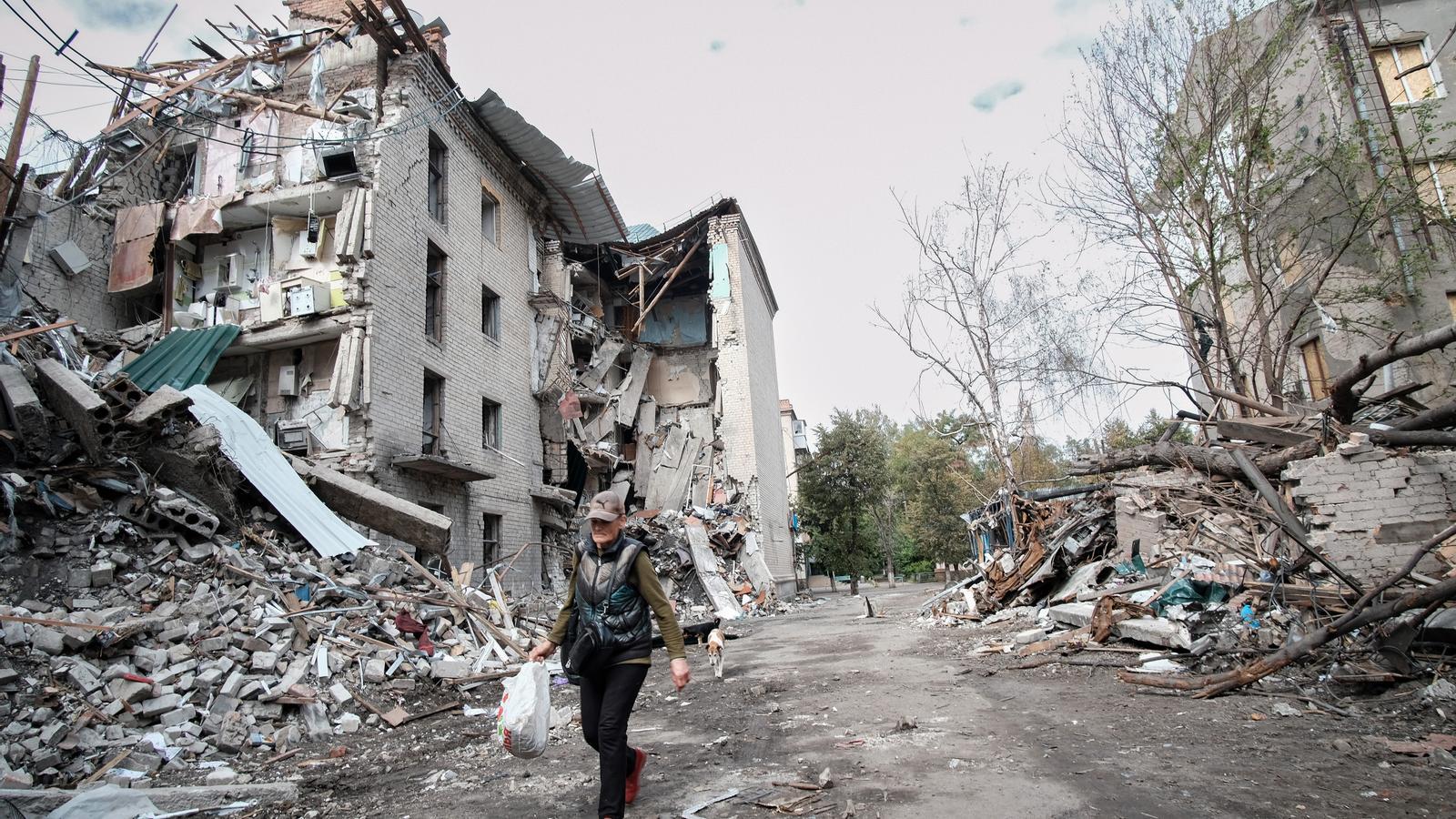
MoscowRussian commanders have been promising Vladimir Putin the imminent conquest of the Donbas for months. The Russian president's triumphalism led him to proclaim, at the beginning of October, that this territory would fall much sooner than Volodymyr Zelensky and the European allies predicted. However, over the last few months, a counter-offensive by the Ukrainian army, which has had no publicity and the details of which have only recently begun to be known, has caught Russian troops and military observers themselves by surprise. Kyiv has been able to stabilize the advance of the Kremlin's soldiers at the Donetsk fortress belt and has thwarted Putin's plans to achieve one of his fixations in this war before the end of the year.
Russia's strategy was clear: to encircle the last two major bastions of the Donbas under Ukrainian control, Sloviansk and Kramatorsk, by forming a pincer from the north and south. Russian soldiers had been advancing for many months along the northern flank, in the city of Lyman, towards Sloviansk, and had approached the outskirts of this town. But the Ukrainian general staff devised the so-called Operation Vivaldi, a counter-offensive intended to blow up these gains and force the Russian soldiers to retreat.
The key to Kyiv's assault was secrecy. The forces of the 3rd Army Corps of Ukraine penetrated the rear of the Russian troops, who had to withdraw towards the Zherebets river to avoid being encircled. The Ukrainian commanders exploited one of the weaknesses of the Kremlin's men: what the think tank Institute for the Study of War (ISW) describes as the “culture of lying”. That is to say, Russian officers draw a biased picture of the front and claim conquests that are not real, so that, when it comes to reacting, they do not have an accurate picture of the battlefield. This, combined with “operational security”, the silence on ongoing actions, also respected by pro-Ukrainian military analysts, greatly hindered the Russian response.

Furthermore, the Ukrainian army used an innovative combination of military technology that paved the way for it. The Gryphons, heavy bomber drones, introduced kamikaze ground robots into the Russian rear, ten kilometers from the front line, which cut enemy communications without them initially detecting it. They also sent old Soviet armored vehicles loaded with explosives, remotely controlled, against fortified Russian zones to facilitate the passage of the infantry. And, despite the supremacy of drones, Ukraine used tanks to quickly mobilize its men and recovered the constant fire of conventional artillery to give the Russian army no respite.
When the Z-bloggers started to alert about the situation, it was already too late. The result was nearly 200 square kilometers recovered by Ukrainian troops, some 250 Russian soldiers captured and more than 5,000 dead and wounded, according to Kyiv's calculations. In a matter of weeks, Russia squandered its advantage in the northern sector of Donetsk and the salient that threatened to isolate Sloviansk disappeared. This week, analyst Clément Molin has declared the front stabilized and agrees that Operation Vivaldi has been fundamental to keep the Kremlin's soldiers away from Sloviansk and Kramatorsk. The ISW, for its part, considers that Moscow will now have to “reconstitute the positions it has just lost” before launching an attack against the city again.
Dobropillia, the great battle
However, despite the setback, Putin remains determined to maintain efforts on the southern flank of the pincer. The great battle at this moment is being fought in the city of Dobropillia, from where Russia wants to advance north towards Kramatorsk, although the option of surrounding the municipality is no longer feasible. Molin admits that it is the point where Russian soldiers are exerting the most pressure and where the situation is most delicate for Kyiv. “If Ukrainian forces can hold Dobropillia, Russian prospects of taking the cities of the belt of fortresses will become extremely slim,” concludes the ISW report.
In contrast, Ukraine has been able to halt Russian progress in Kostiantynivka and Druzhkivka, the two enclaves that block the path towards Kramatorsk along the main road. It has been a year since Russian soldiers began infiltrating Kostiantynivka, and several analysts predicted, in mid-June, that the town would fall to the Kremlin in a matter of weeks. And, while Russia continues to penetrate it very slowly, the conquest is still not considered imminent.
These examples demonstrate that 2026 has broken with a trend that had been dragging on since October 2023. Since then, the Russian army had always accumulated net territorial gains. For some months now, things have changed, and although this does not mean that Ukraine is regaining ground or that it has completely stopped Russia's advances, it does allow us to state that the Kremlin no longer holds the initiative on all fronts, as Putin often claims. And, above all, what it makes evident is that if the total conquest of the Donbas was already expected to be long, now it will be even longer.
