Israel threatens to invade southern Lebanon, but Hezbollah refuses to back down.
At least eight dead in a double attack on Beirut beach where displaced families had taken refuge

-
CAT -
CAST
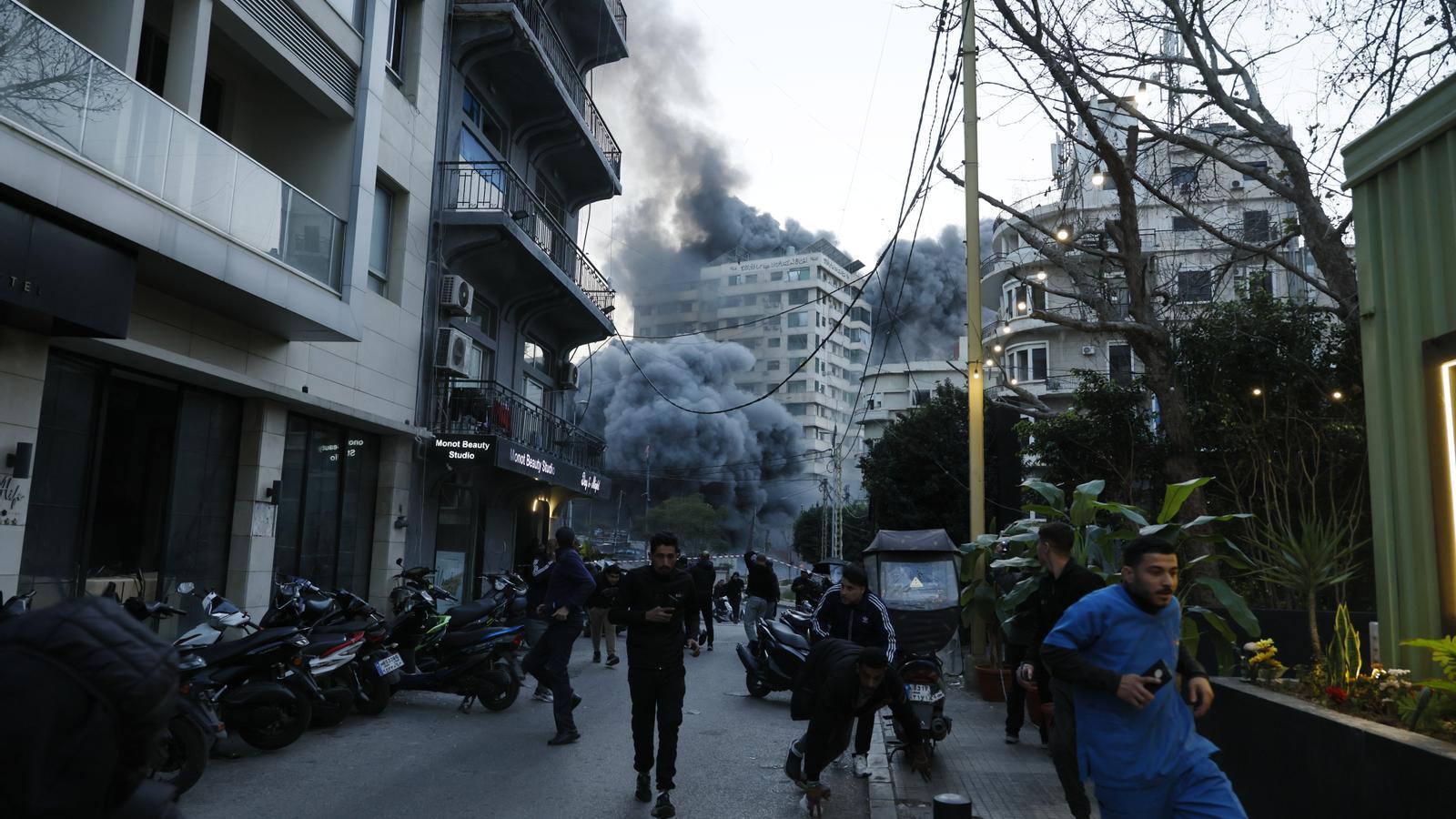
BeirutThe intensity of the Israeli bombings over much of Lebanon and the fighting in the south of the country raise a new question about the course of the warIsrael has ordered an expansion of its operations following a series of rocket attacks by Hezbollah, Defense Minister Israel Katz confirmed on Thursday. In just a few hours, massive airstrikes have hit Beirut and southern Lebanon, with a death toll so far at least 53 since yesterday.
On Ramlet Al-Bayda beach, on Beirut's waterfront, where displaced families were seeking refuge, a double attack has left at least 31 dead and 31 wounded. Katz threatened the Lebanese government in a statement: "If you cannot prevent Hezbollah from attacking Israel, we will do so ourselves." The death toll from the Israeli attacks in Lebanon, which began on March 2, has risen to 687, with 1,774 wounded, according to the latest figures from Lebanese authorities. This figure was released before Israel announced in the afternoon that it had launched a new offensive. This announcement came shortly after Israel issued an evacuation order for downtown Beirut. It is the first time Israel has done so, although it has previously bombed the heart of the Lebanese capital without warning. In just a few days, the escalation has forced more than 750,000 people to flee their homes across the country. As attacks and Hezbollah's retaliatory barrages of rockets and drones continue, the question arises as to how far Israel intends to go on this front. The movements of the Israeli army on the ground suggest that the offensive could extend beyond a campaign against the Shiite group. Israel has attacked hundreds of targets and maintains positions inside Lebanese territory. The stated objective is to protect communities in northern Israel, evacuated at different stages of the conflict, but the operation also appears to follow a territorial logic. In the south of the country, Israeli troops are gradually advancing, occupying hills and high positions that overlook roads and valleys. From these heights, movements can be monitored and strategic routes controlled. For some military personnel, these movements aim to create a buffer zone within Lebanese territory intended to keep Hezbollah fighters away from the border. "Whoever controls the hills controls the terrain," explains retired Colonel Michel Al Khory, a Lebanese military analyst. "From these positions, the roads can be observed, and the adversary's ability to move can be severely limited."

The Litani River
In this context, a familiar reference in Israeli military debates reappears: the Litani River. Since the late 1970s, Israel has made numerous plans to push Hezbollah north of the river and away from the Israeli border. Current movements suggest a more gradual advance: first consolidating a strip of land several kilometers wide in the south of the country before any larger-scale operation. But the offensive is not limited to the military sphere. The attacks and mass evacuations also affect the social environment where Hezbollah maintains much of its influence. The movement is not only an armed militia; it is also a political party and a social network deeply rooted in broad sectors of Lebanon's Shia community. Emptying towns and neighborhoods where the group has a presence can weaken the environment that sustains its political and logistical power.
However, Hezbollah remains active on the ground. Fighters from the movement continue to operate in the south and have used anti-tank missiles against Israeli positions. Rockets and drones have also been launched from areas further north.
The idea of a security zone in southern Lebanon is not new. Israel occupied part of this region for almost two decades, until its withdrawal in 2000, a presence that strengthened Hezbollah's legitimacy as a resistance movement. That experience still weighs heavily on military calculations. The current strategy appears different: instead of prolonged occupation, Israel seeks to control strategic positions and clear certain populated areas to create a space difficult for the Shiite group to use.
Subsequent wars have also demonstrated the difficulties of fighting in this terrain. In 2006, despite intense bombing, Hezbollah maintained its fighting capacity for weeks. The most recent escalations, including the 2023 regional conflict and the current war, have once again demonstrated that the movement retains the capacity to operate and respond from the south of the country. This is one of the risks that most worries observers. "Wars in Lebanon often begin with limited objectives and end up expanding," notes a Lebanese military source who follows the evolution of the conflict. If Hezbollah continues to respond with rockets and drones, Israel could be forced to advance deeper than anticipated. A hostile terrain for conventional armies
The terrain makes it difficult for a conventional army to advance. Hezbollah has adapted its strategy precisely to this environment. "It's hills, narrow roads, and towns very close together. A small group can attack a military convoy and disappear in minutes," explains Al Khoury. In this struggle, southern Lebanon is once again becoming a key territory. And if the regional front with Iran ends first, many fear that the conflict on that border will continue.
