Israel approves death penalty for Palestinians accused of deadly terrorist attacks
Establishes the death penalty as the default punishment in the West Bank, with no possibility of appeal
-
CAT -
CAST
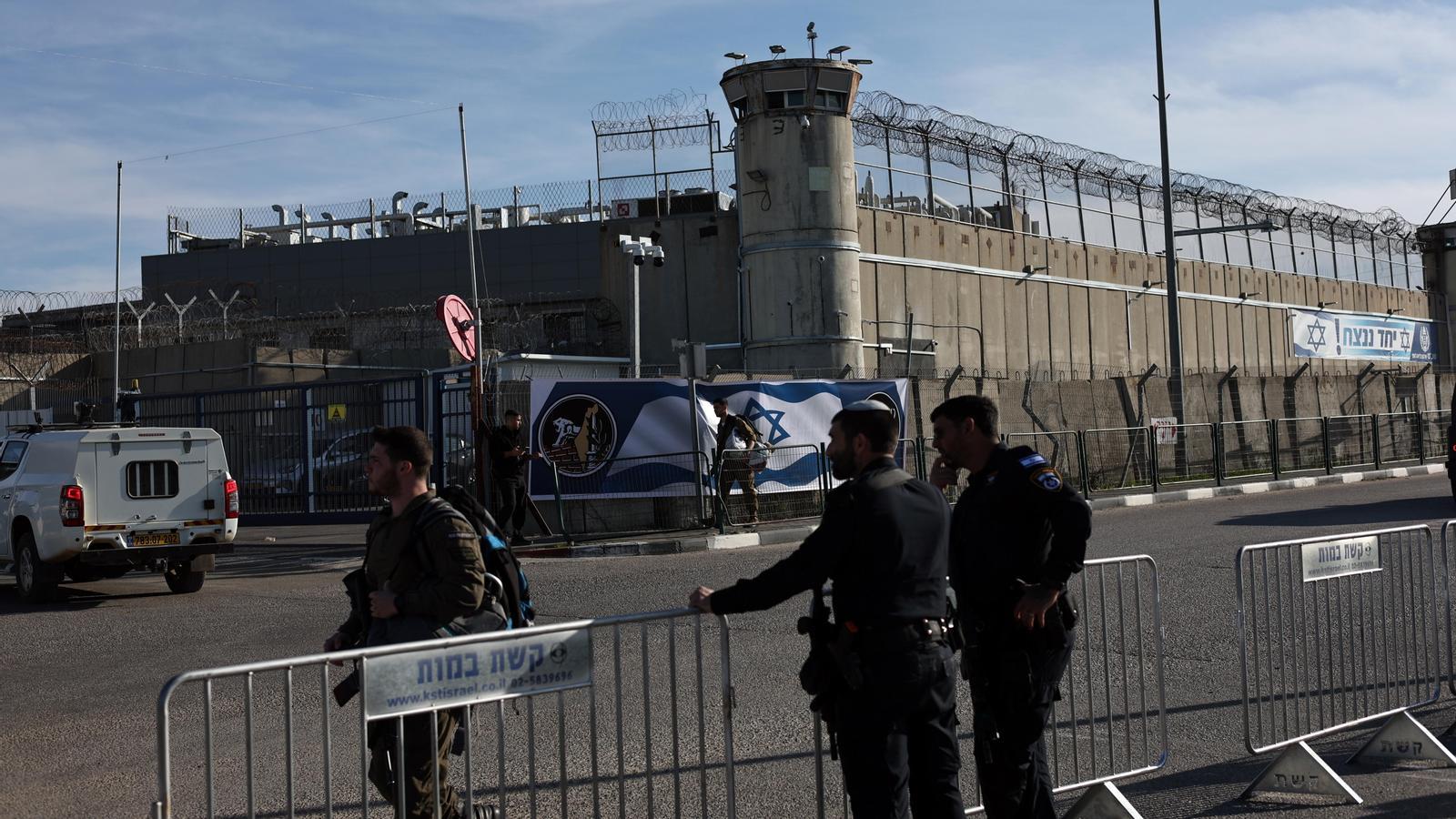
The Israeli Parliament approved this Monday one of the most controversial laws in recent years: it allows the death penalty by hanging for Palestinians convicted of terrorism offenses that have resulted in fatalities. The measure has been harshly criticized as discriminatory by European countries and human rights organizations. The new legislative text, called “death penalty for terrorists”, introduces profound changes to the Penal Code: it allows courts to impose capital punishment without the need for a prior request from the Public Prosecutor's Office and without unanimity among judges; a simple majority is sufficient. Judges will also no longer need to have a superior military rank. In Israel, capital punishment already existed for war crimes, crimes against humanity, or crimes against the Jewish people. In practice, however, the few death sentences that have been handed down have ended up being commuted to life imprisonment. The legal text, driven by the far-right party Otzma Yehudit, led by National Security Minister Itamar Ben-Gvir, was approved with 62 votes in favor –including that of Prime Minister Benjamin Netanyahu– and 48 against. The objective is clear: “To establish the death penalty for terrorists who have perpetrated deadly attacks”, as the text literally states. Thus, any person who “intentionally causes the death of another with the aim of harming a citizen or resident of Israel, and with the intention of denying the existence of the State of Israel, may be sentenced to death or life imprisonment”, it adds.The law will be applicable to any territory under Israel's effective control and establishes a dual judicial circuit: one for civil courts within Israel and another for military courts in the West Bank, which judge Palestinians exclusively under military law. In the Israeli military courts in the West Bank, Palestinian prisoners convicted of armed operations that cause the death of an Israeli will face the mandatory death penalty, unless exceptional circumstances are detected that allow for a life sentence. In practice, the legislation will turn the death penalty into the default punishment, according to analysts. In Israeli civil courts, however, the penalty can be death or life imprisonment. In any case, those convicted will be held in separate facilities, with no right to visits except from authorized personnel, and legal consultations will be conducted solely by videoconference. As for executions, they will be carried out within a maximum of ninety days from the sentence.No avenues for appeal
Various organizations, including the Palestinian Prisoners Society, the Commission of Detainees' Affairs, the Addameer Association for Prisoner Support and Human Rights, and the Association for Civil Rights in Israel, denounce that this legal framework consolidates a system that specifically applies the death penalty to Palestinians and eliminates key avenues for appeal or pardon.“The law subjects Palestinian prisoners to a draconian and racist killing machine,” Sari Bachi, executive director of the Public Committee Against Torture in Israel (PCATI), explains to ARA. “The death penalty is explicitly applied to Palestinians, but not to Jews. It is applied to those who kill with the motivation of denying the existence of the State of Israel, that is, to Palestinians. If a Jewish settler kills a Palestinian for nationalist reasons, they cannot be sentenced to death and will be tried in civilian courts with guarantees because they do not deny the Israeli state. In the case of a Palestinian, the death penalty is the default punishment within a military system with a conviction rate of 99%. This institutionalizes a regime of Jewish supremacy over Palestinians,” she adds.Along the same lines, other Israeli and Palestinian organizations – such as Adalah, the HaMoked Center for the Defense of the Individual, Physicians for Human Rights Israel, B’Tselem, Parents Against Child Detention, and Zazim – also warn that the law violates international law, especially the right to life, as well as the regulations governing occupation. They recall that, according to the Hague Regulations, Israel has no sovereign authority to legislate over the population of the West Bank and must treat people living under occupation with dignity, even if they have been accused of committing crimes.“From a human rights perspective, the law largely contradicts Israeli law on dignity and liberty. Furthermore, the ninety-day period from the final verdict to execution, with virtually no room for requesting a review or other avenues, directly goes against international legal principles,” details Karen Saar, from the Association for Civil Rights in Israel (ACRI), to l’ARA.Following Hamas's attacks on October 7, 2023, several far-right Israeli lawmakers began pushing for the approval of this law. Minister of Security Ben-Gvir has justified that the death penalty can act as a deterrent. However, Amnesty International states that there is no evidence that capital punishment is more effective than life imprisonment in reducing crime.In recent years, human rights organizations have reported a significant increase in cases of abuse and torture in prisons and military detention centers. In December, the Israeli agency Walla! reported that 110 Palestinian prisoners had died in Israeli custody between January 23, 2023, and June 25 of last year. Before the final vote on the legislative text, the law had already generated strong opposition both internally and internationally. Experts from the UN Human Rights Council warned that the norm violated the right to life and could constitute cruel, inhuman, and degrading punishment. The European Union also expressed concern, and the foreign ministers of Germany, France, Italy, and the United Kingdom warned that the law could “undermine Israel’s democratic commitments.”
