The progressive summit that could make history, or not

-
CAT -
CAST
The President of the Spanish government, Pedro Sánchez, has culminated this weekend in Barcelona the operation that began with his opposition to the Israeli occupation of Gaza and that today has made him a reference for the global left and, by opposition, the nemesis of Donald Trump. It must be admitted that Sánchez has known how to play his cards well internationally (perhaps better than domestically), and the success of this Saturday's summit of progressive leaders is the culmination of a strategy planned and executed from Moncloa to the millimeter.
Thanks to this journey, Sánchez can appear today alongside such important figures of the international left as Lula da Silva or Claudia Sheinbaum on equal footing. However, it must be taken into account that Sánchez has the protective shield of the EU, while Lula and Sheinbaum, especially the latter, have had to make more efforts because they are more exposed to the anger and whims of the powerful neighbor to the north.
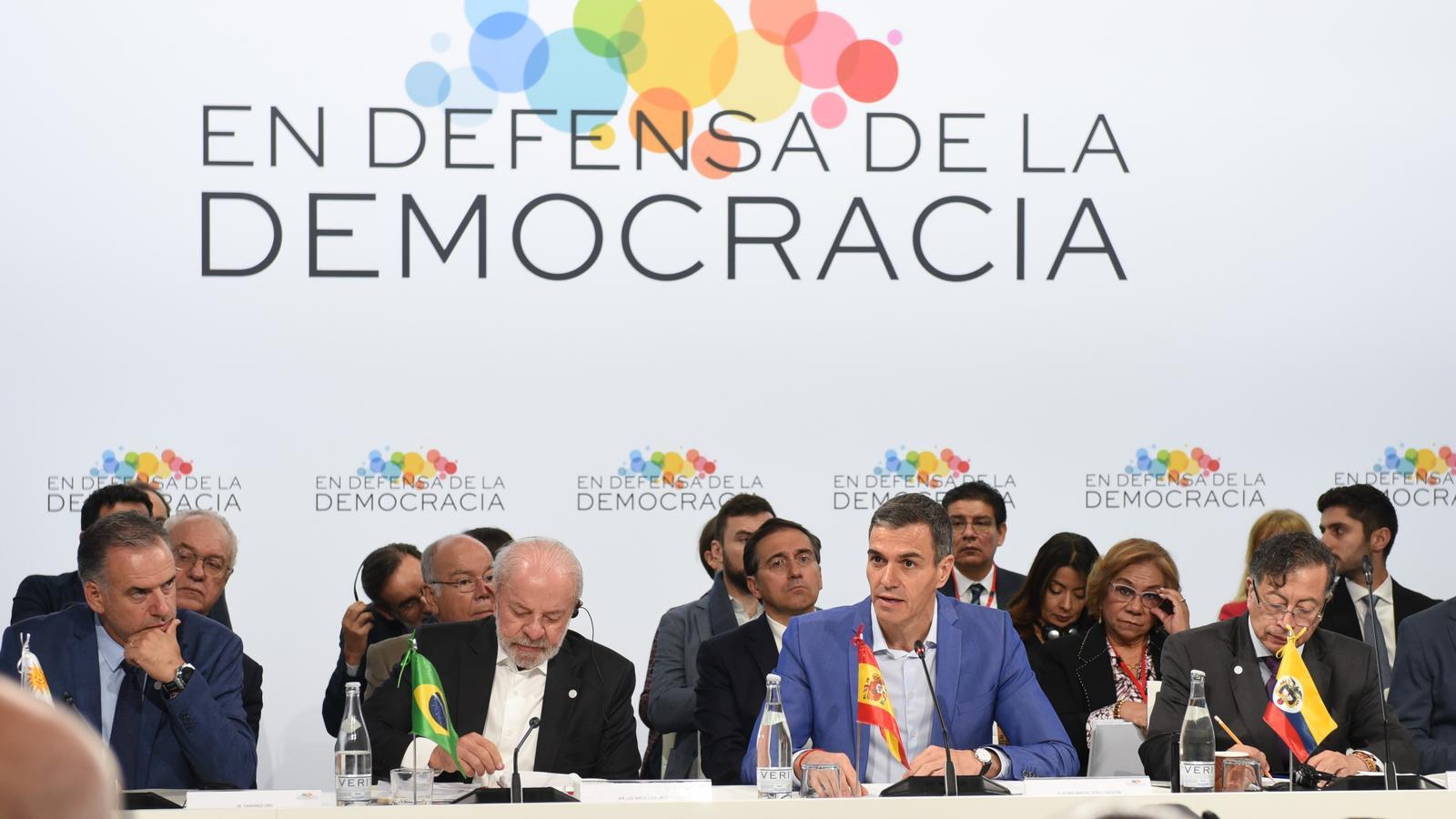
Up to three parallel events have taken place in Barcelona this Friday and Saturday. The Spain-Brazil bilateral summit, the Global Progressive Mobilisation days and the IV Meeting in Defence of Democracy, and all three converged this Saturday afternoon in a large final global meeting in which live interventions were combined with video messages, especially from key figures of the American Democratic Party, such as Bernie Sanders, Zohran Mamdani or Hillary Clinton. There has been no final document, but there has been an agreement among attendees to advocate for a return to multilateralism with a reform of the UN that avoids the current blockage by nuclear powers, to curb the power of techno-oligarchs, and to combat Trumpism and the far-right with social proposals and a more frontal confrontation.
La Moncloa has been able to offer its guests a setting, the Catalan capital, governed by socialists and which is also a benchmark for left-wing policies worldwide and famous for its mobilizations against wars, such as the one in March 2003 against the invasion of Iraq which was cited by George Bush Sr. It cannot be ignored, either, that these types of events serve Sánchez to project the idea that the Catalan Process is buried and that there is no longer any political conflict worthy of the name.
Whether this weekend's summit is a turning point or not will be revealed by the next electoral results. In October there are elections in Brazil, where Lula will face a son of Bolsonaro, and in November the midterm elections in the United States. Here it will be seen whether the pendulum swings back towards progressive positions or the reactionary wave continues.
However, beyond the internal reading in each country, it will be necessary to see if this Barcelona summit will make history and will truly become an alternative movement capable of confronting the involution and the law of the jungle that Trump, Putin and their allies are seeking to impose.
