The Spanish economy is not saved from the impact of the war
The State now requests a safeguard clause for defense spending and to be able to comply with fiscal rules
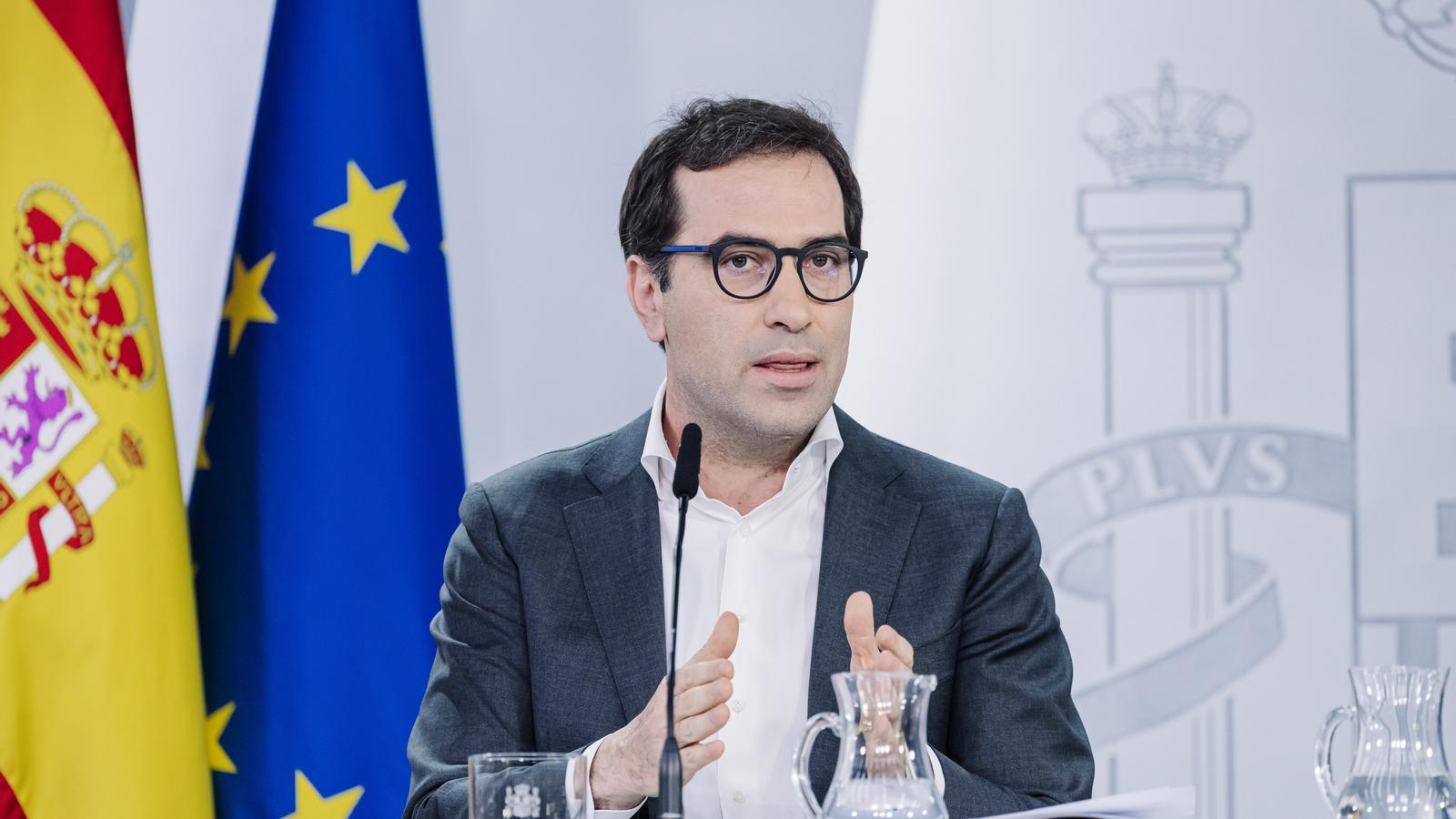

MadridThe Spanish government is considering different scenarios regarding the impact of the war in the Middle East on the growth of the Spanish economy. In fact, as a result of the conflict, the central executive is ruling out the imminent presentation of a macroeconomic framework to serve as a basis for the General State Budgets (PGE) for 2026, which complicates Pedro Sánchez's commitment to presenting accounts this fiscal year.which complicates Pedro Sánchez's commitment to presenting accounts this fiscal year.. For the moment, the 2023 PGE remain extended. The reason is the strong uncertainty derived from the war and the difficulty in preparing solid forecasts, as explained by the First Vice President and Minister of Economy, Carlos Cuerpo, at a press conference this Tuesday, after the Council of Ministers. For now, the Spanish government maintains that the Spanish economy will grow by 2.2% in 2026, but already anticipates a downward revision of between one and eight tenths of the gross domestic product (GDP, the indicator that measures economic activity), as detailed by Cuerpo.
"We could be talking about an impact [on the economy] of between one tenth and eight tenths [...] As the conflict progresses, this range may continue to widen. Therefore, it is a scenario of uncertainty that makes it difficult to make forecasts," Cuerpo acknowledged. In any case, the minister said that the Spanish government's current forecast (an annual GDP growth of 2.2%) is "moderate." The Bank of Spain and the European Commission currently place it at 2.3%, Cuerpo exemplified. "When we have more certainty about the impact of the war, we will update the [macroeconomic] scenario for the budgets," reiterated the minister, who appealed for "prudence."
Different assumptions affect this scenario of uncertainty with regard to GDP: from the duration of the conflict to the evolution of prices of raw materials such as oil, or the need to extend the measures approved due to the war, among others. In any case, two months after the attack by the United States and Israel on Iran, the Ministry of Economy insists that "Spain is better prepared than on previous occasions" to face the shock. "Better prepared in the economic and energy fields, and also very significantly in the budgetary field," indicated the number two of Pedro Sánchez's government. In any case, concern is indeed a fact with regard to the escalation of prices, despite the fact that the Spanish government believes it has acted quickly with measures such as the reduction of VAT on fuels, which have helped to "compensate" for the shock.

Defense clause
The Minister of Economy also confirmed this Tuesday Spain's compliance with fiscal rules in 2025. In fact, it is one of the elements that allows the Spanish government to breathe with some tranquility when facing the current scenario.
On the one hand, it complies with what has become the main reference variable for the European Commission: the spending rule. That is, the maximum growth in disbursements by all public administrations –State, autonomous communities, municipalities, and also Social Security–, excluding European funds and extraordinary spending, such as spending linked to reconstruction due to the storm in the Valencian Country.
For 2025, the maximum growth of this net spending could not exceed 4.5%, and the Spanish government closed the fiscal year right at this limit. In cumulative terms (2024 - 2025), observed growth stands at 8.8%, below the established limit (10.8%). But to obtain these figures, the Spanish government has now asked the European Commission to activate the safeguard clause for defense spending. That is, that the money allocated to expanding the military budget is not taken into account, as confirmed by Cuerpo. Some countries had already done so, and the Ministry of Economy explains that they had not requested it before because they did not have the 2025 figures finalized. "With the data on the table, it was decided to act," indicate sources from this department. In 2025 alone, the Spanish government announced the mobilization of an additional 10,471 million euros in military capacity.
With the new fiscal rules, the European Commission focused on this spending rule –and not so much on the deficit– with the aim of ensuring that the increase in disbursements does not strain public debt. If European limits were not met, the European Commission could demand corrective measures either on the spending side or on the revenue side.
Regarding public debt, the Spanish government is confident it will break the 100% of GDP barrier in 2026 and not in 2027, as initially considered, so it would already stand at 99.3% of GDP this year. Public deficit is projected to close at 1.6% of GDP in 2026 (the 2025 target was met, when the deficit stood at 2.2% of GDP), while public administrations will again register a primary surplus.
All of this will be detailed and notified in Brussels this Thursday, when the Annual Progress Report –the document that replaces the Structural Fiscal Plan since the new fiscal rules came into effect– will be sent to the EU executive and which the council of ministers approved this Tuesday. The document will break down the measures the executive has taken to achieve this "fiscal responsibility".
