The regularization of immigrants satisfies business owners
The contribution of foreign workers is key to economic growth

-
CAT -
CAST
BarcelonaThese past few days, long lines have been seen at many foreign consulates in various countries, such as Pakistan, as people seek the necessary documents to begin the immigration regularization process launched by the Spanish government. This process could have a direct impact on the lives of these individuals, but also on the Catalan and Spanish economies. At a time of robust economic growth and with the unemployment rate in Spain having fallen below 10% for the first time in eighteen years, foreign workers are particularly welcome.
Therefore, despite the PP's opposition to the regularization process, this time the main employers' associations have distanced themselves from the Popular Party's position and applauded the measure proposed by Pedro Sánchez's government. In Catalonia, the most striking example is Josep Sánchez Llibre, president of Foment del Treball. Pimec also supports this regularization process, as do the major unions, CCOO and UGT, and the largest farmers' union in Catalonia, Unió de Pagesos.
The main argument these organizations use to support the measure, aside from social reasons, is that many businesses and farms complain of a labor shortage when they need to hire workers. This is something that some European Union partners don't quite understand, since Spain—aside from Finland—has the highest unemployment rate in the EU, despite the decline, as acknowledged by Josep Ginesta, Secretary General of Pimec. The truth, however, is that the employment of recent arrivals is playing an increasingly important role in the Catalan and Spanish labor markets, and companies complain about the difficulties in finding workers. In fact, across Spain, foreign workers already account for 14% of all those registered with Social Security, while in Catalonia the percentage is 18%. The increase in recent years has been very rapid. In Catalonia alone, there are already almost 700,000 foreign workers registered with Social Security. But above all, in recent years there has been a significant increase in non-EU workers. In 2015, the number of non-EU workers registered in Catalonia was less than 250,000, while a decade later, in 2025, it had more than doubled to just over 502,000. The president of Foment del Treball, Josep Sánchez Llibre, was very clear about what business owners think about regularization: "Business owners need immigration like the air we breathe every day." In fact, Sánchez Llibre highlighted the "courage" of the Spanish government with this regularization, which, in his opinion, will boost the competitiveness of companies. "Anything that represents integration or contribution, or welcoming all those immigrants who want to join the economy, we will welcome." In fact, the president of Foment asserts that the employers' association has studies indicating that the Spanish economy will need one and a half million immigrants in the next decade.
For his part, the Secretary General of Pimec, Josep Ginesta, asserts that there is a social aspect, which is the regularization of people who are already here. He also indicates that, in the economic sphere, companies cite "finding staff as their primary problem," and therefore, the measure could be beneficial. However, he clarifies that "inclusion and integration" policies will be necessary. According to Ginesta, "labor integration requires prior inclusion." In other words, these immigrants need basic training before professional training.”
Otherwise, warns the Secretary General of Pimec, immigrants who obtain regularization may find initial employment, but without sufficient training, they may later find themselves unemployed among nationals.
In any case, the Secretary General of Pimec indicates that, unlike other European states, Spain has an advantage with immigration, because many immigrants, especially those from Latin America, are better educated than the majority of immigrants arriving in other European countries. He also mentions the role that so-called circular flows can play. That is, temporary immigration for specific campaigns. For example, when Spaniards went to work the grape harvest and, once it was over, returned to their place of origin within the country.
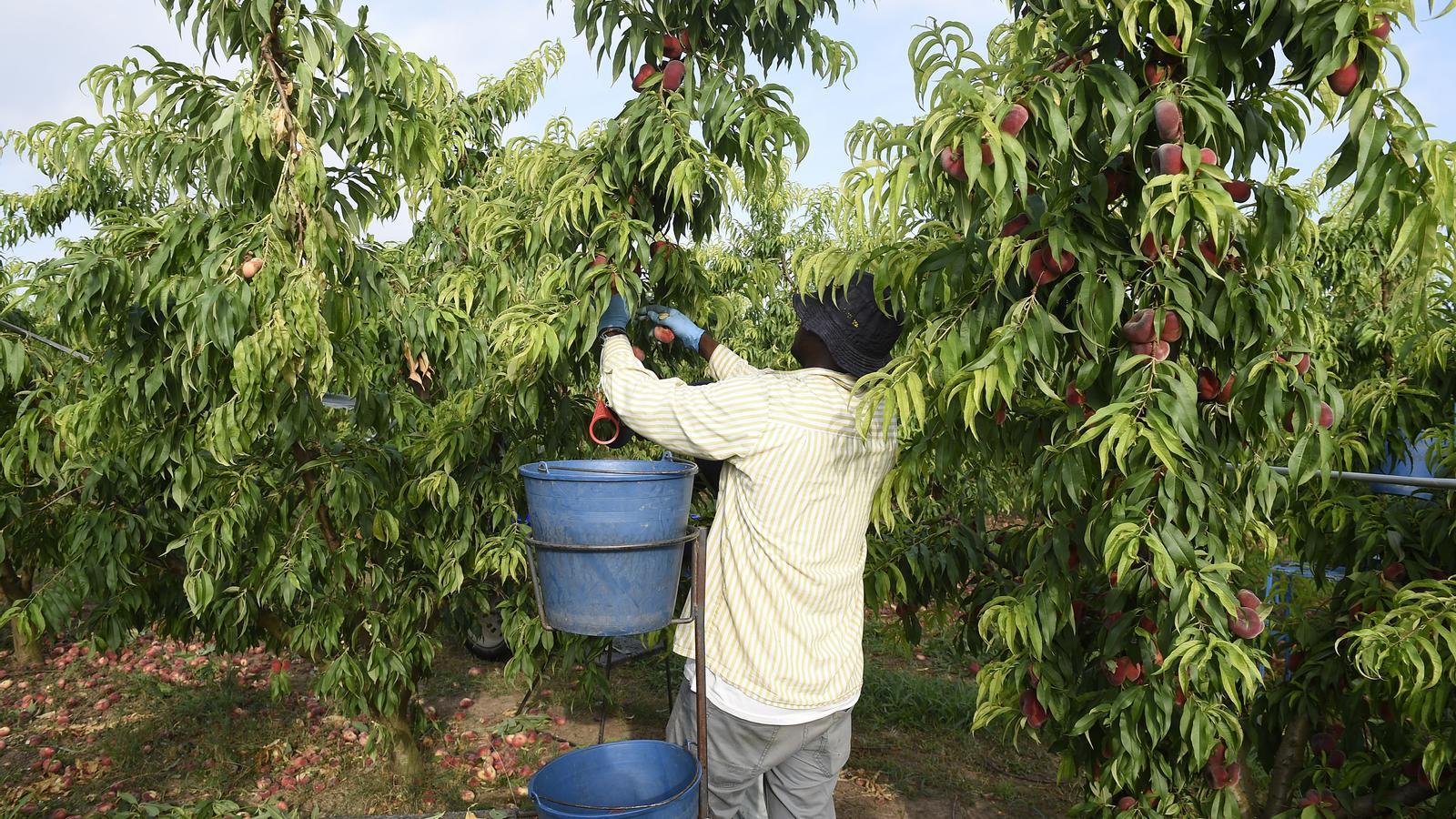
Unió de Pagesos expresses a similar view, demanding that regularization be accompanied by other actions to facilitate farmers' access to employment with guarantees of these people.
