Pujol invests €12M in a new factory to increase production by 30%
The plant reduces the consumption of energy, water and cement
-
CAT -
CAST
BarcelonaPrefabricats Pujol has launched a new factory in Les Borges Blanques which, with an investment of 12 million euros, will allow for a 30% increase in production capacity, the company reported this Monday. The new plant incorporates next-generation technology that will allow manufacturing with lower cement and water consumption.
The new hollow-core slab factory (a material used for roofs and ceilings) represents a new step in the group's industrial growth, innovation, and sustainability strategy. Specifically, the plant is entirely dedicated to the manufacturing of prestressed hollow-core slabs, a structural element increasingly present in industrialized residential construction. Its high resistance, speed of assembly, quality of execution, and ability to cover large spans allow for the reduction of construction deadlines, minimization of waste, and improvement of project efficiency, making them a solution increasingly used in housing development, as well as in industrial, logistics, and equipment buildings, according to the company.

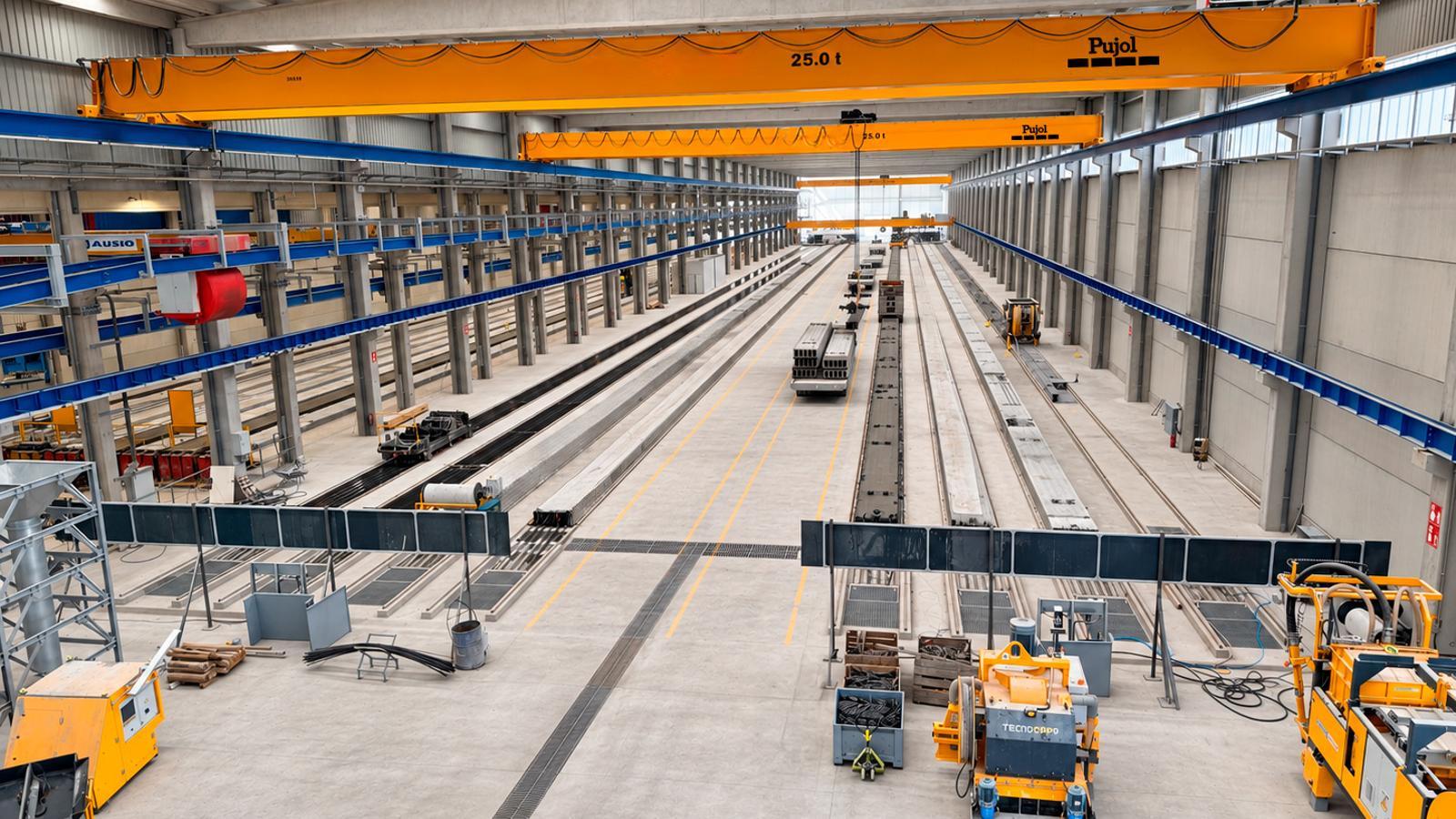
With this new facility, Pujol will increase its production capacity to nearly one million square meters of hollow-core slabs per year, 30% more than the current one, and will consolidate its leadership as the main producer of this type of element in Spain. The new factory incorporates eight new production tracks 175 meters long, prepared to manufacture hollow-core slabs of different thicknesses and widths, as well as a new concrete batching plant with a production capacity of up to 1,000 m³ per day, designed to ensure a continuous supply of concrete.
Photovoltaic plant
The factory is located in the ReGenera industrial estate and has a photovoltaic self-consumption installation with 880 kW of nominal power (1.02 MWp), capable of generating nearly 1.43 GWh of renewable energy annually. This infrastructure allows for covering a very significant part of the energy demand of the industrial activity with energy of renewable origin, reducing electricity grid consumption, and contributing to the decarbonization of production processes. Added to this commitment is the incorporation of a new extrusion technology with semi-dry concrete, which allows for optimizing the use of raw materials while maintaining the same mechanical performance of the final product.
Compared to previous manufacturing systems, this technology reduces cement consumption by approximately 22.2% and water consumption by nearly 14%, which significantly decreases the environmental footprint of production. The plant also incorporates automated processes and advanced control systems that increase production capacity, improve product regularity and quality, and optimize working conditions. This technological evolution, far from replacing human talent, will boost the creation of twenty qualified jobs linked to operation, maintenance, process control, and production management.
