Next Monday, CCOO and UGT will hold a joint informative assembly with 2,000 representatives from the "most important companies in the business fabric" of the State. As explained in a statement, the meeting, composed equally of 1,000 representatives from each union, aims to inform about the demands of the 24-hour general strike called for next November 11 and to establish the roadmap to prepare for this day. The assembly will be attended by the Secretary General of UGT, Pepe Álvarez, and his counterpart from CCOO, Unai Sordo.
CCOO regrets that the time for reaching agreements "has ended" and calls for an "offensive" strike
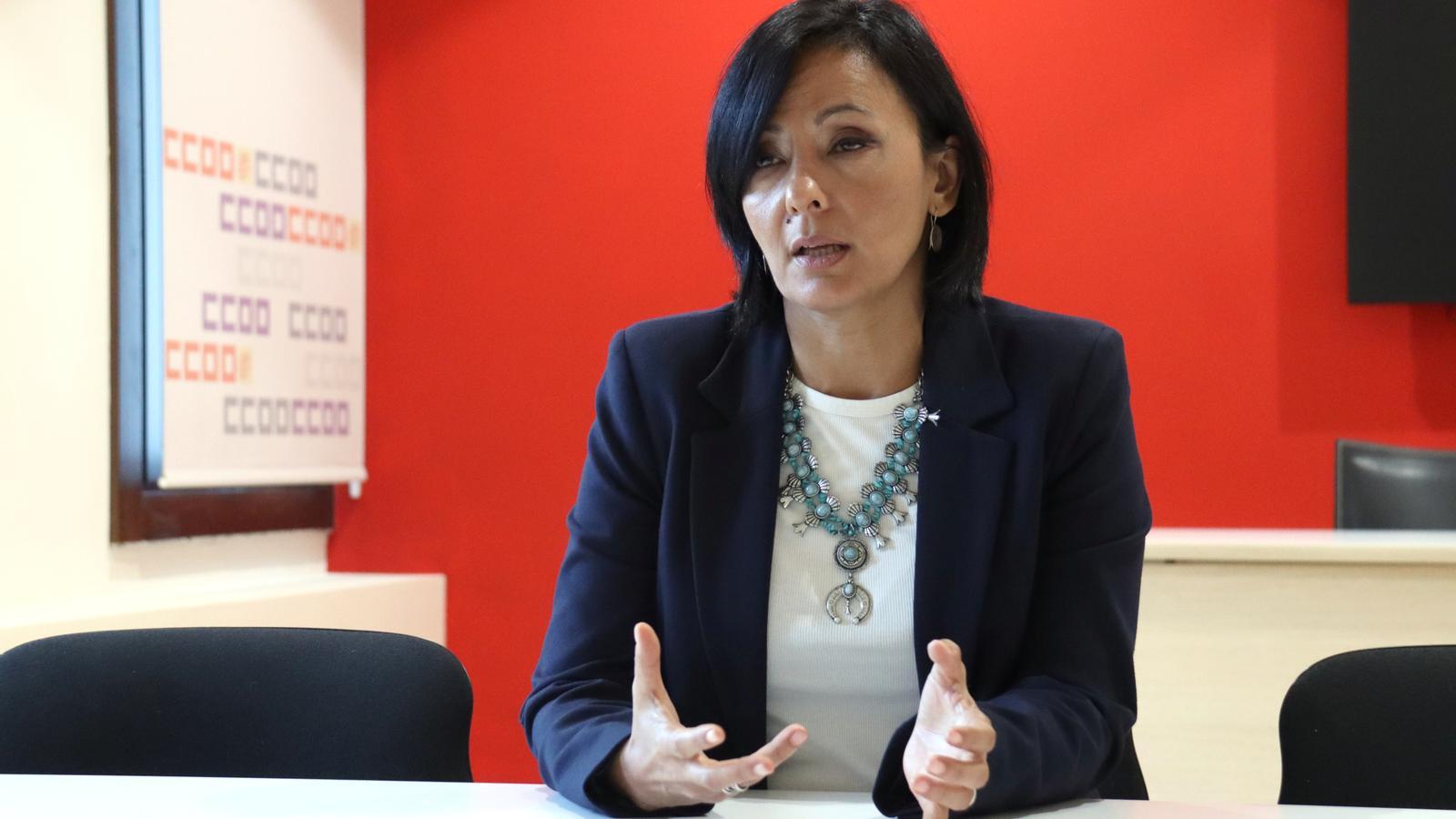
Belén López explains that the general strike seeks to "conquer rights"
22/10/2026 - 16:51 h

-
CAT -
CAST
BarcelonaA strike on the "offensive". This is how the general secretary of Comissions Obreres de Catalunya, Belén López, defined the general strike scheduled for November 11th this Thursday, the first 24-hour strike in 14 years. "It is an opportunity for trade unionism to change its stride," assured the leader of the Principality's majority union in a meeting with journalists, adding that "the era of reaching agreements has ended, unfortunately."
López explained that, for now, the strike seeks to "conquer rights," and not to protest because they have been violated, and she has set her sights on the elections: "Depending on what happens on November 29th, the era of agreeing on big things will come to an end."
The general secretary of CCOO also put on the table the three major demands of the union for the strike. On one hand, they demand that the Permanent Deputation of Congress approve the housing decrees rejected by the parliamentary plenary that ended up leading to the general elections and that the Council of Ministers had approved after the wave of protests over the eviction of Maricarmen.
They also ask that the decree on time registration be unblocked, which according to CCOO must end the "fraud" that overtime currently represents. The last of the union's demands is that the employers' associations "sit down to negotiate" the interprofessional agreement of Catalonia, expired since 2023, and the state collective bargaining agreement (AENC).
Occupying the debate
Given the peculiarity that the strike arrives a few days before the electoral campaign, López explained that they hope the general strike will help put the "real problems of the people" at the center, so that the debate does not focus on issues like immigration. In this way, the union leader has assured that the strike must serve to "situate the social agenda of class unionism" and to send "a clear message to the parties that they must enact housing policies".
In this sense, the general secretary has not only criticized the right side of the Congress of Deputies, but also the Spanish government itself, of whom she said that "they have dragged their feet" on housing matters. On the other hand, according to what she said, it must push for companies to agree on "decent wages".
Regarding the organization of the strike, called by diverse organizations such as alternative unions or the housing movement, López said that, for the moment, the relations are "good" and that they are working in an "intersectional way" so that "everyone feels comfortable and represented". "Everyone has understood that the goal is the same: to stop the country", said the general secretary, who added that the majority unions will be in charge of promoting pickets and work stoppages at workplaces. López has predicted that the strike will be a "success".
CCOO and UGT to gather 2,000 representatives from the State's most relevant companies
