Richard Linklater: "Trump is basically a reality TV actor, but the reality show is moving to the White House."
Filmmaker, 'Nouvelle Vague' premiere

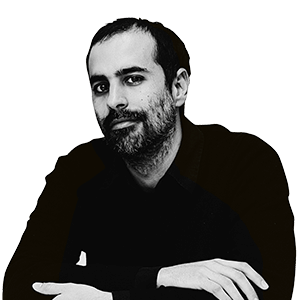
-
CAT -
CAST
BarcelonaAt 65, the American Richard Linklater (Houston, 1960) is one of the world's most in-form filmmakers: a few months ago he premiered the magnificent Blue moon And this Friday a new marvel arrives in theaters, New WaveA sparkling film that recreates with rigor and a great sense of humor the historic filming ofAt the end of the getaway, of Jean-Luc Godard, a foundational masterpiece of the French New Wave. Linklater answered questions from ARA and other media outlets a few months ago in San Sebastián.
What influence has the Nouvelle Vague had on you as a filmmaker?
— A lot, but it's influenced the whole world. The very notion of expressing yourself freely through film is a product of the Nouvelle Vague's idea of making films about anything: growing up, falling in love, a journey... The Nouvelle Vague proved that whatever you like, you can make a film about it. Truffaut wrote that the films of the future would be only about love, acts of love. And this influenced me because many of the films I make don't seem like films. The Nouvelle Vague, in my mind, brought cinema down from the pedestal of genres and grand narratives and allowed films to be smaller in scale, a kind of director's essay.
Do you remember the first Nouvelle Vague film you saw?
— Surely At the end of the getawayAnd I liked it, but I didn't understand it. When I saw it again a few months later, I did. Since then I've seen it 25 times, and I feel like I know it very well, especially now that I've made this film. In fact, I'm even more impressed now that it works so well. It shouldn't work, because it was filmed in a very unconventional way. And if it works, it's partly thanks to its actors, Jean-Paul Belmondo and Jean Seberg.

I had already made a film about another master of cinema, Me and Orson WellesBut this time it's about a great French filmmaker. How did the French react to an American director coming to France to portray one of their greatest icons?
— This worried me a lot at first, but as filming drew closer, I realized it wasn't a problem: the French liked the script and what I wanted to do, and the crew and actors were really committed. In fact, they told me that some people in the French film industry were saying, "We couldn't do it right, we messed it up, maybe he can pull it off." They were very supportive.
Godard is often described as an elusive and somewhat mysterious figure. You give off a very different impression. Do you identify with him in any way?
— No, I'm the opposite of Godard in almost every way. In any case, the Godard in this film is somewhat vulnerable because he hasn't yet been able to do things his way, and he's under a lot of pressure. That's how you feel when you make your first film: enthusiastic and happy to be doing it, but very nervous and isolated. You're petrified with fear, but that's how art should be made. That's how I felt making my first films. And yes, Godard was peculiar, but he had long-term relationships; he wasn't such a strange person.
There are moments when his portrayal of the character borders on comedy, and the aphorisms he utters have an almost comical function.
— He's right on the edge, yes. But if he uses quotes so much, it's to disguise it. He doesn't really have answers to the questions he's asked during filming, so he drops theories and quotes. But he's clearly in love with cinema and is immersed in that cinephile environment, so it's good to laugh with him, and also to laugh at him a little. There's something very funny about Godard.
Godard can behave like an arrogant jerk, but also like a supportive and loyal person. How did he find the balance to capture that complexity?
— It's not just Godard. In the film, you see that Belmondo could also be an idiot. He says horrible things, but he does it in a way that makes him likeable. Cinema is powerful in that sense. There are plenty of unpleasant characters that we nevertheless like. Maybe not in real life, but certainly in a film. Many people have complex relationships with artists in general, but also with their bosses at work. And in film, the director is the boss. You're at the top of a hierarchy, so you have to tell people what to do. It's a tough position: the director's job isn't to be liked, but to be effective. But yes, Godard had a complex relationship with Seberg and with all his leading actors.
Also with Truffaut, but the film ends with a luminous image of both of them that I find very significant. The other great film he released in 2025, Blue moonIt is, among other things, a film about friendship. And I would say that it also is. New Wave.
— That's right! It's about a group of friends. As Godard and Truffaut grew up and went their separate ways, they drifted apart. Also, Godard wasn't very friendly, and they had their conflicts. But during the time ofAt the end of the getaway They were still good friends. And I wanted to show the camaraderie of the entire Nouvelle Vague, because they really were friends and supported each other. It's important to have a community. People in film are always looking for a community.
And what was your community like when you were a young filmmaker?
— They weren't people you'd heard of, just friends and roommates, the people I started a film club with. We all lived and breathed cinema. I'll always remember that time when we'd spend the whole day at the movies, seeing three or four films, enjoying life. It was fantastic, so much fun. That's what being young is all about. They all still have a great love for film, but only a few of us have made a career out of it, in various jobs.
Is the cinephilia that Godard professed still alive among young people today?
— Ten years ago, I thought it was over, because of the internet. But in the last five years, I've seen so many young people returning to cinema; it's as if they've just discovered it. When we program a great film at our film club, we always have a huge queue, and most of them are under 30. I work with many young people on my films, and three or four of my interns have shot their first feature film in the last year. They're people who watch films constantly. Cinema always finds a way to reinvent itself. Besides, we have 130 years of films available right now. There's also good contemporary cinema, but nothing motivates you better than watching films from the past, so there are no excuses.
Is the freedom of expression through cinema championed by the Nouvelle Vague in danger in Trump's United States?
— Freedom of speech is definitely under threat, but our president is so limited... He comes from television and doesn't understand film. Trump is basically an actor. realitybut the reality He's going to the White House. I don't think he's seen many movies. To really watch a movie, you'd have to be completely absorbed for two hours. In any case, film takes longer to react to reality. Television and comedians pose a more immediate threat, but we'll see what happens.
