Carme Portaceli: "They will say that you are a militant or that you have a bad temper: do not pay attention to them"
Director of the National Theatre

-
CAT -
CAST

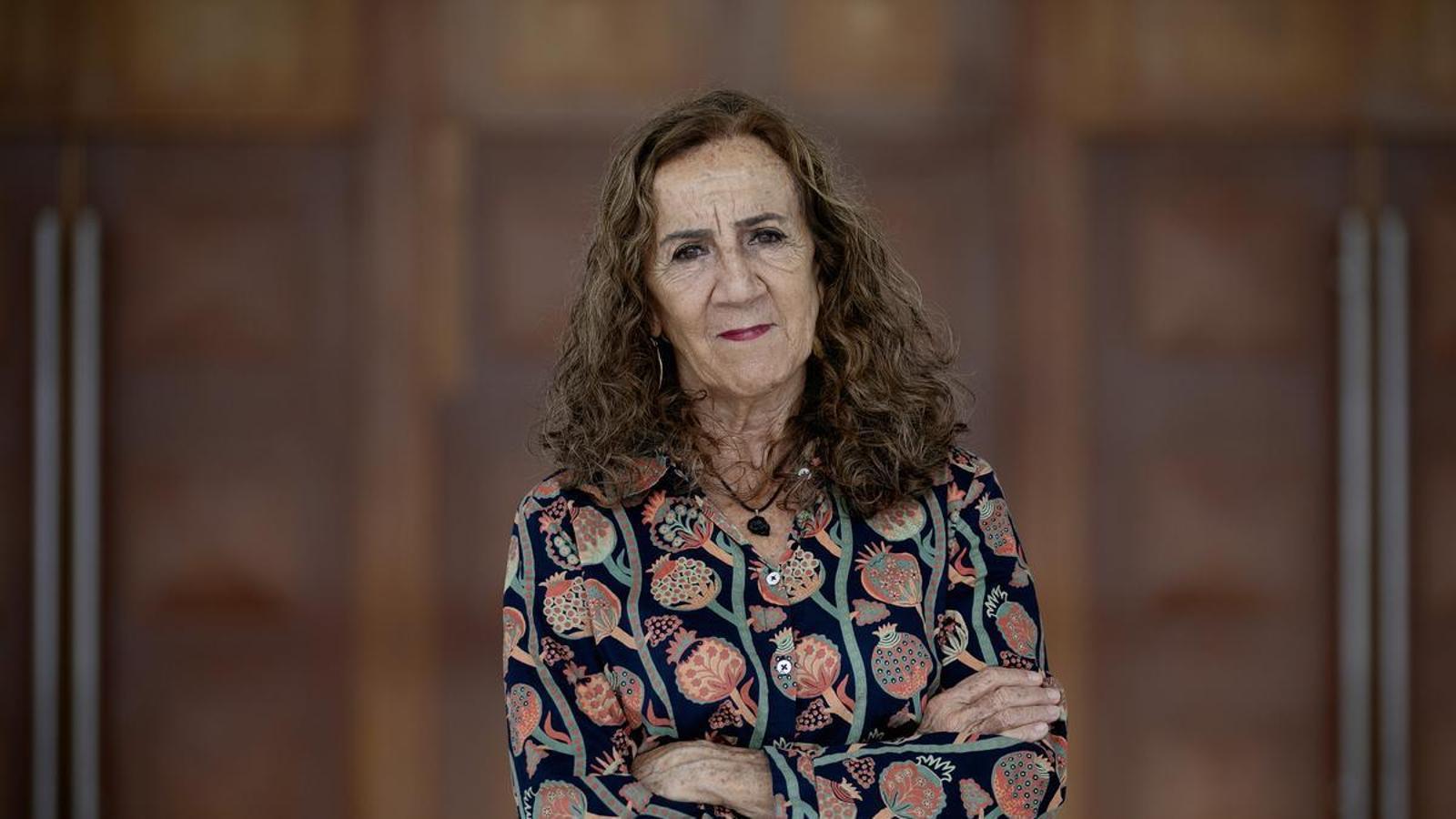
The photo on her mobile phone explains the adoration Carme Portaceli has for animals and, specifically, for dogs. Since her life without fixed schedules does not allow her to have one, she spoils those she has nearby like an adoptive aunt. I am interviewing her in the office at the National Theatre that she will leave at the end of this season, after six years. She has just arrived from one of the great milestones of her career, opening the season at the Comédie Française with a version of The Maids by Jean Genet, and soon she will begin rehearsing The Inn of the Three Camelias by Mercè Rodoreda, which she will bring to the Sala Gran next month.
You are the first woman to direct shows at the Teatre Lliure (and the only one in thirty years!), the first woman to direct the Teatro Español in Madrid...
— Since 1583. Until 2016.
...the first woman to have directed the TNC, who has invited the first Catalan female author to direct her own text in the Sala Gran, you are the first female director in the country to premiere at the Comédie Française. I wanted to congratulate you, but it is almost a reason to offer our condolences. How many times have you had to be the first?
— It surprises me, when you say it. I am not the first woman, I am the one who has resisted. I am a mule. But I do not believe it is a positive characteristic. For me, it has served to get where I have arrived, because I have been able to do what I dreamed of. But I claim that you do not have to be a fighting beast. It should be normal. I have opened many doors, but that does not mean they remain open.
Let's see if they will say that being a woman works in your favor!
— Lie. Parity must exist by law for it to be fulfilled, because we are 52% of the world's population. But the key is not just that there are women in a theater program, but that they are women who break with the patterns and clichés of sexism, hypersexualization, and the traditional role of women.
If you have to choose a war, is it against misogyny?
— Misogyny is nauseating, because it is hatred. And it doesn't just come from savages, it comes out everywhere. Comments like "Feminism has advanced too much". Too much! Is having rights too much? We women have had to fight to have dignity.
You were born during the Franco regime, as a woman, in Valencia, but in a Catalan-speaking family of liberal professionals. Is that what would later make you a left-wing artist in Barcelona?
— Without a doubt. My father was a man of the left and one of the best people I have ever known, of extraordinary kindness, even sometimes a bit of a fool, like me. Because there is a moment when pounding your fist on the table is fine, if you are capable of it, I have to work at it. My family sent me to study in London at 12 or 13 years old. They bought me freedom. There I see the possibility of another world.
And how do you manage to grow within Catalan theatre without female role models?
— You have what you learn in the theater and you have what your life brings you: the fact that we women have not been accepted, loved, or valued easily, and we have often been made invisible. This gives you the feeling that there are things more important than the ego. In life, I have made the effort to say: "Do not go there, Carme," without being authoritarian and without shouting.
I believe the feeling one gets about Carme Portaceli is that of a rebel, who is against many things.
— It is not true. It is they who are against me and read this. I am stubborn and that is all. It has often happened to me that without opening my mouth I already have men against me. But I have never been against men, only against some men that I do not like: the chauvinists, away. I have great friends and I have worked with a very masculine team for years.
If a work does not trigger, is it not worth it?
— The thing is that theater is political, and when it is not on one side, it is on the other. You can do entertainment theater, but if you sell a fun and amusing sexism, you are selling poison. I believe you have to be very clear about what you are explaining: I am a woman and I defend our rights and our place in the world. They will say that you are a militant or that you have a bad temper, I am already used to it. Don't pay any attention to it. It is very hard for people to believe and respect you.
Given the difficulty of pleasing everyone...
— You suffer like a donkey. You suffer a lot... until you no longer suffer. You have to take the focus off non-acceptance and try to function in another way. I have an advantage and a disadvantage: I owe nothing to anyone. Sometimes you would appreciate a surprise gift: never! I have already accepted that my life is sweeping and sweeping.
Has it been more uncomfortable or more tiring?
— It has been sad, sometimes. I do not feel the tiredness, which must not be very healthy: one day I will snap.
Have you ever felt like the enemy of the people?
— No. I have felt contempt at some point.
Not even when Andrea Levy kicked you out of the Teatro Español with the change to a conservative government, for example?
— They fired me over the phone: "On the 30th you have to quit," without any conversation. I asked that at least they send me an email. I suffered a little the first few days, when people came crying. But afterwards I accept it and it's over. That's just how I am.
I still remember that once you recited a passage from the Apocalypse to me...
— Ah, yes. "I wish you were either cold or hot, because I vomit the lukewarm". You cannot trust a lukewarm person, they are a potential traitor.
I always think that people who are so combative must afterwards have a place of great comfort or a refuge of peace. What is yours?
— For example, by rehearsing. By working, everything disappears. Theater is my life; without it, I would have no reason to get up every day. But that does not mean it is the most important thing: the most important thing is my people.
I thought you would tell me a beach!
— In the Empordà I go wild. I always say that I get dressed to return to Barcelona. You live with the dogs, the spiders, the frozen river, the mountain... it is extraordinary. Work absorbs you, but you must not let everyday life pass you by. You have to stop to look at what you have, look at who you have in front of you, and say: "What a wonderful life".
