Gastón Duprat i Mariano Cohn: "There's an epidemic of actors and directors clinging to noble causes they don't give a damn about."
Filmmakers premiere 'Homo argentum'

-
CAT -
CAST
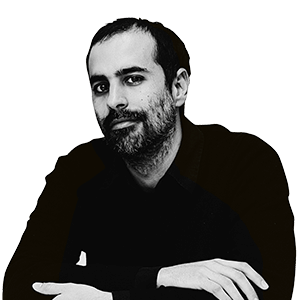
BarcelonaSixteen independent stories, the same lead actor, and plenty of meanness. These are the elements that shape Homo argentumThe Argentine film phenomenon, with nearly two million viewers, premieres this Thursday in our country. A portrait of the Argentine condition, directed by Mariano Cohn (Villa Ballester, Argentina, 1975) and Gastón Duprat (Bahía Blanca, Argentina, 1969), known for films such as The distinguished citizen and Official competition and for series like Fine arts
The episodic film format is very rare in contemporary cinema. What prompted you to make this type of film?
— Mariano CohnWe already have a series with Guillermo Francella, The person in chargeThe show, which is already in its fourth season and is very successful in Argentina, sparked the idea of making a film during a break in the series. The problem is that Guillermo's character in the show is so powerful... Eliseo, a building doorman, is a difficult role for any actor to top, and for us as well. Guillermo showed us Dino Risi's film. The monsterswith Ugo Tognazzi and Vittorio Gassman, and we thought it suited us. We came up with forty ideas, of which sixteen remained. Guillermo told us he loved it and asked us which episode he was interested in. And we answered that it was all of them.
Was the idea from the beginning to create a portrait of Argentina?
— MC: Yeah. The monsters It emerged during a time of intense debate and discussion in Italy. And this also applies to Argentina, where we're always in a state of debate and discussion. In fact, the film has generated a national debate since its release. So we made it for the cinema, for theatrical release. We demonstrated that an Argentine film could bring people back to the movies, a phenomenon that hadn't been seen since the pandemic.
It's significant that in the first short film, a character praises Argentinians as individuals, contrasting this with the failure of Argentina as a community. This character exposes his own irresponsibility and hypocrisy. Is this how Argentinians are perceived? This disillusioned view is very much present in the film.
— Gastón DupratWhat the character says is a common refrain. When the character talks about Argentinians, many viewers must have felt a connection. That's why the ending is such a shock. We wanted to open up the debate, to stir things up so everyone would reflect on it. We didn't want to say that everyone is like the character, but rather to break a taboo about something many Argentinians think.
— MCAnd it is, after all, satire. We want to play at questioning some topics that are untouchable in Argentine cinema.
The money changer is a con artist, the Italian family are opportunists, the director is a hypocrite, the bourgeois at the beginning is selfish... There is a rather misanthropic view of human beings.
— GDBut in those same episodes there are also warm and honest people. There's a balance. I don't see it as misanthropic, but I wouldn't mind if it were. There are misanthropic authors like Woody Allen who are fabulous. It's neither good nor bad in itself. But there's a trend, especially among critics, that calls for rescuing the humanism from the stories. I think that's fine, but let them do it.
The episode dedicated to the filmmaker reiterates the idea of cinema as a world of false appearances, which he already portrayed in Official competition.
— GDAll the worlds we portray, not just those of film, are worlds that are close to us and that we know. We have a certain authority to portray them. In some cases, we are part of them, and in others, it's through people we know. But these are not worlds we should try to fake.
— MCIn recent years, there's been an epidemic of actors and directors who go on stage to receive some award and use their three minutes to cling to noble causes, cry, and wave flags for causes they know nothing about and couldn't care less about. It's demagogic, egocentric, unbearable. And it's a in crescendo It's so pathetic it's almost laughable. And we wanted to highlight the behavior of these supposedly morally superior artists, these absolute liars. I don't do this when I go up to collect an award. I won't dedicate an award to penguins; I'd be mortified, because it's a subject that doesn't interest me, and I've never done anything for them.
During the last year and a half, the complaint I've heard most often from Argentine directors and actors is their concern for the film industry in their country, where The government has dismantled the system of production subsidiesDo you share this claim?
— GDFor almost ten years now, our chosen system for filmmaking has been to not wait for public funding. And fortunately, we've been able to focus our careers by partnering with production companies, co-producers, adding sponsors to our films, shooting with a large crew or with a mobile phone. We've never stopped making a film to wait for a grant. I'm not saying it's the only way, but it's ours, and it requires a great capacity for adapting to the times and the times, and a lot of risk—both artistic and financial.
But Homo argentum It's a comedy aimed at a popular audience, starring one of Argentina's highest-grossing actors. It doesn't seem like the most daring kind of film.
— GDYes, absolutely. It's a bold film because it's very complex and extremely expensive. And it needs audiences to try and recoup its enormous budget. It's not a film that wants to die in a museum where only a handful of people look at it, or that isn't relevant to the public. And there's also a risk regarding its content, even with Francella in it. The film has generated a national debate because of the issues it addresses. It doesn't have that deathly quality of unanimous critical acclaim. It's not solemn and it goes against the grain. That's why it's bold.
And regarding the state of Argentine cinema...
— GDThe state of Argentine cinema is catastrophic, and has been for much longer than two years. And this is what I point out as the hypocrisy of these directors, who started speaking out late and were silent before. The decline has been brewing for decades: nepotism, cronyism, corruption, backroom deals... Mariano and I have always denounced it, regardless of who was in power.
Now there is a president, Javier Milei, who has clearly positioned himself in favor ofHomo argentumwhich he praised because, in his words, "it exposes the lies of the culture wokeWas that his intention?
— GDWe've been creating this type of content since before the concept even existed. wokeEach of the two million viewers who have seen the film is free to have their own opinion. We can't be responsible for what they think, whether it's the president or a young messenger. One of the film's strengths is precisely that it's designed to generate debate and doesn't close off any avenues for the stories. That's why there are opposing viewpoints, which I think is fantastic. Let everyone have their own opinion. Milei said he liked it, but two days later we learned that President Cristina Kirchner, who is in prison for corruption, had asked to see the film. We've always been affected by politics, because the things we do shake things up. When we made The man next door We got a call from the government, which was Peronist at the time, ordering 500 DVDs to give away as institutional gifts, because they thought it was the best Argentine film of the year. Politics always tries to co-opt you, but we're clean, as they say, and we've never aligned ourselves with anyone.
