The best stop-motion animation film in history?
‘Wildwood’ premieres, the ambitious masterpiece by Travis Knight and the Laika studio
-
CAT -
CAST
BarcelonaJordi Sánchez-Navarro, researcher and professor of information and communication sciences at the UOC, is also director of the Anima’t section of the Sitges Festival, author of the book Tangible imagination. An essential history of animation cinema (UOC, 2020) and, needless to say, a great expert in animated film. That is why it is valuable that on October 15th, upon leaving the screening of Wildwood in Sitges and still overwhelmed, he affirmed that it was “surely” “the best animation film stop-motion of history”. And once seen, it is difficult to contradict Sánchez Navarro.
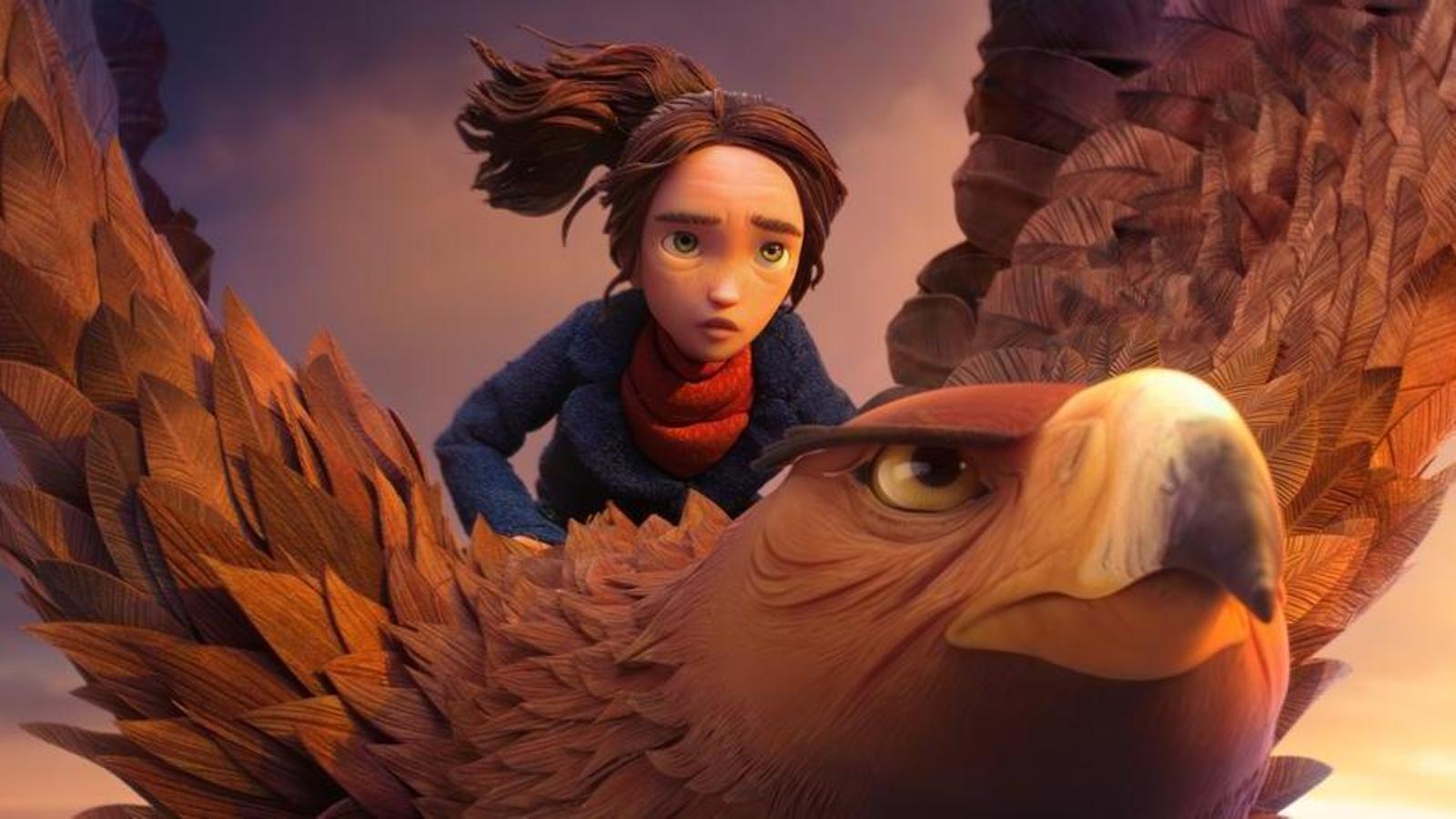
More than a movie, Wildwood, which arrives in cinemas this Friday, is a demonstration of the limitless potential of stop-motion animation and, therefore, a staunch defense of talent and imagination in times of artificial intelligence and prompts. It is also the culmination of one of the most fascinating anomalies of the cinema of this century, that of Laika, a young student who has made stop-motion its reason for being and which in just seventeen years has built a practically perfect filmography that escapes the laws of common sense and the market.
Wildwood brings to the cinema the eponymous heroic fantasy novel written by Colin Meloy, also known as a musician and leader of the American indie folk band The Decemberists. It stars a pre-teen from Portland who ventures into a mysterious forbidden forest on the outskirts of the city to rescue her brother, kidnapped by a flock of crows. A story with a young adult tone with notes of Tolkien, C.S. Lewis, and Miyazaki in which characters from the real world – Prue and her classmate Curtis, a nerd insecure but loyal– cross the threshold that separates them from a magical world of talking animals, bandits, and factions locked in a conflict rooted in loss and pain.
The film's plot is a safe space for fans of heroic fantasy without excesses of originality, but with inspired strokes of humor, well-drawn characters, and a sense of wonder that, at times, connects Wildwood with the great works of the Ghibli factory. The other obvious link to Ghibli is the love for craftsmanship and traditional animation, hand-drawn in the case of the Japanese studio and animated using figurines at Laika. But it is above all in this aspect that Wildwood dazzles the viewer with a spectacular nature and deployment of resources never before seen in stop-motion animation. "It's absurd," summarizes Guillem Ignasi (Palma, 1998) via video call, one of the animators who worked on the film. "The effort that has been made makes no sense from an economic point of view, but luckily there is a studio like Laika that bets on this type of project.
A talented 'nepo baby'
Laika's generosity has a catch: the company is owned by Phil Knight, co-founder of Nike and one of the 30 wealthiest people in the United States, with a fortune valued at 42 billion euros. Knight's interest in animation comes from his son Travis, a lover of traditional animation whom he placed at Will Vinton's stop-motion studio. In 2005, Knight bought the studio, rebranded it as Laika, and promoted his son to an executive at the company. It must be said that Travis Knight is a talented nepo baby: “Travis is an excellent animator; on Paranorman (2012) he won an Annie Award, the Oscars of animation, for the sequence in which the zombies come out of the graves, and he also animated the legendary scene of Wybie in Coraline (2009),” points out Ignasi.
Knight made the leap to directing with Kubo and the Two Strings (2016), a prodigious fantasy tale inspired by Japanese folklore that cannot be missing from a list of the best animated films of the 21st century. Wildwood is his second animated film as director and, at least on paper, it is a more complicated project, as it is Laika's most ambitious production and arrives just after their first major box office failure: Mr. Link (2019). According to Ignasi, however, the pressure was never transferred to the team: “Our feeling was that there was no budget. We had to achieve the level of quality that Travis wanted, whatever it cost. And that is a stroke of luck, but it has a negative side, because someone spends two months working on the design of a car and, suddenly, Travis changes his mind and says he wants it to be different and here we go again designing the car all over again.”
The great challenge in creating Wildwood was, in reality, that Travis Knight disappeared for a year from production to direct a film for another studio: He-Man and the Masters of the Universe, which was released just a few months ago. It was not the first time that Knight had left Laika to direct a Hollywood blockbuster; he already did so after Kubo to direct a spin-off of the Transformers, the charming Bumblebee (2018). “It was a bit chaotic –explains Ignasi regarding the impact of Knight’s absence–. Someone else from the studio came to replace Travis, but things weren't going well. He kept supervising everything from a distance, so we would send him the work and he didn't like many things. Over time, everything was fixed because the animation supervisor, the editor, and the director of photography coordinated to understand what Travis wanted”.
When Ignasi presented the screening of Wildwood at the Sitges Festival on behalf of the Laika team, he couldn't help but end his brief intervention with a furious “And screw artificial intelligence!”. “It seemed like a good place to say it, especially because one of the festival’s sponsors had previously shown a commercial made with AI –explains the animator, who stresses that he has nothing against digital animation–. At Laika, we use digital effects in some scenes, but it shouldn't be confused with AI. Behind digital animation, there is always someone who dedicates many hours of work and who makes many decisions”. Decisions, wise or not, such as not releasing Wildwood in a Catalan version in any cinema in Catalonia; that is what Beta Fiction Spain, the film's distributor, wanted.

