Cristina Genebat: "It's more rare to find a good plumber now than an actor."
Director, actress, and translator. Premiere of 'To the Limit of the Impossible' at the Library

-
CAT -
CAST
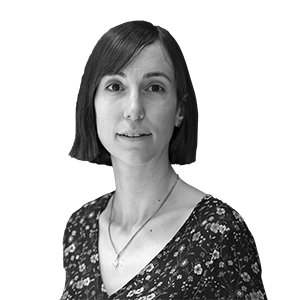
BarcelonaBehind and at the forefront of some of the shows that have defined the theatrical scene in recent decades is the name of Cristina Genebat (Barcelona, 1976). She has translated major productions such as Fires (2012) by Wajdi Mouawad and The Importance of Being Frank (2018) by Oscar Wilde, and has starred in successful productions such as The girls from Mossbank Road (2019) by Amelia Bullmore and The braid (2022) by Laetitia Colombani. Now Genebat embarks on a new path, that of stage direction, with To the extent that it is impossibleA show by Tiago Rodrigues that delves into the lives of various international aid workers. Starring Joan Amargós, Màrcia Cisteró, Andrew Tarbet, and Elena Tarrats, it will run at the Teatro la Biblioteca from February 27th to April 19th.
You have two professions, and both involve speaking. interpretationYou have a degree in dramatic arts and also in translation and interpreting. How did you combine these two vocations?
— It was a moment of stage fright. I started working very young, I did a couple of shows at Beckett, and when I was 25 I did a play at the Teatre Grec and I was terrified. I remember that feeling of going out in front of two thousand people and feeling dizzy. It's a very fragile career. You always have to please, you are the instrument, and there's a lot of exposure and dependence. So I started studying translation and interpreting.
What has this second job given you?
— Writing has brought me immense happiness, and having an alternative to acting has given me peace of mind. Being able to do something else that also makes me feel good and gives me a certain tranquility has allowed me to continue acting. I needed an alternative because, when you leave the Institut del Teatre, the emptiness is overwhelming. You feel incredibly responsible for the work you do. Everyone is different, and I need counterbalances in life to keep me grounded. It was a good choice.
Now you're embarking on another path, that of stage direction. How did you get there?
— I brought this text to Oriol Broggi and we immediately agreed to do it. I'd thought about directing many times before, but I always felt I had to find the right time, the right place, the right material. With To the extent that it is impossible I've felt the need to tell this story and for it to reach the audience. Tiago Rodrigues says that if he were a politician he would give answers, but as an artist he asks questions. The show has something of that.
What perspective does the show offer on humanitarian aid?
— One character says the world is changing, but very slowly, and all they're doing is plugging a leak with their bare hands, waiting for the plumber to come, knowing he'll be late, or maybe he won't come at all. The show is about accepting that what humanitarian workers do will have an effect on people's lives, but it won't change the world. I admire them deeply. I don't think I could do it because I don't have the strength to live with so many dramatic situations. But it's wonderful that there are people dedicated to helping, to restoring humanity to places where humanity has lost its way.
You say that artists ask questions, but the decision to do this show and not another has, in a way, a political component.
— It's a debate worthy of a whole book, but I don't have the answer. Obviously, there's a certain political dimension to this performance, but it's not a work that will tell you what's right and wrong. Philosophically and conceptually, everything is political. What I find most interesting about art is that the viewer doesn't leave feeling reassured, convinced they've been proven right. Culture serves to make us all better people. And, in the case of this performance, you might leave thinking about what we do with humanitarian aid, how we manage caregiving, how we're neglecting things that are truly important in favor of others that aren't…
You've been working for more than half your life. Are you at peace with the career choices you've made?
— I've been wrong about suffering, but I think it's more related to age than profession. Between 20 and 30, I suffered a lot, mainly because of this chasm of taking everything too seriously. I wanted a job, and if I didn't get one, it was a huge disappointment, and I'd be sad for a few days because of it. Then I gained perspective and realized that the most important things in life aren't about that. I'm a collection of experiences that have shaped my path, but I'm quite at peace now.
Has there been any project that has helped you put things into perspective?
— A very inspiring moment was meeting Wajdi Mouawad and translating FiresIt made me very happy and inspired me to write. So I wrote Holy NightIt was also important because it was a piece I wrote for my friends, based on my experience with my first childbirth. That's when I understood that Christmas is a way to celebrate and honor life and birth.
What's it like working with friends?
— Knowing how to choose your friends is really important, not just for theater, but in life in general. Ultimately, it's all about chemistry, and I get along really well with Marta Marco, Clara Segura, Nora Navas, Màrcia Cisteró, and Mireia Aixalà. We're all around the same age, and now we're getting together again like teenagers. We really want to talk about life from a different perspective. I think it has to do with hormones; perimenopause puts us in a place where we share how life is going, support each other—it's lovely. Working with friends, you can sometimes be a bit too familiar, but in the end, we have to be clear about everyone's role. Even if I don't agree with something, we'll do what the director says.
What do you think the profession has gained since you started until now?
— We've gained work. When I started, there were three series running with 20 actors. It's also happening that theater is doing very well now. There's something about the experience. People often watch movies at home. The act of going out has become quite the domain of theater. Now there are also many more people who dedicate themselves to it. It's not as strange or unusual as it was 25 years ago. Back then it was a more peculiar job; now it's more exotic to find a good plumber than an actor.
What has been lost?
— There's a lot of frustration, and that worries me. On Instagram, you constantly see what everyone else is doing that you're not. I remember how much I suffered without social media, and I think about how now, every day, everyone in your profession and your age is showing off what they're doing. This creates a lot of anxiety; we didn't experience that before. We didn't have everyone's projects right under our noses. This feeling of vertigo, combined with all that information, is very destabilizing. We've become slaves to something that doesn't make us feel good, and that has hurt our profession.
