"In Galicia there is a bus where the souls of the dead travel"
David Roas, writer, university professor and specialist in fantastic literature, publishes 'Territories', a collection of horror stories set in rural settings

-
CAT -
CAST
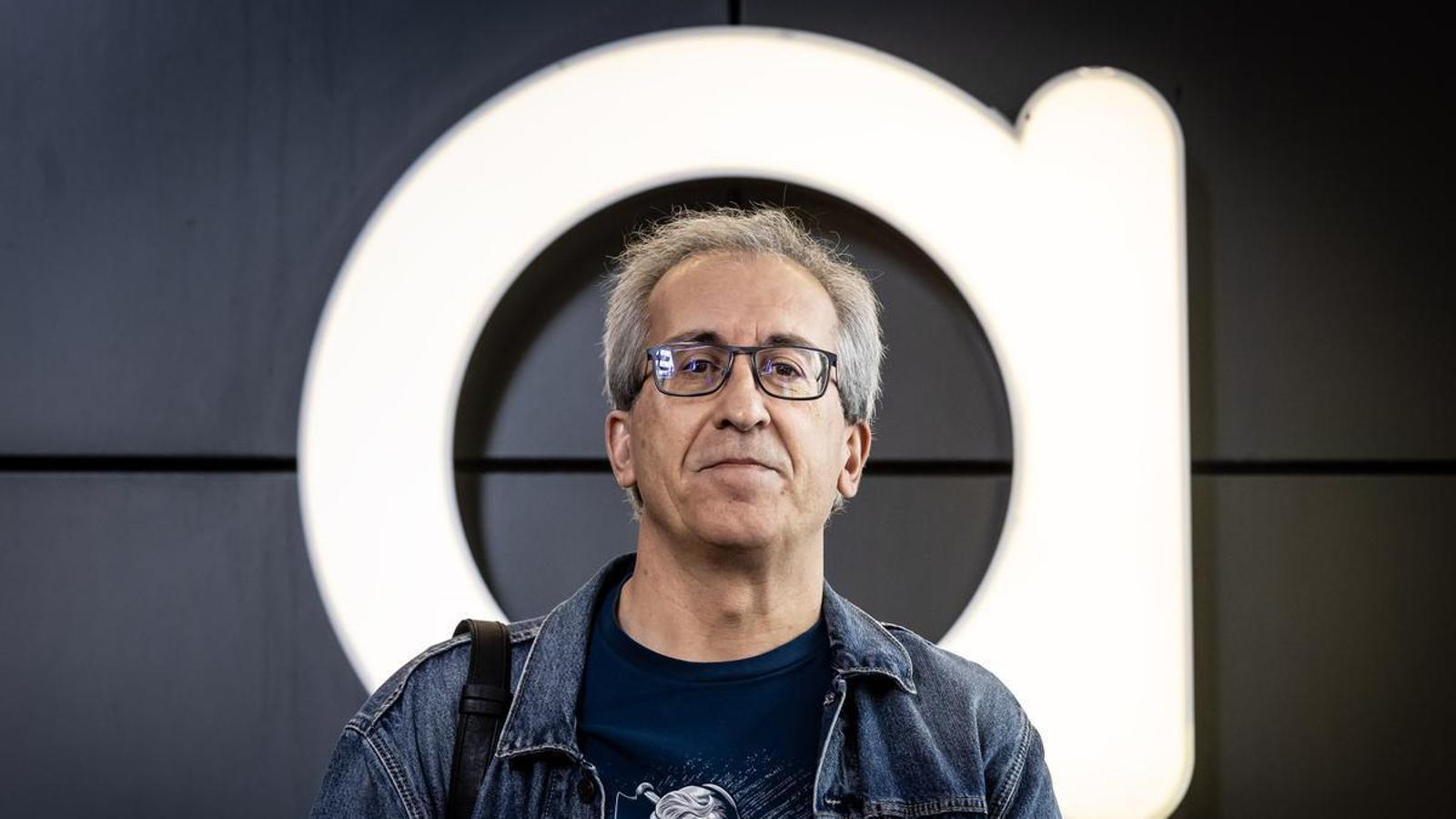
BarcelonaOne of the most peculiar rituals of rural Galicia is the one that ends at the sanctuary of Santo André de Teixido, located in the municipality of Cedeira, in the province of A Coruña. “To San Andrés de Teixido goes the dead who did not go alive,” says a well-known saying. "He who does not go in life goes when he is dead," recalls David Roas (Barcelona, 1965), professor of literary theory at the Autonomous University of Barcelona and author of a dozen books of fantastic stories – a genre to which he has also dedicated numerous studies – the latest of which is Territorios" (Páginas de Espuma, 2026).
The volume includes a story inspired by the sanctuary of Santo André de Teixido. "It has an autobiographical basis, because it starts from a request my mother made to me shortly before she died," he recalls. According to tradition, when you die, you must make one last pilgrimage to the sanctuary. The custom is to go accompanied by a family member and, often, by bus. "In Galicia there is a bus on which the souls of the dead travel – Roas continues–. It is the one that goes to Santo André de Teixido. When someone has died, you buy two tickets: one for you and the other for the soul of the deceased." The protagonist of
Rituales", David Roas's story, goes to the village accompanied by the soul of his dead mother, but he goes in his own car, and in addition to accompanying her to the cemetery, he eats an abundant portion of goose barnacles and overdoes it with the orujo. When he tries to return home, he realizes that his vehicle has been boxed in between two vans and he has to return to the village. At dawn, the protagonist ends up being the privileged witness of a procession of souls heading towards the sanctuary.
Welcome to agrohorror
"I won't tell you where reality ends and fiction begins," jokes the author, who in "Territorios" brings together seven stories that share the same approach to horror. "All the settings are rural, with characters who, in the midst of their daily lives, encounter situations that escape reality – he comments –. There is a literary and cinematic return to the exploration of rural life. Perhaps because I lived in Sentmenat for two decades, it seemed to me that I could make my contribution." Roas has coined the expression agrohorror" to define this subgenre to which, as he himself states, horror novels such as "Carcoma" by Layla Martínez (Amor de Madre, 2021); "Terres mortes" by Núria Bendicho Giró (Anagrama, 2021); "Fòrvid" by Elena Bartomeu" (Males Herbes, 2021), and in the more humorous-grotesque vein, also "Les feres" by Uriol Gilibets" (La Segona Perifèria, 2024) belong.
"The protagonists of my stories are not bumpkins, but people who have seen Quentin Tarantino's films, who read Stephen King and buy on Amazon – continues David Roas –. The approach to horror can come from the darkest and most brutal side, but also through laughter." Agrohorror explores the shadows of rural life with a gaze that moves away from the gothic genre and also from folk horror" focused on "isolated communities and sects." In one of the stories in "Territorios" titled La invasión de los ladrones de huertos", the author shows "the negative effects of excessively developing organic farming." In another, A matanza do porco", he focuses on a group of witches who gather around a sacred stone to perform a bloody ceremony. In La conjura de los recios", a tourist bored of driving through sunflower fields ends up in a village where the body of a saint rests, capable of resurrecting and feeding on the living.
