Mia Hansen-Love: "I feel there is a connection between Carla Simón's cinema and mine"
Filmmaker. D'A Award 2026

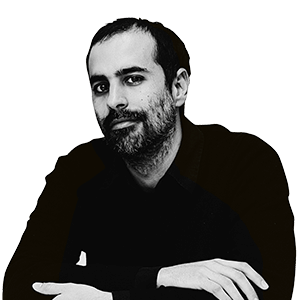
BarcelonaIn 2011, Catalan audiences discovered the cinema of Mia Hansen-Love at the first edition of the Festival de A, which presented the second film by the French director, Le père de mes enfants. Since then, both the festival and the filmmaker have grown in importance and are essential references for any cinephile. Therefore, the D'A award that Hansen-Love has received at this 15th edition of the festival is something of a mutual recognition and shared celebration. Cinema needs directors like Mia Hansen-Love, but it also needs festivals like D'A.
Her visit to Barcelona coincides with the premiere of a film by Pedro Almodóvar that questions the dangers of autofiction and the harm it can cause to the people it inspires. You often use your life and the lives of those around you to fuel your fictions. Do you have any rules or red lines to avoid harming the people you are inspired by?
— Yes, I do. There are red lines I will never cross regarding how to use facts or aspects of the lives of people around me. I haven't written any film to hurt anyone, but I'm aware that this is only my intention and that I might have unintentionally hurt someone. I believe the way I look at people in my films shouldn't hurt anyone, but it's true that someone can feel hurt simply by recognizing themselves in a character. It's a very complex issue. In my cinema, there are characters more or less inspired by people I know and who are important to me, but they have always been a starting point and have ended up becoming someone else. In the end, it's a process of transformation, and by transformation, I don't mean betrayal. In One Morning, Léa Seydoux plays a woman who, in many ways, is based on me, but when I see Léa on screen, I don't see myself; I see a new character who is the result of the encounter between Léa, myself, and more people who have inspired me.
And that is the objective it seeks, starting from reality?
— It sounds paradoxical, but yes. This process, the transformation of reality into fiction, is what I like most about making films. And I don't feel like I'm taking something and moving it elsewhere, I don't feel like I'm betraying the truth. It's almost the opposite: that to arrive at a truth through cinema and fiction, a transformative process is necessary. It's like giving freshness or a new life to a relationship or a person who is no longer there. By reinventing these characters, you bring a new presence. It's like a painter who portrays a landscape or some fruits: the appearance is similar, but they are different things. What we like about painting is that it makes us look at the landscape or people in a different way, with a new freshness in our perception. And I feel that my work as a director is to create this freshness, and that even characters who are inspired by people very close to me are transformed into someone different.
When she presented One Fine Morning in Cannes, Léa Seydoux said she was very grateful because, finally, she had been able to play "a normal person". I thought it was a nice compliment.
— I suppose Léa meant that, in this movie, she shouldn't do super dramatic scenes, and that it gives off a feeling of everyday life and simplicity that contrasts with the characters she usually plays, who are more sophisticated and eccentric, and surely further removed from her own world. Deep down, is the character normal? Or is it the world she inhabits that makes her seem different? The same character in an extremely dramatic world full of events and violence would not be the same. Even if we keep the plot, that of a character who feels a strange mourning for her sick father and falls in love with a married man.
It all depends on how the story is told.
— Yes, of the situations that interest you to show and those that don't. For me, the key is the simplicity of the character and the scenes, although the feelings are not necessarily simple. Simplicity doesn't mean there isn't a great complexity buried within. I'm currently working on the casting for a new film, and it's difficult to find actors who say things in a simple way, without the need to add anything to give more intensity or nuances, or things that, simply, when I feel them, don't quite fit me. In the end, those who speak directly and simply are the ones who convey the most truth. In fact, one of the things I liked most about working with Léa is that she can seem like she's not a professional actress, in the sense that she has a very raw and direct way of acting, and this is very unusual for an actress of her level.

It's been five years sinceOne morning. What can you tell us about the new film you are preparing?
— I'm going to get into trouble, because the producer just told me not to talk, but it's a period film set in the 17th century about the life of Mary Wollstonecraft. Do you know who she is?
Yes, the feminist writer and thinker, the mother of Mary Shelley.
— I've been trying to get this film off the ground for four years, and I think the pieces are finally falling into place. It's a very difficult project, because the scale is bigger than my previous films, even bigger than Eden. Oh, and it has Spanish production from Elastica Films.
It is the producer of the latest films by Carla Simón. Do you know her work?
— Yes, I really like Carla's cinema. I feel there is a connection between her cinema and mine. We met a couple of years ago through Elastica Films, which also distributed my films, and we have been in touch ever since. I don't know her very well, just a little, but I think we have a lot in common, especially in the way we approach cinema.
A curiosity. In Bergman Island, two secondary characters were film critics and to play one, you hired film critic Jordi Costa. He and the cartoonist Pep Brocal published in ARA a magnificent comic strip series recounting that experience, but I'm still intrigued as to why you chose a Catalan critic with whom you had no relationship.
— [Laughs] Are you jealous that I didn't ask you? No, when I choose someone to play a small role, I'm not looking for the most extraordinary performer, just faces, looks, and presences that I like and that seem natural for a scene, and this is a quality that doesn't necessarily have to do with acting. I am very used to working with non-professional actors. I had known Jordi before, I had interviewed him once or twice. I knew what he was like physically, I liked the sincerity and authenticity he exuded, he fit the character. It's a very instinctive decision, there's no strategy here. I didn't do it to please Catalan cinephiles! Only because I like Jordi and his naturalness, and he has a pleasant presence that I wanted to bring to the film.
If you were to tell the story of how the daughter of two philosophy professors ended up becoming one of the greatest filmmakers of her generation, what would be the first scene?
— If I try to really get to the roots of my relationship with cinema, what comes to mind is not being in the cinema watching an incredible film, but the summers in the mountains of Haute-Loire, in the south of France, where I spent my summers as a child. My grandmother had a farm we used to go to during the holidays, a remote and isolated place with very few people. And I think it was during those summers that my relationship with time, nature, and the invisible, with the beauty of the world, was born. Spending the holidays in a place that was boring in the best sense of the word, where there was nothing more to do than walk along the mountain paths and swim in the rivers, was an experience so different from my life in Paris that it structured me mentally and has been very defining in making me the director I am now. I can't tell you a specific scene, it's more of a context and an experience very connected with my cinema, also in the sense that this relationship with childhood and innocence is essential in my way of understanding cinema.
