Aliona Bolsova: "I don't want to be remembered as a rebel, I want to be remembered as a laughing person"
Tennis player

-
CAT -
CAST
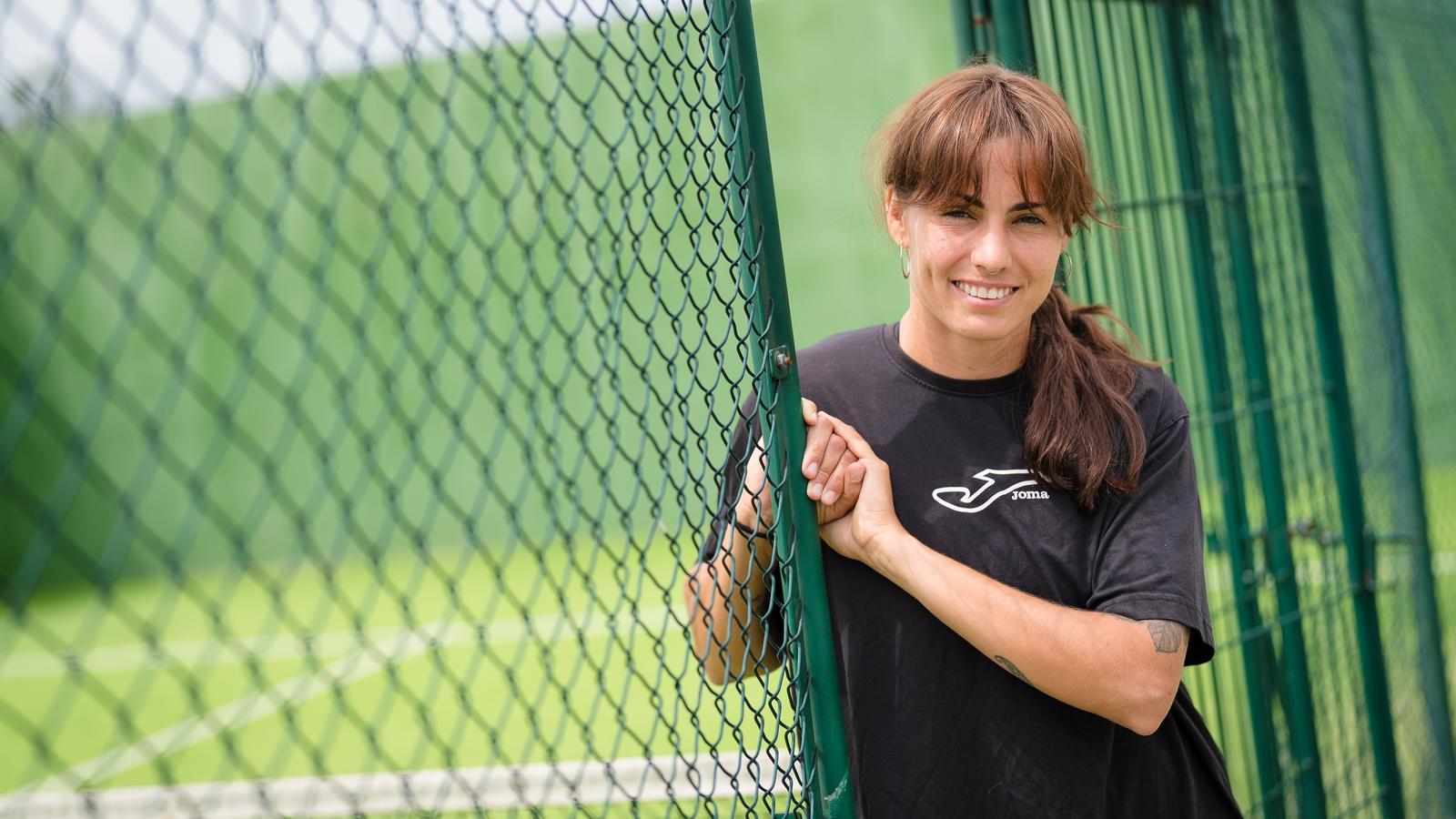
La Bisbal d'EmpordàIt was almost 11 o'clock at night on Wednesday when Aliona Bolsova Zadoinov (Chișinău, Moldova, 1997) played her last singles match as a professional tennis player. After having a set point to prolong her career a little longer, the Palafrugell player was eliminated in the second round of the Catalonia Solgironès Open in La Bisbal d'Empordà by her friend Marina Bassols in two sets. The next day, she receives ARA at the facilities of the club that organizes the best women's tennis tournament in the country. At 28 years old, she has decided that she does not want to continue competing. Here ends the career of one of the Catalan tennis players with the most personality.
What has it been like to wake up knowing that a new life is beginning?
— I'm not processing all the emotions yet. It's been a roller coaster. Yesterday, at one point in the game, I cried with emotion and a few points later I was like nothing happened. When I got home, I thought I had gotten over it. This morning I cried a little. I don't know, I think I'll need a few weeks to finish processing everything I've experienced these days.
Some athletes, when they retire, say they feel like they have to go through a kind of mourning, as their career ends and a part of what they have been dies. Do you agree?
— No. I don't think a part of me will die. I see it more as if tennis were a relationship. Like when you have a relationship with someone and one day you realize you don't share the same interests or aren't heading in the same direction. Like when in a relationship you love that person very much, but for some reason you are not at the same point and have to go your separate ways to avoid hurting each other. But that doesn't mean that person, and in this case tennis, will disappear from my life. Tennis has shaped me in many ways. It won't disappear. It's like re-signifying the place tennis occupied in my life. It will continue to be like my buddy with whom I might have a different kind of bond.
I don't know if you've thought about the role tennis will play in the future.
— We'll find it, this. I know that as a coach I won't lack work. In fact, I've already had some offers. I don't want to commit to anything. I need time to find myself. But in tennis I leave friends and contacts, and I suppose I won't lack work. Tennis will be part of my life, one way or another.
Once the decision was made that you were leaving, how has it been to continue competing?
— Curious. I had already made the decision in the summer. I waited until November, because I still had the goal of entering the Australian Open, and in the end I just scraped in. It was strange, as I knew I was retiring but still had a goal, so I didn't say anything so they wouldn't start nagging me. Once I said it, I had it on my shoulders and from then on it was very difficult to face day to day, to keep working hard. I wondered why I was suffering training if I already knew it was ending. It has been strange.
You decided that the last tournament would be in La Bisbal.
— Last year I was talking about it with Hugo, my coach. And I didn't know how I would last these months because what I didn't want was to come here and be useless. But I remembered how happy I have been playing this tournament to find the strength to train and say goodbye at home. And it has exceeded all my expectations, it has been beautiful. And even though I faced one of the favorites in the first round, Peyton Stearns. I was afraid of losing 6-0 and 6-0. When I won the first game, I could joke that I had already avoided it... And look, I won in a three-hour match. I was so tired in that match that in the tie break I even thought that perhaps it was better to lose and leave it at that. But I found the energy for a final triumph.

Everyone says about you that you have been a player with great personality, on and off the court.
— All tennis players have their own personality. Perhaps I attracted more attention for my hairstyles, my tattoos, or the fact that I didn't want to play in a skirt and wore trousers. Now I'm an adult and I have a more defined personality, before I was looking for myself. I spent many rebellious years. It was a way of looking for myself, of expressing yourself when you're young and you see things you don't like in tennis, such as sexist or very elitist attitudes. Some things made me lazy and I sought to rebel with my personality. But it's an era that's a bit behind now. More than as a rebel, I want to be remembered as a cheerful and loved person.
You are doing your history final degree project. It doesn't often happen to find athletes who study history.
— I am putting together counterculture and feminism in the years of the Transition, from 1975 to 1980, to see how these worlds dialogued. I am finishing two careers at the same time, the sporting one and this one. I was very lucky at 16 or 17 years old when I entered the CAR. I had a coach who opened my mind, who recommended readings to me. And I started living in Barcelona. I wouldn't live there now, as I'm not a city person, but back then it was very exciting to discover the city and its struggles. I had an LGTBI+ bookstore nearby where I could buy many books and learn. I need to understand, to have tools for critical analysis, I need to know how everything works. That's why I study history.
You have never been afraid to talk about what you felt. You have defended playing with pants, you have criticized what you don't like and you have spoken openly about mental health. Has any of this ever penalized you?
— When I made like the boomentering into the Top 100 I started to do more interviews. And I said everything I thought. And I started to be labeled in a certain way and I got pretty upset. So I stopped doing interviews and getting so involved. It's very hard to find the balance between sports, my job and being committed. And having values.
Sometimes the fact that you have a discourse has caused your sporting successes, which have been many, to be little talked about. Here we journalists have failed, but it is difficult to find athletes with a discourse like yours...
— It hasn't been easy, what I've achieved. Going with the national team, a good Roland Garros or coming back from injuries. These days when I remember everything I realize what I've done, that I've been strong, that I've won doubles titles and good individual results... and I've told myself "Aliona, you've done very well. You have to be happy". Could I have done more? Sure. But making a global assessment, I'm proud.
In tennis, you suffer and enjoy at the same time. In the same match or the same set...
— It's an emotional rollercoaster and I've worked on it with psychologists, doing therapy, because I carried a lot of trauma and insecurities. I've had very hard periods in my life and I didn't always manage pressure well when I competed. I've worked on it a lot. I've improved it and these are things that will serve me for my whole life.
When you were young you stopped for a few months due to pressure, and you suffered from bulimia. You have overcome it, you have explained it... can't your experience help other young athletes?
— There are people who tell me that I could make good use of it, that I could be a good coach or teacher. Who knows. I would like to contribute to local sports in Empordà or in Girona. I still have to explore how. But I want to give back the things I have received, to contribute. All these years I have dedicated myself exclusively to myself. So I will want to help the community for sure. In these years some girls used to approach me and tell me that they played in pants because I did. It's special to see that you reach a new generation.
How do you remember your best years competing in tournaments like Roland Garros?
— I was so tired that it was difficult to think about the future. You live it in a different way, and I had the bad luck that when I was competing at my best, one of my first coaches died of cancer. I always kept him in mind. Euphoria and tears were mixed.
Athletes seem like giants and people often don't know that you compete crying for the loss of someone or for problems like this.
— It annoys me when people cruelly judge what an athlete does. It's easy to give opinions and criticize, but nobody ever has all the information. I like commentators on television who choose the right words, who don't say the player is bad, who tell you how hard it is to handle the pressure. A thousand things can happen in each person's mind.
What does tennis leave you with?
— The bonds I have formed with people. The other day I was preparing a farewell letter and I realized that I have met many good people since I started playing at the age of six. And all the good people I have met over these years are still in my life. In life, you go through difficult times, but you also meet many people who help you, who add to your life... I'll hold onto that.
