They falsely accuse two Catalans of murdering an elderly woman in Burgos: "We will reach the end"
The two young people regret that profiles linked to the extreme right have used their faces with a clear racist intent
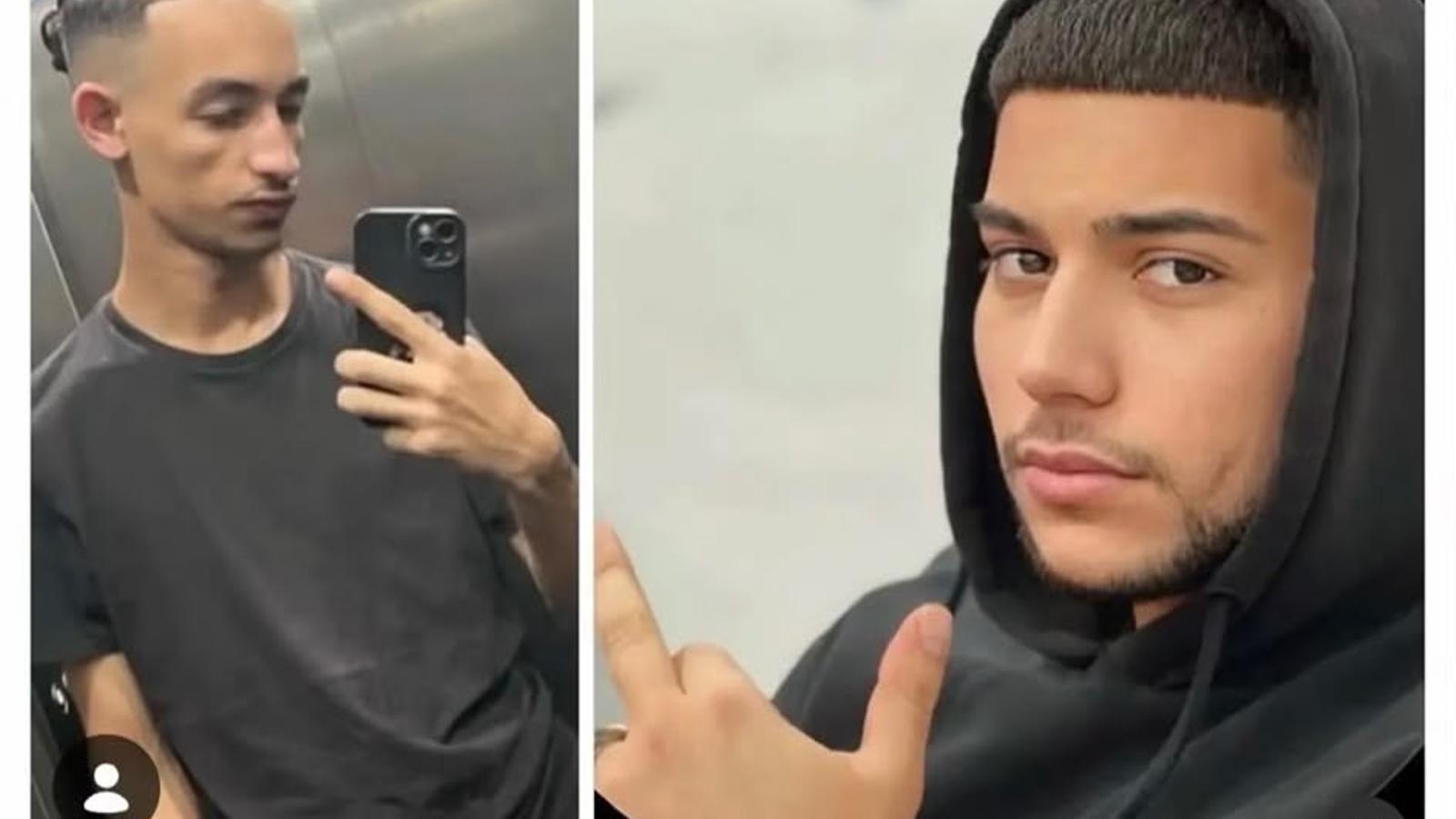

BarcelonaAhmed's suspicion is that someone searched for two fairly common Arab names on social media and they, unfortunately, were the ones chosen. "They wrote the name of a racialized person and I came up," he narrates. And Youssef's suspicion is that the day before he posted a video on TikTok that went quite viral and they took his photo from there. The result is a post with his image accompanied by two names that are not his own to accuse them of being murderers.
Ahmed was entering the Vall d'Hebron Hospital in Barcelona to visit a friend's mother, who was admitted, when a friend sent him a photograph with his face on it which stated that he and a person named Youssef – whom he did not know at all – were the two minors arrested for the murder of an 83-year-old woman in Burgos. "I thought my friend was playing a prank on me," recalls Ahmed, who is twenty years old and is a lifelong resident of Nou Barris in Barcelona. "But it wasn't a prank. They started sending me links and more links. I started going into news stories, seeing racist comments, seeing how they were insulting me, how they were threatening me with violence," he describes.
His photo appeared in pseudo-media outlets like El Imperial or Revuelta, multiple X accounts, some from fascist organizations like Núcleo Nacional – one of the first publications Ahmed saw – and in many forum threads like Forocoches. "Two despicable beings, for both deserve a good American History X in their fucking and rotten mouths"; I am the lady's son and I will not rest until I find those two fucking Moors and execute them"; "They deserve to be stoned in the town square". All these comments still appear on Forocoches and many accounts have now deleted these images. The reality is that Ahmed and Youssef have nothing to do with this crime and have been victims of a harsh campaign by far-right groups.
The first moment
Youssef, 19, a taxi driver, was taking a nap because he had started work early in the morning. He had his phone in airplane mode and no one could reach him, to the point that a neighbor knocked on his door to warn him about everything that was happening. The first thing he thought was, also, that it was a prank. Upon seeing that there were accounts, many of which were verified, spreading the news, he began to get stressed. "I just thought that I hadn't done anything and they would all pay for it," he recalls this Tuesday at noon, stopped on Via Augusta in Barcelona with his taxi, looking from side to side because he has the feeling that people are watching him, that someone thinks they recognize him. He explains that he has received support from his family, his friends, and his city, Manresa, where he was born and raised. His mother was also born in Catalonia. In fact, Youssef wonders what would happen if this had happened to an undocumented person, someone without the capacity to defend themselves, afraid to file a complaint, or a person without a network and without a support system.
"We won't let them get away with it, we will go all the way," warns Ahmed. He has already filed a complaint with the Mossos d'Esquadra, has contacted X to have these posts removed – the platform has not yet replied – and he already anticipates that they will file a joint lawsuit with Youssef in court. "We will report it no matter the cost," he concludes.
The day they murdered the woman in Burgos, he was having a drink with his friends, and now he still admits that he feels stress and anxiety, even though a few days have already passed. He spent days locked at home: "I was afraid to go out on the street, that they would beat me up," he explains. He studies social integration and works in an open soup kitchen, but Ahmed is a person who has not received what he tries to give to society: he has received racist comments for years from "fascists and Nazis" when he walked down the street.
The Government's reaction
This Tuesday is the first day that Ahmed and Youssef have met. Both are gathering information to file a lawsuit. "I am preparing everything with my sister, who is a lawyer, and with associations, to make the complaint as strong as possible," he states. "It gives you goosebumps," admitted the President of the Generalitat, Salvador Illa, about this case in statements to Catalunya Ràdio. The head of the executive has lamented that there are people who want to "criminalize groups" and has opted to regulate social networks. In a press conference, the Government spokesperson, Sílvia Paneque, gave her support to the two young men and also opted to regulate the networks: "It is a very serious situation. This is not freedom of expression, it is of extreme gravity," she stated.
In this sense, Karlos Castilla, a researcher at the Human Rights Institute of Catalonia and a professor at the UPF, laments in statements to ARA the ease of publishing openly xenophobic content without any accountability, a fact that deepens "stereotypes and prejudices" that are increasingly present in society and that, he opines, are sometimes even followed by the police themselves. Castilla advocates for filing criminal charges for the crime of slander, with the aggravating factor of discrimination and hate, since the hate crime on its own, he admits, is difficult to apply. He believes there must be an exemplary conviction to discourage these practices.
