The track was already broken before the accident: the main hypothesis for the Adamuz derailment
The researchers suggest that car 6 of the Iryo overturned due to "a complete loss of rolling continuity"

-
CAT -
CAST
Barcelona / MadridThe Railway Accident Investigation Commission (CIAF)The Spanish Railways Authority (AER) issued its first report on Friday regarding the cause of the train accident in Adamuz (Córdoba), based on rail and tread samples. The tread is the outer surface of the train wheel in direct contact with the track. The document suggests that the leading hypothesis is that the left rail of the track broke before the Iryo train passed. "Car 6 derailed due to a complete loss of track continuity," it states. The condition of the railway tracks on this section of the high-speed line in Córdoba has been a focus of the authorities' investigation almost from the outset. At the site of the accident, where an Iryo train car overturned and collided with an Alvia train traveling in the opposite direction, causing 45 fatalities, a broken section of track was identified, as well as damage to the undercarriage of some train cars. marks were detected which could correspond to a defect in the rails, as the Spanish government had explained.
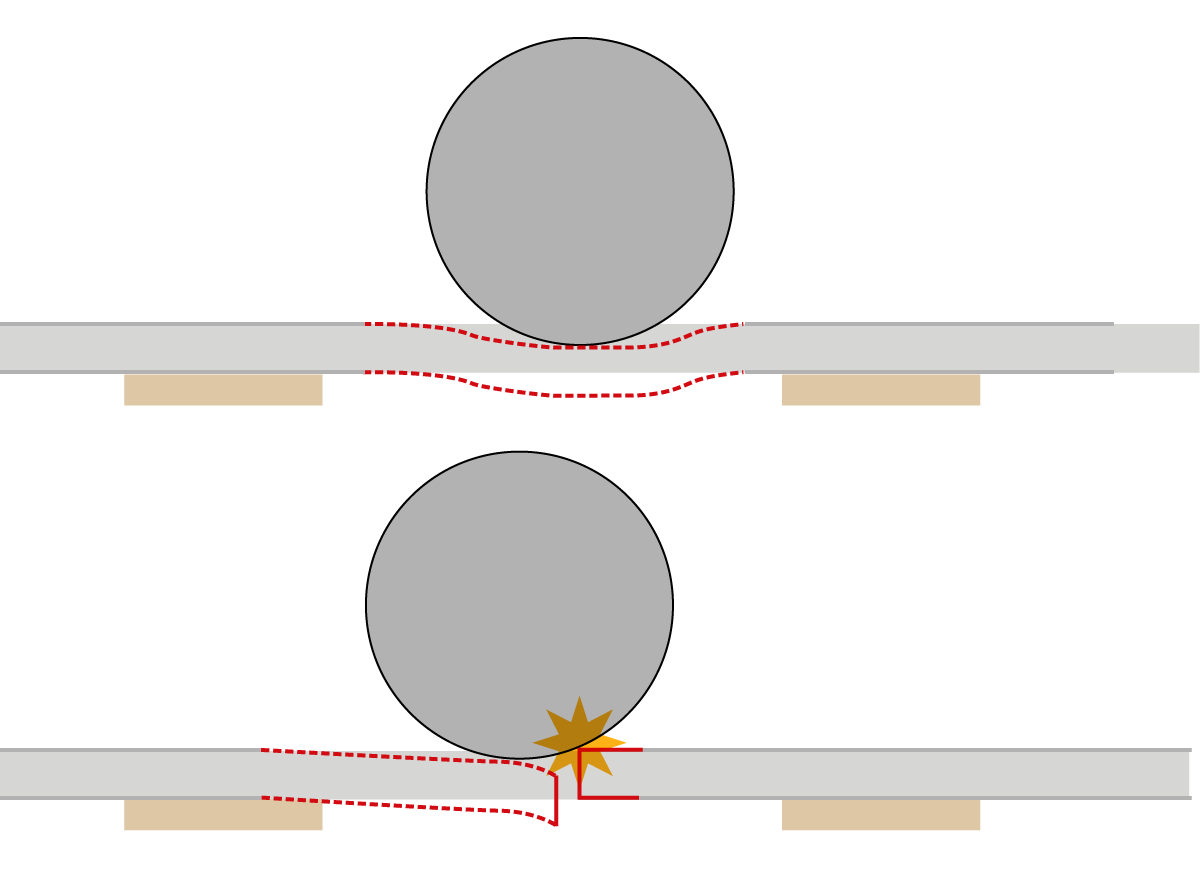
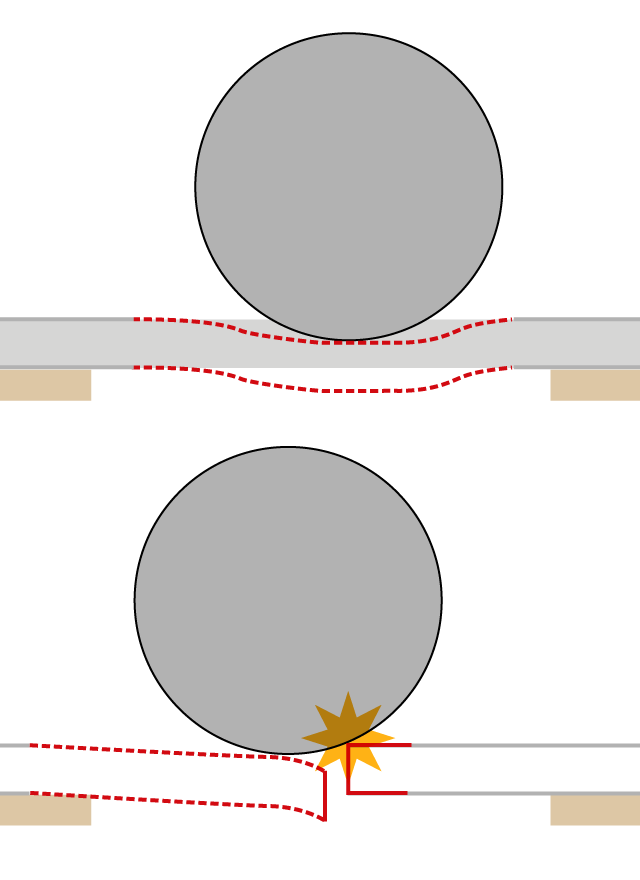
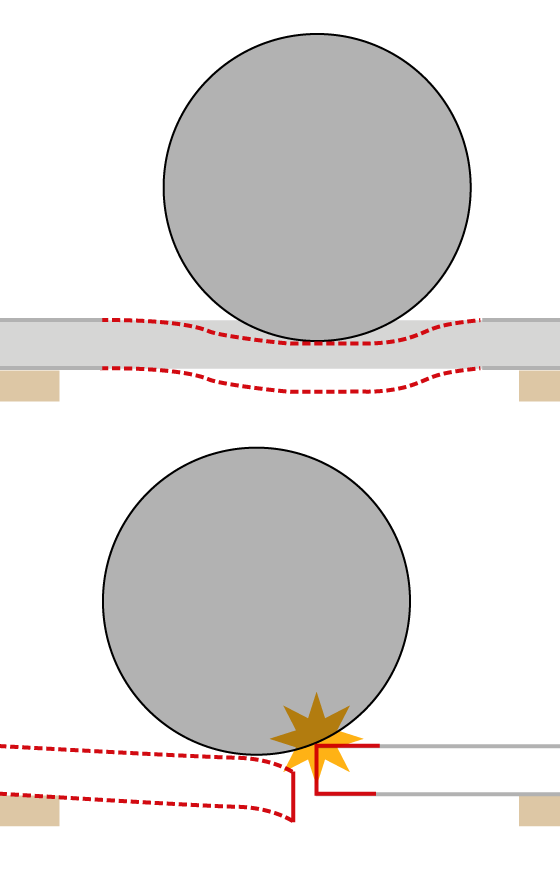
Now, according to the six-page document published this Friday by the CIAF, the marks found on the wheels and the rail deformation are consistent with the rail being fractured before the Iryo train passed over it, a possibility that had already been raised. "The visual comparison between the wheel marks and the section of broken rail at the derailment's ground zero yields presumably consistent results," the agency reports.

The CIAF investigation maintains that the track fracture caused a slight dip in the rail under the weight of the wheels, as if there were a small step in the track, which would explain the marks found on cars 2, 3, 4, and 5 of the train. "Since the section of rail behind the break was no longer acting in unison with the section in front, a step must have momentarily formed between the two sides of the fracture, which would have struck the wheel rim," the report states. In other words, since the rear section of rail was no longer joined, a small step formed between the two sections, causing the wheel to hit the edge of the rail, resulting in marks on several train cars. In fact, the CIAF highlights that these marks are uniformly present on cars 2, 3, and 4, and that they coincide with the section of the broken rail in the area where the derailment began. Laboratory confirmation is still pending.
Investigators have also found similar marks on three other trains that had previously passed through the same spot: one Renfe train (at 7:09 p.m.) and two Iryo trains (at 7:01 p.m. and 5:21 p.m.). This reinforces the hypothesis that the rail fracture occurred before the train involved in the accident passed. However, the commission emphasizes that this is still a provisional hypothesis, which will need to be confirmed with more detailed technical analysis. The report also notes that the marks on car 5 show a different pattern, consistent with an impact in an area where the rail is not continuous, and that this could explain why car 6 was the first to derail. In the coming weeks, the wheels and the rail will be sent to a metallographic laboratory to determine the exact causes of the break, on which there are currently no conclusions. The black boxes of both trains involved will also be analyzed. Once the analyses are completed, new lines of investigation can be opened. The Córdoba Prosecutor's Office has requested that Court Number 2 in Montoro (Córdoba), which is handling the investigation into the train accident in Adamuz, not declare the preliminary proceedings of the railway accident secret.

Transport Minister Óscar Puente believes that having the provisional hypothesis that Sunday's train accident could have been caused by a track break "before or during" the Iryo crossing is unprecedented – "never" has such a rapid report been produced – and offers "some reassurance" regarding his own. "[The initial findings] shed light on the theory that the experts consider most plausible," despite not being definitive, he said. Puente also stated that railway track breaks are "recurring" in Europe, and in fact, the European Railway Agency (ERA) receives around three thousand such reports each year, although most are not serious. In this regard, he said that these breaks do not occur because there are no safety and control systems, but because "errors can sometimes happen." "Perhaps the conclusion when this is over is that other types of controls need to be implemented," the minister admitted.
Controversy over emergencies
In recent hours, controversy has arisen regarding the warning from the administration's control center and the arrival of emergency services on the day of the accident, which has led the Spanish government to publish a document with detailed facts to defend the actions of the security and health forces.
In this regard, Transport confirms that the train collision occurred at 7:45 p.m., and that at 7:50 p.m. Adif requested the mobilization of emergency teams: Civil Protection, health services, firefighters, police, and Adif maintenance and security personnel, among others. It also reports that the first Civil Guard patrol arrived at 8:00 p.m., confirming the incident at the Iryo train. "When they arrived, the first train they collided with was the Iryo, which had seriously injured and fatal passengers, and it's understandable that their first attention was focused on that train," Puente added.
It wasn't until 8:15 p.m. that the track where the Alvia train was located—more than 600 meters away—was inspected, and more resources were requested given the magnitude of the tragedy: there was an Alvia train involved in an accident, with carriages that had fallen down an embankment. Puente emphasized that this second train "was more difficult to locate because it was in the dark, 500 or 600 meters down the track." The first medical team arrived at 8:30 p.m.
Interior Minister Fernando Grande-Marlaska defended the response of the Civil Guard and emergency services to the train accident, stating it was "quite reasonable" and that the alert about the second train involved in the accident was "immediate." Meanwhile, the president of Adif, Pedro Marco de la Peña, asserted this Friday that if the investigation into the accident reveals any responsibility on his part, "by action or omission," he will resign.
