What is the Shamonda virus, which has caused the death of a man in France?
The French authorities confirm the contagion in a patient with serious illnesses and experts rule out that there is a health risk for the population

-
CAT -
CAST
BarcelonaFrench health authorities confirmed this Thursday the death of a man infected with the Shamonda virus, a pathogen transmitted mainly by mosquitoes to cattle, sheep, and goats, which until now was considered to have a low infection capacity in humans. In fact, this is the first documented and reported detection of this emerging disease in humans.
The man, who died in early October, was admitted to a hospital in Lyon and was immunosuppressed due to serious illnesses, which made his body more susceptible to any pathogen than that of the general population. French authorities have not provided details of his identity, such as his age or the pathologies he suffered from, nor how he might have contracted the infection.
The initial hypothesis is that he could have been bitten by an insect of the genus Culicoides –of the same order as mosquitoes– in eastern France, where months ago a high circulation of the virus was detected in animals during the spring and summer of 2026. The French government has stated that everything points to the fact that the cerebral complications the patient suffered before dying were likely related to the virus.
According to a joint statement from the French ministries of Health and Agriculture, clinical, biological, and epidemiological investigations have already begun to study the case, which they consider "exceptional," as it occurred in a patient with a severely weakened immune system. In these situations, it is possible for pathogens that are not usually considered infectious to humans to manage to invade the organism.
France has already notified the positive case to international health bodies, that is, to the World Health Organization (WHO) and the European Centre for Disease Prevention and Control (ECDC). The European agency has issued a statement in which it assures that it is "closely monitoring the situation" with the European Commission and the European Food Safety Authority to investigate the possible implications of this first human infection for public health.
An insect, the main hypothesis
This Frenchman's case is the first identified instance of the Shamonda virus in humans, although it is known that other viruses in the same group can make this species jump. It belongs to the Orthobunyavirus genus and was first detected in Nigeria in the mid-sixties. The name comes from the town where the laboratory in which it was first isolated was located.
The main hosts of this pathogen are ruminants, although it is transmitted through Culicoides insects, the same ones that spread other animal diseases, such as bluetongue. In Europe, these insects are generally most active from spring to autumn, although seasonal patterns vary depending on the species, location, and weather conditions. With the drop in temperatures, the activity of most Culicoides species is decreasing in Europe.
To date, sporadic cases had been reported in animals in various regions of Africa and Japan, although this summer a variant was also detected for the first time in Central Europe, called Shamonda-Europe; specifically, in Switzerland, at the end of July, and mainly in livestock. "The human infection occurred after the first detection of the Shamonda virus in European farm animals, during the summer of 2026. In animals, the first clinical signs were reported in June and the virus was identified at the end of July. Since then, it has been detected in farm animals in Austria, Belgium, France, Germany, Ireland, Italy, Liechtenstein, Luxembourg, the Netherlands, Portugal, Spain, and Switzerland, as well as on the island of Jersey," the ECDC detailed.
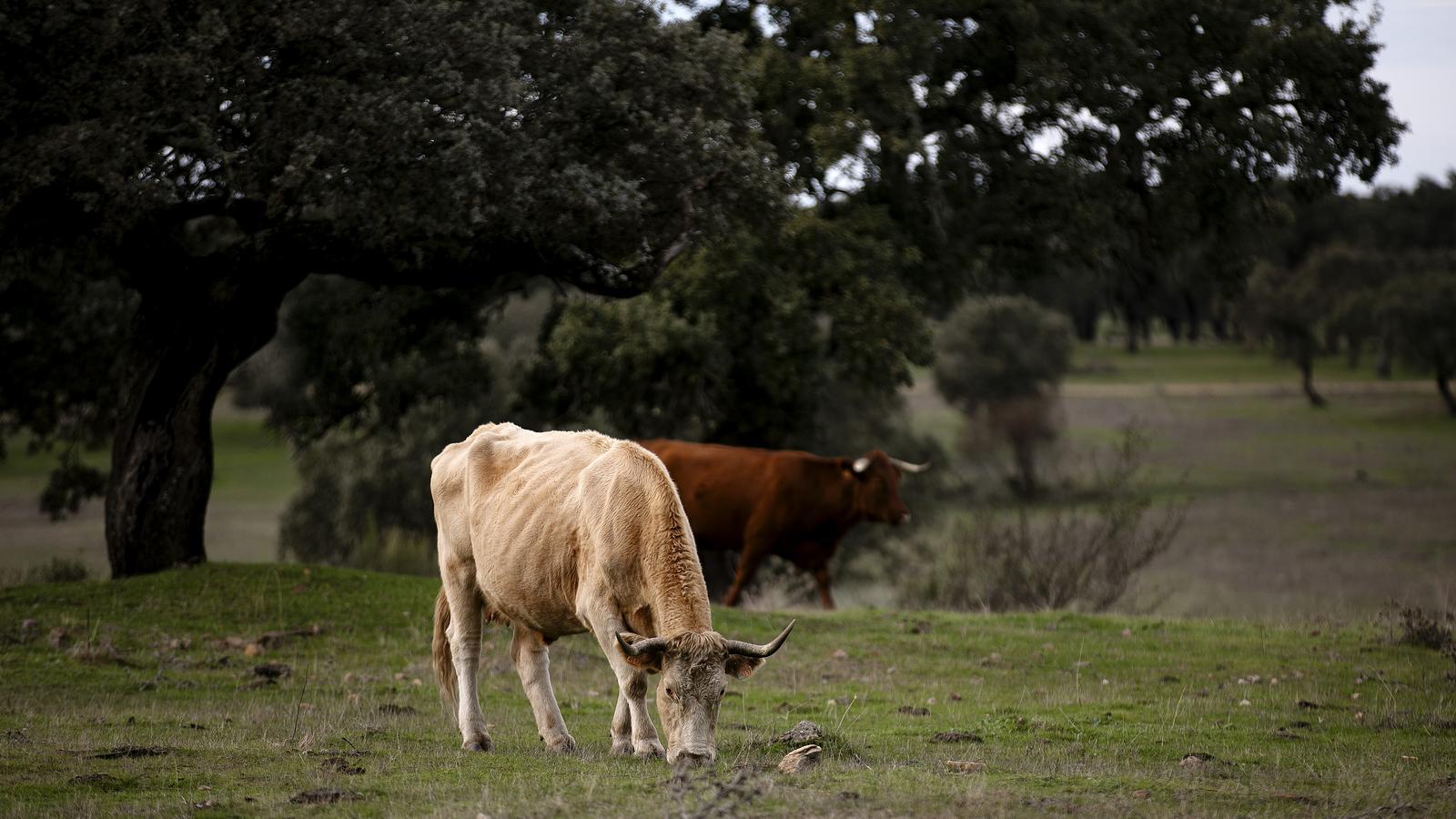
In Spain, the Ministry of Agriculture, Fisheries and Food has assured that they are "on alert" and in "permanent" contact with France, regional governments, and health authorities regarding the incidence of the Shamonda virus in some cattle farms, but has called for "calm" because the disease is being monitored. Currently, there are confirmed outbreaks in animals in Girona (with three farms affected), Córdoba, Toledo, Cantabria, Madrid, and Ávila, but always among animals. The Shamonda virus –which is not a notifiable disease– does not cause the animal's death, but it does cause fever and diarrhea and impacts milk production, which decreases.
"Highly unlikely" in humans
At the moment, there is no evidence that the virus has the capacity to be transmitted between human beings, which is why daily contact between people does not represent, with the information available, an effective channel of propagation. The specialist in microbiology and parasitology at the Germans Trias Hospital and spokesperson for the Spanish Society of Infectious Diseases and Clinical Microbiology (SEIMC), Gema Fernández Rivas, considers it "highly unlikely" that there will be infections in humans in Spain, although she clarifies that "zero risk does not exist".
"The news highlights the importance of epidemiological controls and veterinary health, but for the ordinary citizen the health risk is practically zero", she says. In the event that a human infection were to occur in the State –where she points out that cases have already been detected in animals–, the expert details that the epidemiological pattern and the type of patient would be "the same" as in the French case.
Also the group leader and senior lecturer at the MRC-University of Glasgow Centre for Virus Research, Ben Brennan, states that it is "an important scientific finding", since it is the first documented case of human infection by the Shamonda virus. However, in statements to SMC UK, he asks for everything to be put into perspective: the patient suffered from a serious underlying disease that made him especially vulnerable to infections, and this does not imply that it poses a significant risk to people who enjoy good health. "Currently, there is no evidence that Shamonda causes widespread disease in humans, although more research is needed to understand its ability to infect people", he admits.
According to Fernández Rivas, for a pathogen to cause an epidemic or a pandemic, as happened with SARS-CoV-2 and covid-19, it must meet very specific biological requirements that this virus does not possess. "Despite having infected a human, the amount of virus in the patient's blood is insufficient to be able to infect another mosquito that bites other people", she suggests.
The microbiologist points out, however, that the generalized increase in global temperatures and alterations in rainfall facilitate the expansion of the Culicoides mosquito towards more northern latitudes. "Although the species barrier is strong against humans, a high level of virus circulating in insect populations increases the probability that highly vulnerable or immunocompromised individuals come into contact with it", she warns.
On the other hand, Fernández Rivas highlights that the rapid sequencing of the European lineage (SHAV-Europe) on farms during the summer months facilitated the ability of reference laboratories and public institutions to trace the origin of the pathogen when the suspicion of infection was detected in a sample from the deceased French man.
