Virginia Cierco: "Google Translate is overheating in our library"
Director of the San Pablo Library - Santa Cruz

-
CAT -
CAST
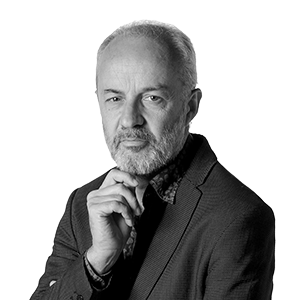
BarcelonaVirginia Cierco has been managing the San Pablo - Santa Cruz Library in the heart of Barcelona's Raval district for three years. She began her internship at a high school on Meridiana Avenue, where the library was a rather dreary room. Now she dreams of expanding the facility, located next to the Library of Catalonia, and approaches each day with passion.
What is it about Raval that attracts him so much?
— I carry the Raval in my heart. Working here is so much fun. I was born in the Gothic Quarter, and I used to come to this library as a child.
Where does your vocation come from?
— My mother used to clean, and when the city council outsourced cleaning services, they put her in a library. She'd tell me, "Live life, you're destined to work in libraries." And of course, what does a teenager do? The opposite of what their parents tell them. I started other things. All sorts of things. But in the end, I ended up studying to be a librarian.
What is the secret to a good library?
— Think about the readers, about those who need it. Carry out activities, actions. Promote reading, information, and education.
Reading comprehension continues to decline, while book sales, especially children's and young adult books, continue to rise.
— Neuroeducation says that we only learn through emotion. Storytelling should be fun. We can create readers without strong literacy skills. Libraries should be the fun part of reading. That said, the lack of libraries and librarians in schools and colleges is a tragedy. In the Raval neighborhood, there's a school that, lacking a library, has filled its hallways with books.
Are your parents selling you out?
— Yes, but we want many more to come. We work with many organizations in the Raval neighborhood. The important thing is that they say, "Ah! They can help me here." That they see it as a free and welcoming space where they can access information. Many people who live on the streets see it as a safe place: they come to charge their phones and read. We also have people with mental health issues or who are experiencing unwanted loneliness. And, of course, people who don't have those problems.
Have you noticed the announcement about the regularization of immigrants?
— Yes, we have noticed an increase in requests for certificates, the document that proves the date you got your library card.
JYou make a lot of ID cards for newcomers, right?
— We have a tradition of welcoming new users: they come from all over the metropolitan area to get a library card. In 2023 we issued 3,005 new cards, in 2024 it was 3,405, and last year, 5,533. The average across the 41 libraries in the network is 1,560 new cards. Why do they come here? For community outreach services like family reunification, Catalan and Spanish literacy groups, or our work with third-sector organizations. And above all, through word of mouth.
Do you go out to find readers?
— Of course! We do more activities outside the library than inside. In schools, community centers, in the gardens outside, we have parties, we have an open mic Poetry Day where a woman comes up to read poetry in Urdu, some kids come up to sing a rap and then Juanito does flamenco.
Do Muslim women come?
— Normally, before they come, we first go to the Raval Women's Center to ask what they need. They want to share stories from their oral tradition to read to their children later. They come in the mornings when we're closed to the general public, so they feel safer. It's a first step.
Will the library be expanded?
— We hope the project will finally get moving again. We're the only district in Barcelona without a district library. Bonnemaison handles those functions. We don't even have an auditorium right now. The neighborhood has many top-notch cultural facilities, but few that are easily accessible.
How many languages does it work with?
— In the 1990s, following the first waves of migration from Morocco, Arabic was adopted as the language of instruction, and we have maintained it, although now the approach is more intercultural, with many languages in different alphabets. But Catalan is our working language. Google Translate is working overtime.
Are mobile phones a problem?
— We are starting to worry about screen time in children aged 0 to 3. It's a complex issue, linked to the burnout of those who care for children.
What is your ideal library?
— This one, when it's expanded. Good: the one that has the same kind of people inside as you find on the street. A library for everyone who lives in the neighborhood.
How is a love of reading contagious?
— Don't you like to read? Just wait, you'll see you do. The goal is that when they leave, they realize they had a good time, even if it's with books that have little text and lots of illustrations. Read-aloud clubs are also a great option.
And what about the culture of hard work?
— Perhaps we've idealized a past that's far from ideal. The fact that few people enjoy reading isn't a recent phenomenon. The difference will have been more noticeable in wealthier neighborhoods, where there used to be more readers, but where their numbers have now declined due to new technologies and changes in lifestyle.
Are you afraid of the xenophobic political shift?
— More than fear, we feel that we must work very hard on the idea of diversity and human rights as a pillar of our library.
