Puente's resignation does not fix everything

-
CAT -
CAST
MadridThis time, polling experts are more cautious than in 2023, but the majority opinion is that for now the PP and Vox can maintain hope for a victory wide enough to govern on the upcoming November 29th. Even so, the voices of the left do not falter and are intensely looking for a foothold. They do so with the usual arguments, such as Pedro Sánchez's capacity for resistance and survival, but above all with the idea that Spain cannot have changed so much and that the center-left sensibility continues to be the majority. They are aware, in any case, that this time it will not be enough to rely on the increase in pensions and the minimum wage as the central appeal for the vote. We are living through a pre-campaign marked by tragedies and at the same time accompanied by outbursts and flashes. Everything happens at hypersonic speed, and almost every day the main focus of attention shifts.
The electoral call and the pre-campaign came about following the eviction of Maricarmen Abascal, taken by stretcher that same September 23rd to the hospital, where she died a few days later, on October 7th. There was a strong social reaction, while the two decrees drawn up to try to alleviate the effects of the lack of a determined policy on the right to housing continued to have no chance of being approved in Congress. The problem continues to exist. But the aforementioned focus of attention has been changing dizzyingly, especially due to the Urda train accident.
Conversation between Sánchez and Puente
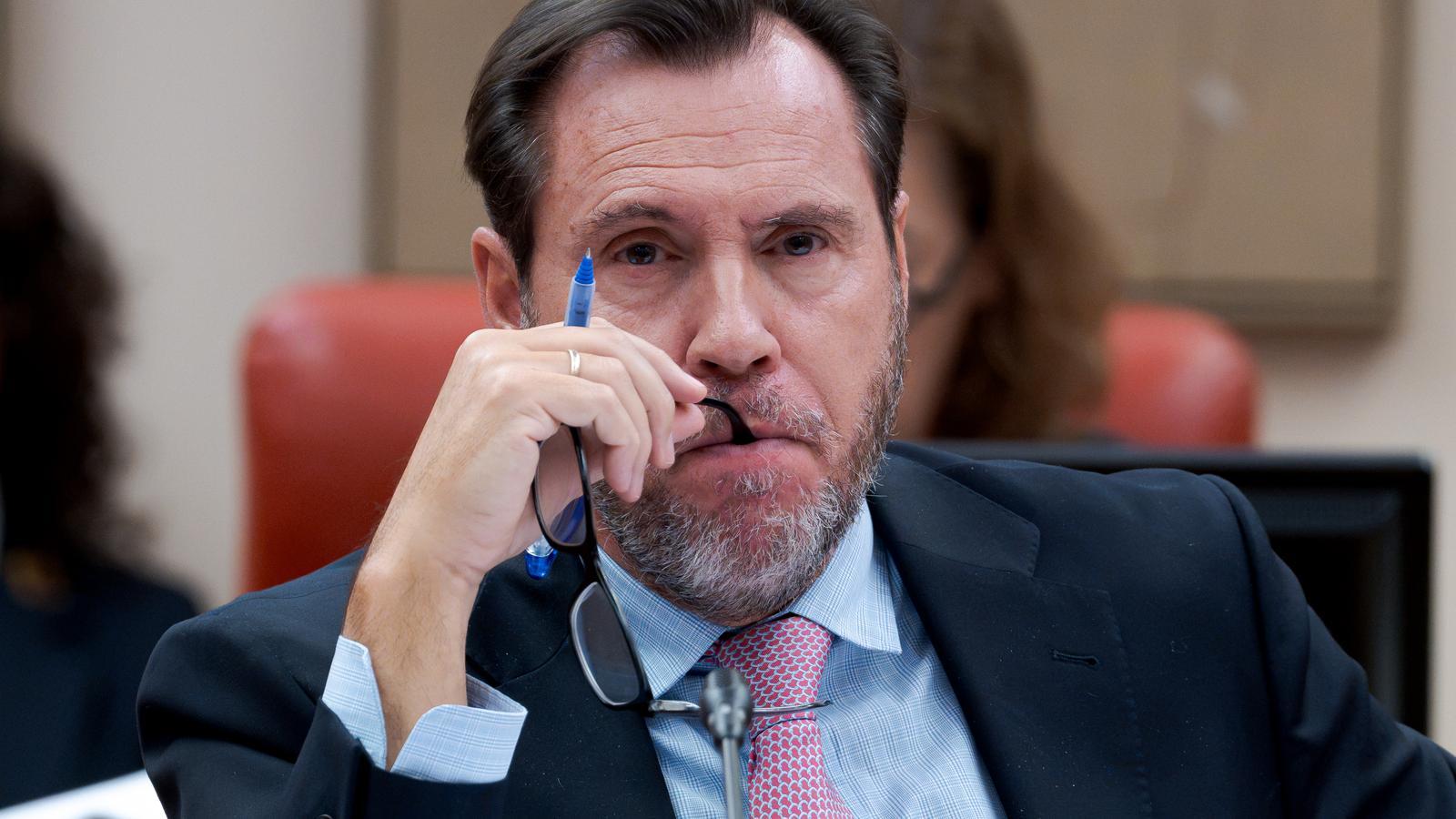
The resignation of the now former Minister of Transport, Óscar Puente, was a gesture of dignity, but I do not know if it would have occurred without an upcoming election. He said on Tuesday, at the permanent deputation of Congress, that he had practically decided it from the first moment, although his previous explanations did not allow one to assume it. The fact is that Sánchez and Puente spoke at length about the matter during the weekend. The president did not withdraw his confidence in him, but Puente himself was fully aware of the damage that his continuity could cause to the PSOE's electoral expectations. That is why his remaining in the government was unfeasible. Sánchez already knew he would resign when the debate began in Congress. The message that Puente sent him when the meeting in the chamber ended was to communicate that the resignation had already been announced to the permanent deputation.
A pre-campaign with these jagged ups and downs gives arguments to those who believe that there are many votes to be decided, that the undecided are legion. Honestly, I do not believe it. I have always thought that the percentage of citizens who are very clear about what their vote will be is very high, even if they do not proclaim it, not even when they look in the mirror. The decision may have been made little by little, depending on the impressions that accumulate throughout a period of government, of a legislature. But when general elections are called, there is a social majority that is already clear about who inspires a certain confidence in them and who they will not vote for.
In this case, moreover, the card game has gathered around the table a group of trained and scarred players. Hence the different strategies. Vox did not respect the days of mourning for the Urda accident and continued firing its artillery against Sánchez without rest. But there are days when they must work underground. They have reached the conclusion that they will pass sixty deputies by inertia, because the wind of the disgruntled of all kinds and classes carries them. They no longer speak of the PP as “the cowardly right.” They do not want to spin the lottery drum too much, thinking that this way they have a better chance of winning the lottery.
A fragmented Congress
The PP, on the other hand, focuses everything on expelling Sánchez from power. Its campaign slogan is simply: “The necessary change”. To do what? That is secondary. What is important is to remove the socialist leader from La Moncloa. It is curious to see how time passes and that the magnetism of the concept of change does not end. In this case, this magic is better understood, because the PSOE has traveled a very rocky path. It is that business of driving a cart over stony ground. Three years—and beginning the fourth—without budgets make this clear. I do not know if bipartisanship has ended forever. But surely the coming years will continue to be those of a fragmented Congress, where it will be difficult to make medium and long-term plans. Even if the PP and Vox add up to more than 176 deputies and can form a government, it will be very hard for them to move forward in mutual agreement. Here, the story of the scorpion that ended up stinging the back of the frog that was carrying it across the river could repeat itself.
It seems to me that for the coming years we will have to get used to government schemes with stability difficulties. Even if the PSOE were to be the most voted force, the division on its left would make it difficult to add up to a sufficient majority. The reissue of an investiture pact like the one in 2023 would also present itself as very complicated. The PSOE is not a great keeper of promises. With ERC—which is doing very well in the polls—there could be an opportunity. But it will not be easy for the sum to work either. One cannot count on Junts. It remains to be seen when and how Carles Puigdemont can return, with an amnesty that does not seem to arrive. The polls are not favorable to the 'juntaires' and it cannot be ruled out that Vox could surpass the PP in Catalonia. For its part, the PNB is suffering a lot, with the fear in its body over the possibility that Bildu consolidates itself as the left-wing alternative in the Basque Country.
This is how things look as the judicial scene is stirred up again around Ábalos and Koldo over other alleged irregular business dealings, while the European Public Prosecutor's Office is interested in knowing if the funds they were allocated for the maintenance of the AVE tracks on the Madrid-Seville line were spent well. In parallel, Koldo himself claims that the PP's lawyer tried to buy him off so that he would testify against Sánchez. Zapatero is the only one receiving good judicial news, because the judge rejects the Prosecutor's Office request to expand the scope of the investigations and the indictment for a new crime of embezzlement. It is obvious that Sánchez and the PSOE do not have it easy to rebalance the game with a campaign based on the defense of what is public and social policies.
