How is the Galician school model that Feijóo wants to export to Catalonia?
When the leader of the PP accessed the presidency of Galicia he limited to 50% the presence of Galician in the classrooms
-
CAT -
CAST
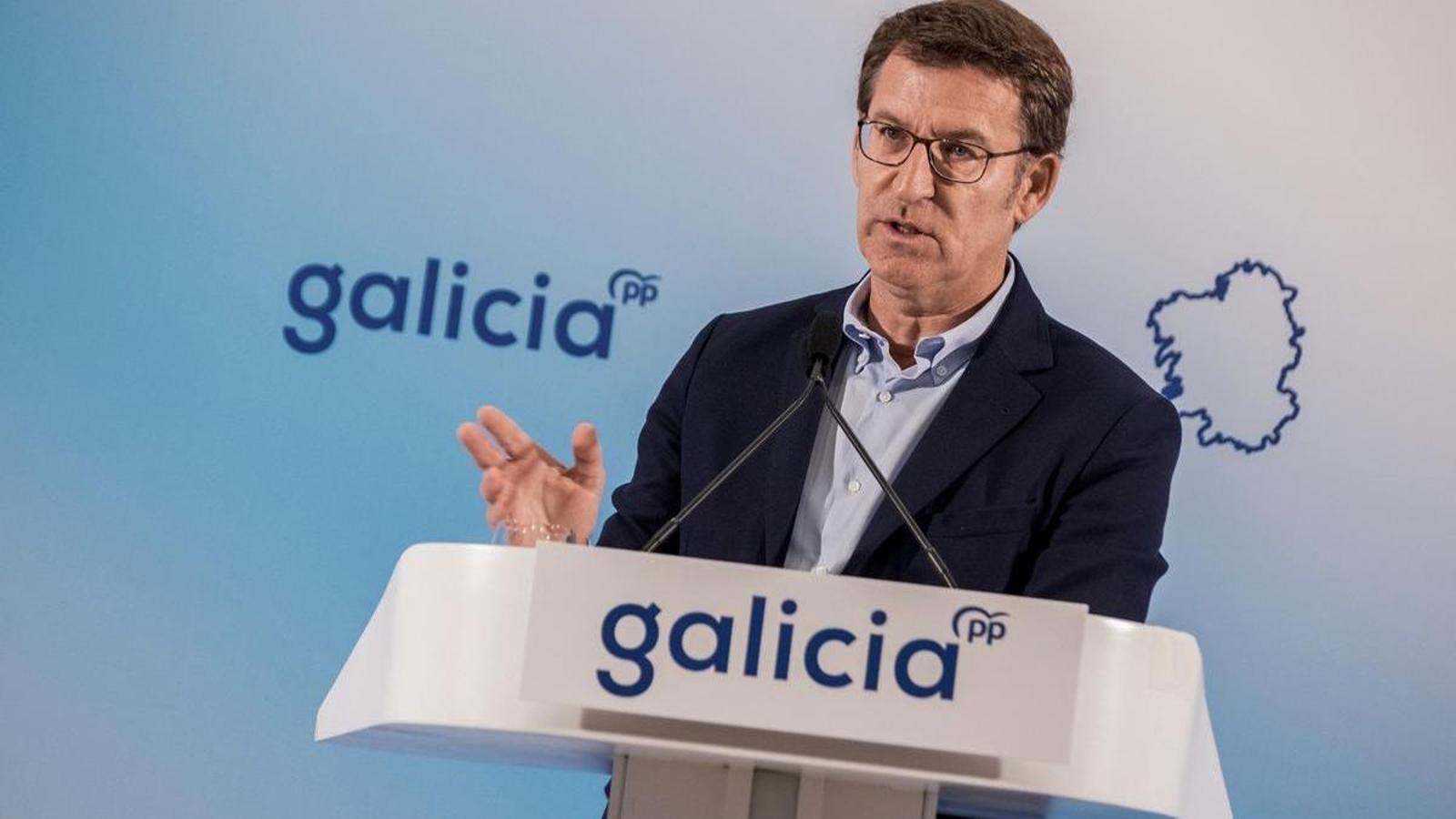
MadridIn the midst of the pre-campaign, Alberto Núñez Feijóo has personally committed to "guaranteeing Spanish" in classrooms. In practice, this means following the model that the PP leader applied in Galicia when he governed there and which, in Catalonia, would entail reducing teaching hours in Catalan. Let's review how the linguistic model of the schools in the autonomous region currently presided over by the Popular Party's Alfonso Rueda, successor to the now candidate for the Moncloa on November 29th, works, and which entities in defense of Galician and experts in sociolinguistics label as "disastrous" and "catastrophic".
In 2010, coinciding with Feijóo's first term, the Galician Government promoted a reform via decree that limited the presence of Galician in classrooms to 50%. "It strained the public discourse and clearly regressive measures were taken for the first time," recalls Henrique Monteagudo, president of the Royal Galician Academy and expert in sociolinguistics, in a conversation with ARA. The Popular Party member introduced for the first time a cap on the presence of the native language and put an end to the previous policy, which even during the governments of Manuel Fraga set minimums for teaching hours in Galician.
Feijóo, in fact, came to power with a belligerent campaign against Galician, which represented a "very big turning point" from the previous attitude of "sympathy" and low conflict regarding this issue, adds Monteagudo. At that time, a minimum of 50% Galician was being applied, set by the left-wing coalition PSOE-BNG that governed between 2005 and 2009, which allowed educational centers to increase the presence of Galician in some cases up to "70, 80, and even 90%".
With the introduction of Feijóo's cap, schools must ensure that there is the same percentage of weekly hours of Galician and Spanish. In the case of trilingual schools, which add English to the equation, the percentage is reduced from 50% to 33%.
"Catastrophic consequences"
"The consequences have been catastrophic," laments Marcos Maceira, spokesperson for the platform Queremos Galego!, which brings together entities from different fields that defend the Galician language, in a conversation with this newspaper. Maceira warns that the situation of the language is "serious" and relates it directly to the policies of "de-officialization" and "discrediting" of Galician applied by Feijóo and, subsequently, Rueda. The latest study by the Galician Institute of Statistics (IGE) on the health of the language, from 2024, reveals that, since this model has been in force, the number of Galician children who do not know how to speak the language has doubled (32.44% of minors between 5 and 14 years old).
The number of children who use exclusively Galician (7%) has also been reduced by half since the previous IGE study from 2018. A figure that contrasts with the fact that around a third of families say they speak exclusively in Galician to their children at home. "It reinforces that there is a family language and another, which can only be Spanish, for public or social use," denounces Maceira. Monteagudo agrees that it is a "disastrous" policy, which has caused the future of Galician to have a "very worrying" prognosis.
The veto on science
One of the most "irrational" elements of Feijóo's reform, in the words of the president of the Royal Galician Academy, and which has been criticized by organizations, is the veto on teaching Galician in scientific subjects. In the primary education stage, mathematics must be in Spanish. In secondary school as well, with the addition of technology, physics, and chemistry. This is a division still in force this school year and the next, but it will change starting from the 2028-2029 school year.
This September, the PP and the socialists of Galicia signed an agreement that updates this plan and opens the door to teaching scientific block subjects in Galician. However, if educational centers choose to teach mathematics in Galician, this must be accompanied by a change to Spanish in other social subjects that were taught in Galician to balance the distribution of hours. In no case is the 50% maximum modified.
The climate in schools
Monteagudo frames this first "distancing" from Feijóo's model within a "shift" in the social climate, marked by growing concern for the health of the Galician language. Queremos Galego! has, in fact, promoted a popular legislative initiative (ILP) in the Galician Parliament that proposes to repeal the 2010 decree and advocates for a model in which Galician is the vehicular language "without it being able to be restricted." As Maceira explains, they will begin collecting signatures in the coming days and trust that it will serve to demonstrate that "there is significant support from Galician society for its language," including among teachers and family associations. "It is in the public sector where there is the most dissatisfaction with the restrictive policy," explains Monteagudo, who states that there are even teachers who are "very committed" on an individual basis and "put themselves on the line" to expand the presence of Galician, while in the private sector, Spanish dominates.

