A port to return to
The trades, the flavors and the memories of a culture forged between the waves
-
CAT -
CAST
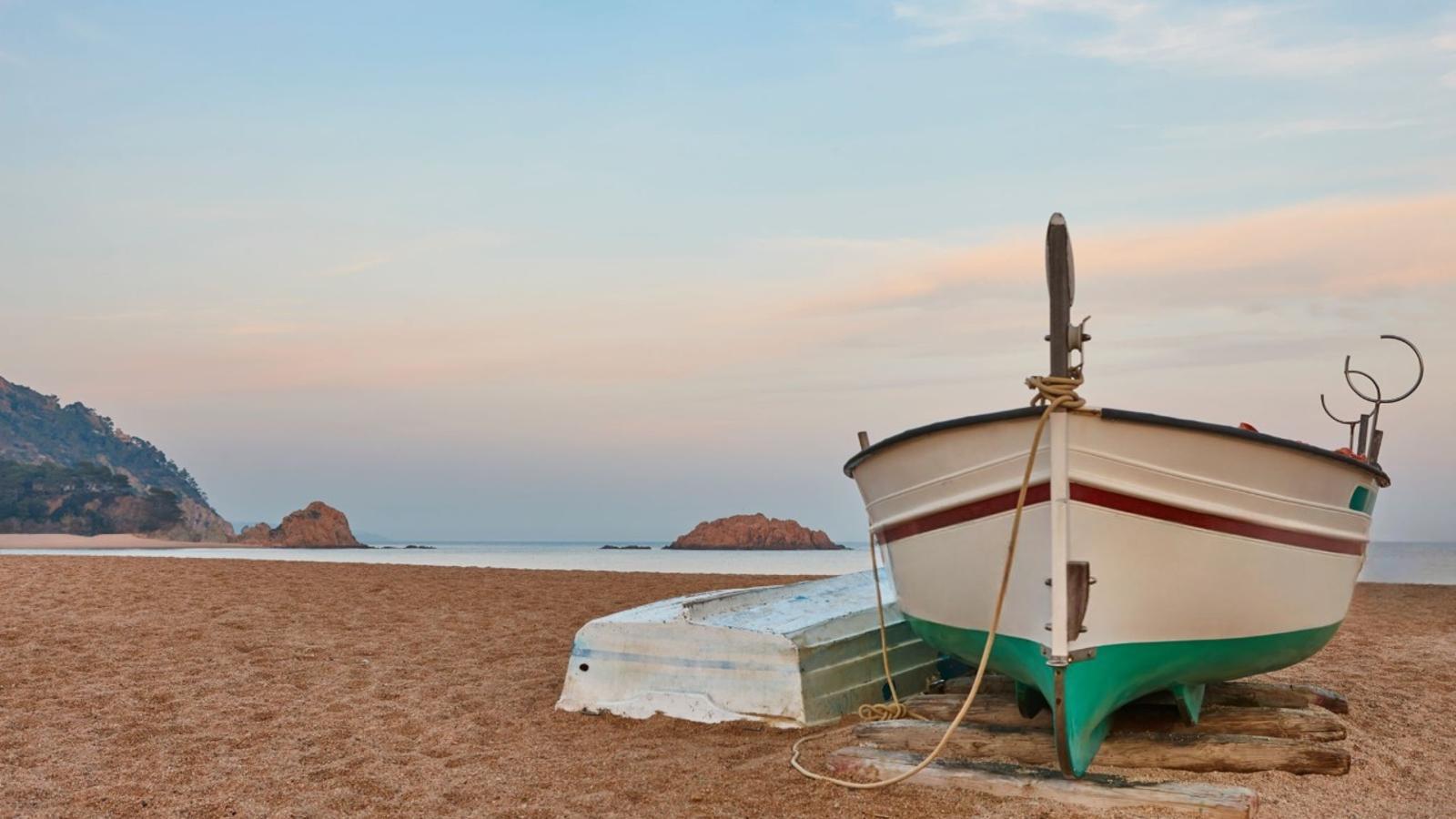
While the town is still sleeping, the day has long since begun at the port. The boats sway gently at the dock, while weathered hands check the nets with the precision of inherited gestures. The ropes creak, the wood still holds the salt from the previous day, and the seagulls draw the first circles in the air, above the water. When the protection of the port is left behind, everything will be in the hands of the wind, the currents, and a sea that never promises how the day will end.
The boats set sail slowly and the coast begins to blur behind the breakwater. On land, life goes on. The stalls gradually occupy the streets, the squares fill up little by little, and the town recovers its daily bustle. But there is a gaze that, almost without realizing it, continues to search the horizon. This scene was repeated, throughout the years, in the seaside towns of Catalonia. For those who left, a workday began. For those who stayed, a wait made of experience, trust, and a silent hope: to see the silhouette of the boats again before evening fell.
For centuries, the Mediterranean was the place to earn a living. It fed entire peoples, opened trade routes, brought cultures into contact, and imposed a rhythm that knew nothing of haste. Long before its beaches became a summer holiday destination, the sea was part of work, the table, and the calendar. Each day began with a departure and hoped to end with a return. From this daily coexistence with the sea, a way of understanding life was born that can still be recognized today in ports, in markets, and in many of the traditions that have reached our days.
A world made of many hands
The Catalan maritime culture depended on an entire community. Around each vessel, there were trades and people who made life on board possible. Shipwrights gave shape to the hulls that would have to face years of navigation; caulkers sealed the wood joints so that the water would not find any crack, and the net menders reconstructed the nets thread by thread after each day's work. The guilds, in turn, organized an activity that marked the rhythm of entire ports. When a boat set sail, the discreet work of many other hands traveled on board as well.
That world lived in suspense of what could not be mastered. Fishermen learned to read the sea before any book. They knew the temperament of the tramontana, distrusted the levant, and knew that a sudden change in the color of the water or the restless flight of a flock of seagulls could announce a very different day than the one they had imagined. It was knowledge that was not written down anywhere. It passed from fathers to sons, from masters to apprentices, until it became an almost instinctive way of inhabiting the coast.

When Josep Pla traveled the paths of the Empordanet or stopped at the docks of Palamós, l'Escala, or Cadaqués, the nets spread out in the sun, the murmur of the auctions, the taverns where men met after the day's work, and the boats returning at dusk were all part of the same landscape he described. In those daily gestures, there was a way of life that, as the years passed, would begin to fade away.
The ancient seafaring devotions were born from that coexistence with the sea. The processions dedicated to Saint Elmo, to Saint Peter or, later on, to the Virgin of Mount Carmel expressed respect before a force that always kept a part of mystery. The skill of a good sailor consisted of knowing how to read the waves, the winds and the changes of the water. The sea was one more presence on board, a force with which one had to learn to coexist.
A home above the waves
There was a moment when the sea changed its rhythm. When the nets had already been hoisted and the wind granted a moment of truce, the deck filled with other gestures. Someone lit a small stove, a pot occupied the center of the boat, and the aroma of garlic began to mix with the salt of the waves. In the middle of a horizon with no land in sight, that boat became, if only for a while, a home.
Catalan seafood cuisine was born out of necessity and daily ingenuity. Rockfish that would hardly reach the market, some potatoes, a handful of garlic, oil, bread, and some aromatic herbs were enough to prepare a casserole capable of sustaining a whole day. It was a cuisine made with what the sea offered each day, taking advantage of every ingredient and adapting it to the crew's possibilities.
Among all those recipes, there is one that still today preserves much of the fishermen's memory: the 'cim i tomba' of Tossa de Mar. Over the years it has become one of the great gastronomic icons of the Costa Brava, but its origin remains humble. It was the meal of the seafaring people. It was prepared on the very boat while the outing took a break and the fire broke, for a few moments, the dominance of the wind and the waves. The casserole boiled slowly while conversations replaced the noise of work. During those minutes, the catch took a back seat and the sea ceded the spotlight to an improvised table on the deck.
On board, everyone knew their responsibility, but around the cooking pot the differences narrowed. Recipes were not written down. They were transmitted by memory, through gestures repeated over and over again, until they became part of the identity of each crew and each family.
Even today, a dish of 'cim i tomba' brings to the table a memory that begins long before the first bite. The fish, the potatoes, and the 'allioli negat' that gives it its unmistakable character appear there. Also arriving are the hands hardened by salt, the hours shared on the deck, and that old certainty that, even in the middle of an unpredictable sea, a casserole could turn a boat into a home.

The promised coast
There are landscapes that we only learn to love when we leave them behind. For centuries, Catalan fishermen lived with this paradox. Every dawn they abandoned the protection of the port without knowing what awaited them out at sea, but with an intact certainty: the value of that journey only revealed itself when, a few hours later, the coastline was drawn once again.
The Mediterranean has been a sea of returns. Its waters have led merchants, sailors, and fishermen to distant lands. The coast marked the end of the journey and held the silent promise that at home, family, friends, and everything that gave meaning to the effort were still waiting.
We also find this image in Viatge a Ítaca (1975), in which Lluís Llach makes the metaphor of the journey his own, based on the poem Ithaca, by Constantine Cavafy. Both the poem and the album remind us that the value of the journey lies in what we discover along the way. Seafaring culture adds a dimension of its own: for those who live by the sea, the journey also depends on the existence of a coast to return to.
For Catalan fishermen, this Ithaca could be the bell tower that reappeared on the coast after hours of navigation, the smell of the land after the salt, or the voices that filled the port at dusk. It was home.
Many of those vessels have disappeared and sea trades no longer occupy the center of life in coastal towns. A memory remains that still speaks of a way of living in which work, community, and the table were part of the same rhythm. And of a simple idea that time has not managed to erase: that even in the middle of an unpredictable sea, there was always a pending conversation, a shared casserole, and a port to return to.

