Kherson (Ukraine)The road leading to Kherson, the Ukrainian city closest to the front line, is covered with fishing nets to protect against constant Russian drone attacks. The few drivers who pass through do so at high speed, equipped with a detector that hacks the drones' signals and displays on a small screen what the Russian drone operator can see. "If you see your car on the screen, you're screwed: you have to get out of there as fast as you can and hide," warns Denys Sujanov, a local activist who agreed to accompany the ARA to the city, now one of the most dangerous for Ukrainian civilians. A traffic light at the entrance to the road turns red when drone activity is detected, and part of the route is protected with fishing nets rigged with wooden poles that form a precarious tunnel: drones can get caught in the nets, but not the bombs they carry.
A street in the center of Kherson, which has become a ghost town due to Russian drone attacks.Oleksandr АndriushchenkoRoad leading into the city of Kherson, protected with fishing nets, in a car equipped with a drone detectorCristina Mas
Stepping outside in Kherson is to risk being chased and killed by a Russian FPV (first person view) drone. Unlike traditional drones, the pilots operating them can see the TV image from the viewpoint of the vehicle’s flight in real time. Like something out of a dystopian film, these drones, which fly at over 100 kilometers per hour, can launch a grenade with great precision at anyone they locate. Russian Telegram channels show them in action: an elderly woman starts running down the street and in a matter of seconds disappears in an explosion. The only protection the population has, because air defenses cannot prevent the constant penetration of these small drones, are the fishing nets placed in some streets, near gas stations and at the train station, and the concrete shelters installed next to bus stops.
Dozens of videos are surfacing on social media, showing Russian drones targeting civilians in Kherson, with Russian forces proudly posting these attacks online. pic.twitter.com/WWmzuok5uA
The people of Kherson have learned strategies for surviving the drone siege. "Before leaving home, it's very important to check the chat: what's being said, where the drones are, how many there are, and the alerts. If they say there are no drones in our area, they may not have detected them: when we leave home, we must listen carefully," explains Natalia Shatilova, who works in the Red Cross headquarters in Kherson.
The safest thing is to keep an ear out for the buzzing of the drones. "We don't wear headphones, hats, caps, or hoods. We have to listen and also look up at the sky, because sometimes they fly very high. And when we get in the car, we always have the window open so we hear them." Stepping outside is very dangerous: "When we're out, we try to move very quickly, always by car. And when we arrive at a location, we never park in the open: we park under a tree, but now, in winter, they don't help much because they don't have leaves."
Natalia Shatilova, Ukrainian Red Cross
Shatilova has lived in Kherson her entire life. She survived the Russian invasion of the city in March 2022, when the inhabitants of Kherson came out with their bare hands raised to protest against the tanks. And when, nine months later, the Ukrainian army managed to liberate the city, Shatilova celebrated, as did the entire population.
But that didn't bring peace: only a new phase of terror in which Russian troops, deployed on the other side of the Dnipro River, just five kilometers from the city, continued to bombard it with artillery fire, guided bombs and, since the summer of 2024, constant drone activity. Sujanov is unfazed by the echo of the bombings that have become a soundtrack and which the people of Kherson have learned to identify unerringly: "They are Russian Grad rockets, but they are far away, five or six kilometers away," says the activist.
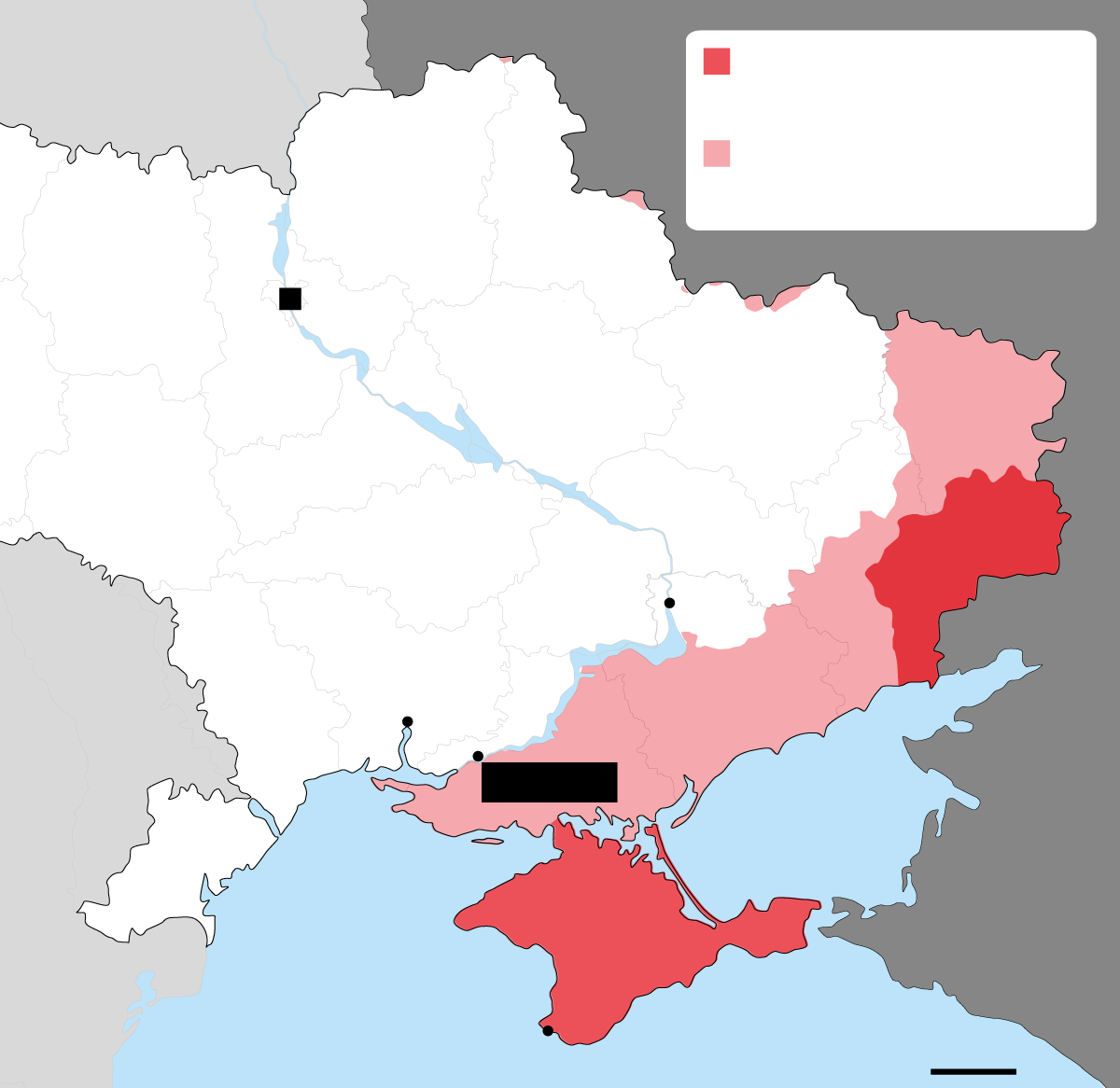
El front de la guerra
Territori ocupat per
Rússia abans del 2022
Territori ocupat per
Rússia actualment
Kíiv
riu Dnipró
DONBÀS
UCRAÏNA
Zaporíjia
Mikolaiv
Kherson
mar d’Azov
RÚSSIA
CRIMEA
mar Negre
Sebastòpol
100 km
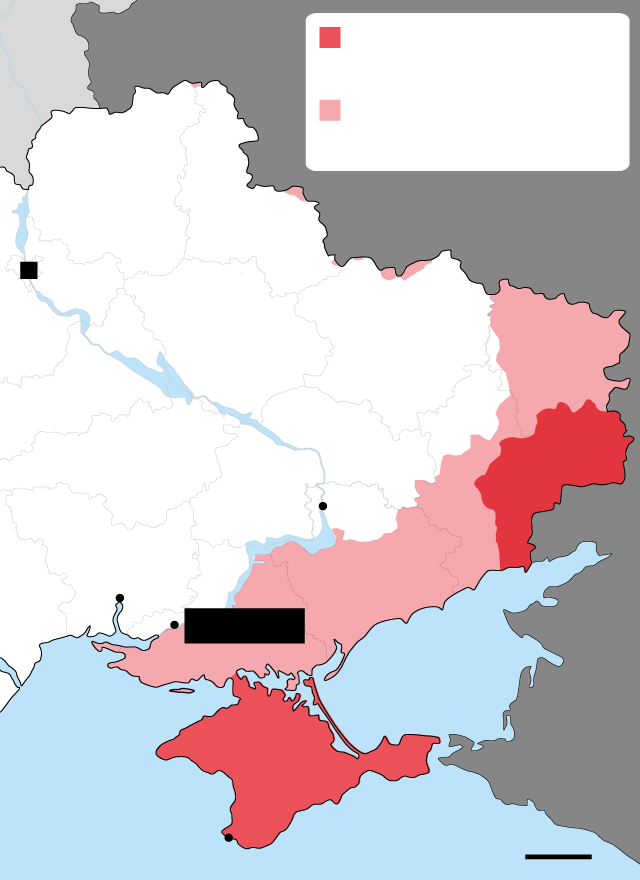
Territori ocupat per
Rússia abans del 2022
Territori ocupat per
Rússia actualment
RÚSSIA
Kíiv
riu Dnipró
DONBÀS
UCRAÏNA
Zaporíjia
Mikolaiv
Kherson
CRIMEA
Sebastòpol
100 km
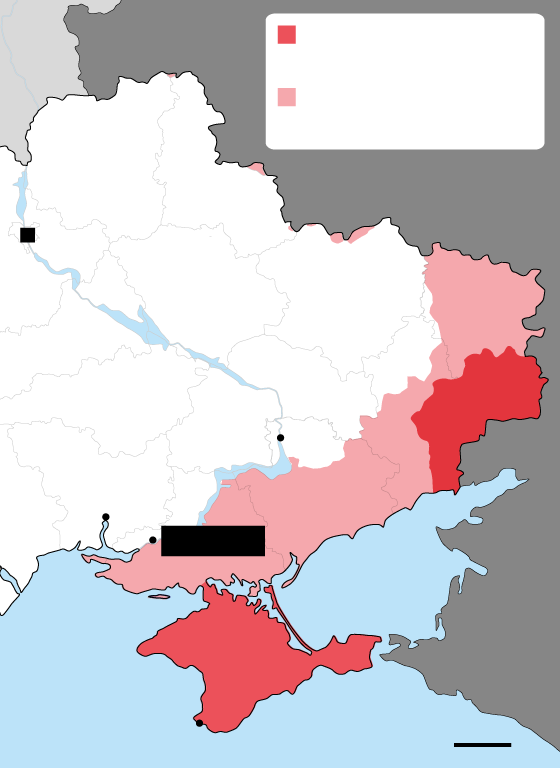
Territori ocupat per
Rússia abans del 2022
Territori ocupat per
Rússia actualment
RÚSSIA
Kíiv
riu Dnipró
DONBÀS
UCRAÏNA
Zaporíjia
Mikolaiv
Kherson
CRIMEA
Sebastòpol
100 km
Rain of mines
The 60,000 Ukrainians who still live in Kherson (before the invasion, it had a population of 300,000) barely venture out for a few hours each morning to buy what they need. Everyone is a target. In the two days that the ARA has been able to spend in the city, we haven't seen a single child in the street. In July, a one-year-old boy was killed in a drone strike while playing in the yard. In September, Oleksandr Hordiyenko, head of the region's Farmers' Association, was killed when a drone crashed into his vehicle while he was working in the fields.
And the only danger isn't drones or bombardments: from the air the FPVs also drop landmines, which remain hidden among the leaves or under the snow. The least that can happen if you step on one is to lose a foot or even your entire leg.
Drone warfare now dominates the clash between Ukrainian and Russian forces. There is no clear front line; instead, drones from both sides constantly fly over a swath between ten and twenty kilometers wide known as the "kill zone". According to the UN Commission of Inquiry on Ukraine, at least 200 civilians were killed and 2000 wounded in drone strikes in Kherson and nearby areas under Ukrainian control between July 2024 and last November. In December, local authorities reported that 12 people were killed and 146 wounded within the city alone. Human Rights Watch has documented at least 50 Russian drone strikes against people walking, cycling, driving, using public transportation, or even inside their homes. Emergency services workers have also been targeted while attending to the wounded: a double-strike strategy.
Oksana Pohomii, who heads the NGO Community Affairs in Kherson, welcomes us to a basement shelter within the city, where they have set up a library with Ukrainian books and where they organize cultural activities and theatre performances for children. On the shelves are also remnants of Russian shells, painted with Ukrainian motifs as a symbol of resistance. "Before the invasion, I could walk down the street, go to the park, to the cinema, or buy whatever I needed in the shops because we had everything. Now I can't do any of that because they're hunting people down. It's a human drone safari. You have to watch the ground to avoid stepping on a mine, and also the sky," she recounts.
Survival depends on the smallest details: "My favorite color is red, and I used to wear bright colors. Now I wear dark clothes so I'm as inconspicuous as possible." Pohomii asks us to pass on a message: "Barcelona is very far from here, but war is very close. And it must prepare and learn from our experience. Everyone must know how to help others if—God forbid—the war comes there. Everyone must have a plan for where they will take their family if one day you are bombed."
Oksana Pohomii, NGO Community Affairs
Kherson is a ghost town. Not a single hotel remains open, and only a few bars and restaurants are functioning. Speeding through the streets, between dilapidated buildings and burned-out cars, we approach the central market, where only a few stalls sell fish, meat and clothing. At one of them, we find a woman selling homemade vegetable preserves on Sundays to supplement her income. "I'm scared, like everyone else. Living under the drones is the worst; you try to live a normal life, but you're constantly on high alert," she says.
A fish stall in the central market of Kherson.Oleksandr Аndriushchenko
Among the few bars that are open is 11-11, which commemorates November 11, 2022, the day on which Ukrainian troops managed to liberate the city of the Russian invasion. At the bar, there's a pulse oximetre, and if you manage to stop it at exactly 11.11 seconds they give you a free coffee. It's a memento of a happy day, but one that didn't end the nightmare for the people of Kherson. During the occupation, Russian President Vladimir Putin ordered a sham referendum, in which soldiers went door-to-door with ballot boxes to force people to vote in favor of annexing the entire province to the Russian Federation. Now the Kremlin considers Kherson part of its territory and doesn't seem willing to give it up.
Denys Sukhanov, Kherson activist
During the nine months that Russian troops occupied the city, everyone suffered. Sujanov remembers his brother, who was detained in a hospital: "All we know is that he was in a prison in Crimea. We haven't heard from him in a year and a half," he laments. The activist, who owned a chain of electronics and phone stores in the city before the invasion, under the occupation dedicated himself with his network of colleagues to evacuating civilians and bringing medicine to the city. Now he wants people to rebuild their connections. "I'm trying to restore the community, because the worst thing war does is break human relationships: now we have people from Kherson scattered all over the world, we've lost family members, friends, I myself haven't seen my children for three and a half years. We need to reconnect, to get our lives back."
And he tries to do this by organizing board game sessions. Every week he gathers ten people of different ages, men and women, to play Mafia, a very popular game in Ukraine and Russia. He deals the cards, the players put on blindfolds, and the game begins. After an hour and a half of laughter, knowing glances, and watching each other's every move, the game ends and they return to the human safari. Life in Kherson goes on, underground.
From occupation to liberation
March 1, 2022. Invasion
Russian troops occupy the city of Kherson five days after the start of the full-scale invasion of Ukraine. People take to the streets in massive protests.
September 22, 2022. Sham referendum
The Kremlin staged a sham referendum on the annexation of the Kherson region to the Russian Federation. The official result was 97% in favor.
November 11, 2022 Liberation
The Ukrainian army liberates the city and Russian troops withdraw to the left bank of the Dnipro River
June 6, 2023 Attack on the dam
Russia destroys the New Khahovka dam. Floods leave hundreds dead and cause serious ecological damage.