Europe must prepare itself better in the face of cyberattacks

-
CAT -
CAST
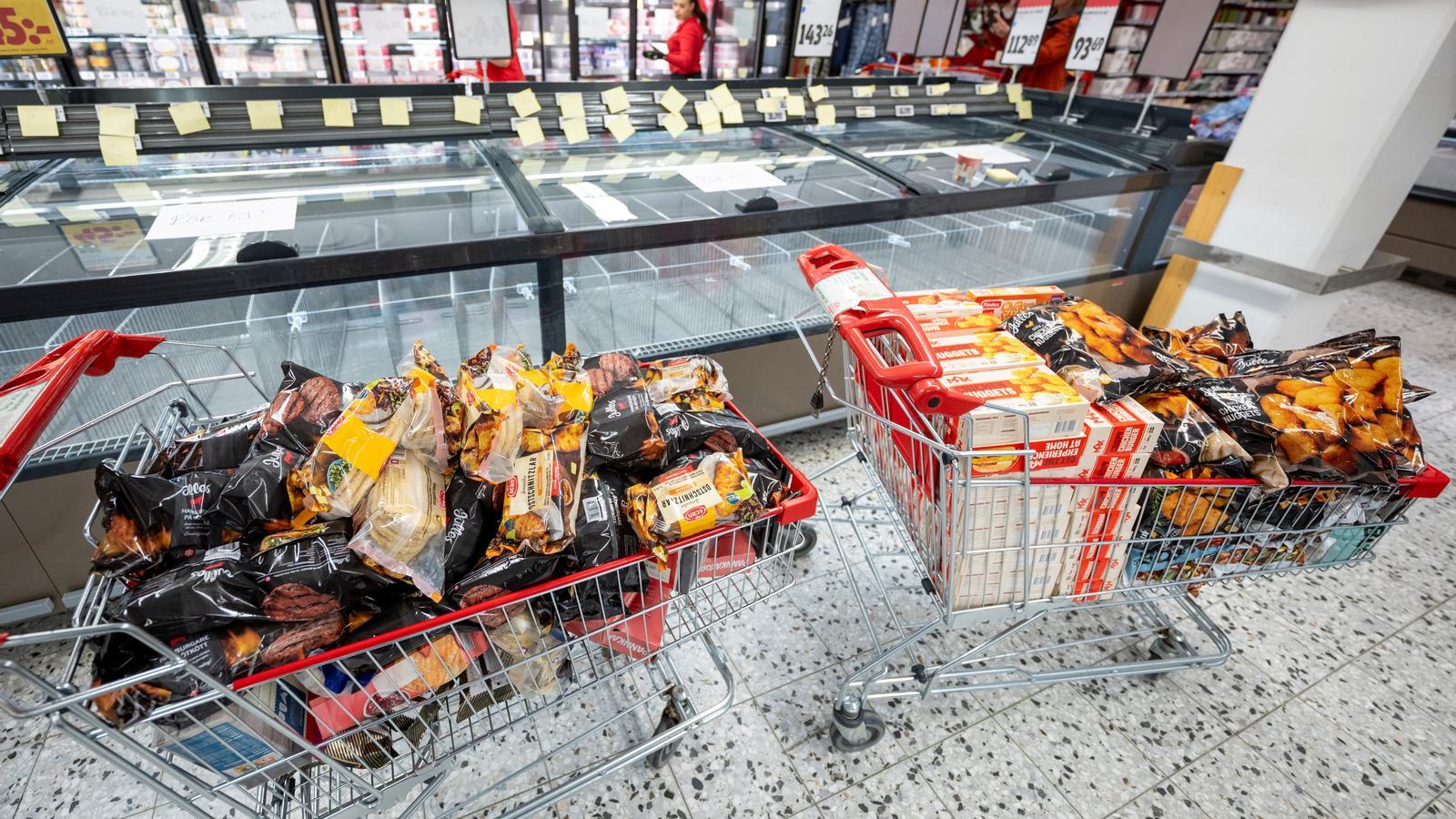
BarcelonaOn Monday, dozens of supermarkets in Belgium and Sweden, and to a lesser extent in the Netherlands, Finland, and Estonia, suffered cyberattacks that disabled freezers, resulting in tons of food spoiling. This Tuesday, the attacks were repeated in Portugal. In parallel, over the last 24 hours, up to eight planes have reported bomb threats in Europe, one of them on the Manchester-Murcia route. These are too many coincidences to think that everything is a pure coincidence. "There is no doubt these are not isolated incidents, and we must collectively strengthen our resilience and preparedness in the face of such cyber incidents," asserted the European Commission spokesperson, Thomas Regnier.
In a context of hybrid warfare like the one we are experiencing, with state actors such as Russia or global reactionary movements interested in destabilizing European democracies, it is urgent to take the necessary measures to protect ourselves. Cybersecurity must be treated as a pillar of European defense, which is not built only with tanks and ammunition, as experts warn. Germany directly accused Russia of being behind a drone attack at the Leipzig airport and Emmanuel Macron announced a plan to protect critical infrastructure against possible hybrid warfare attacks. And Spanish minister José Manuel Albares has warned this week about foreign interference in Spanish elections.
AI, for its part, has exponentially multiplied the potential of hackers. It was seen last week: a group of hackers took control of the information panels on an Egyptian highway and projected pornographic images onto them. And also with what could be one of the biggest thefts in history, suffered by the cryptocurrency platform Binance, which lost 6.3 billion dollars in a cybertheft.
In short, we find ourselves at a moment when the combination of the malicious use of technology and international disorder results in a landscape where anything that deviates from normality can be interpreted as hybrid warfare. In any case, it is evidence that Europe is not prepared, at this time, and that it has many vulnerable points that must be reinforced: mainly, the food system, the energy system, and the transport system.
The United States incursion into Venezuela to kidnap Nicolás Maduro was also preceded by a cyberattack that left the country in the dark for hours, which facilitated the American military operation. European countries must ask themselves if they could also suffer a similar attack and what defense systems they have. The ultimate goal of cyberattacks, obviously, does not always have to be a military operation, but simply to create social unrest or amplify conflicts that are real but do not have a great magnitude. Europe's enemies are not as interested in invading it as in promoting governments that suit their interests. And it must be said that they are succeeding in this.
