Naturgy shields itself from the noise surrounding the balance of power
The company is sending a message of stability with the reorganization of the board of directors and the renewal of Francisco Reynés's term.


-
CAT -
CAST
MadridNaturgy – formerly Gas Natural – doesn't want any distractions from its management, and in recent years it has had enough. Since the sudden entry of the Australian fund IFM in 2021, when it launched an unsolicited takeover bid for 22.69% of the share capital for €5.06 billion, the rumors surrounding the gas company's shareholders and management have been constant, albeit in the wake of recent moves by one of its main shareholders: GIP, now BlackRock, which at the end of 2025 accelerated the sale of 7% of its capital to the company. The company, facing a "challenging" 2026, has sought to project an image of stability, emphasizing the business and strategy, rather than governance. How? By reorganizing the board of directors and extending the term of its CEO, Francisco Reynés, until 2030—one of the few executives in the Ibex 35 who wields absolute power within his company—the company is "cutting off any distractions at the root," in the words of one company insider.
Although Reynés himself stated this week that "there have been reports about tensions we haven't had [at Naturgy]" and boasted about the "unanimity" of the latest decisions, the peace pipe hasn't always been lit within the company due to the conflicting interests of its main shareholders: CriteriaCaixa; the Australian fund IFM, whose initial arrival was not well-received by the investment arm of the La Caixa Foundation, but which now has plans to remain with the gas company; And the funds CVC and BlackRock-GIP, both driven by the idea of a profit-driven exit, which Criteria even tried to resolve, albeit unsuccessfully, with the potential entry of the multi-energy group TAQA. Adding to the uncertainty is the fact that Naturgy is not just any company, but a strategic one—the leading gas company and third largest electricity company in Spain—and is regulated, and therefore under the watchful eye of the Spanish government.
So, what's the outcome now?
Initially, the latest changes suggest that Reynés could end up presiding over Naturgy for twelve years – he joined in 2018, replacing Isidre Fainé, the current president of Criteria. In fact, Reynés, a trusted associate of Fainé, has also consolidated his power within the holding company. of the Foundation, where he has been first vice president since April 2025, although he receives no remuneration. Regarding this dual role, the president of Naturgy asserted that he "can manage both." "My commitment is to Naturgy," he reiterated this week.

The extension of his term came sooner than expected – it was due to be decided in 2027 – and for that reason, some interpreted it as a quid pro quo, with IFM, under Jaime Siles' leadership, gaining an extra seat on the board of directors. Criteria, which has always been a staunch defender of Reynés –The last great example was when the possibility of hiring a CEO was put on the table.—, she has looked askance every time the gap in capital between her and IFM narrowed.
Francisco Reynés
president executiu
El consell
d’administració
de Naturgy
Repartiment de l’accionariat
CriteriaCaixa
26%
IFM
15,5%
CVC*
13,8%
BlackRock
11,4%
Independents
33,3%
*Els drets de vot de Corporació Financera Alba (5%) estan atribuïts a CVC.

Francisco Reynés
president executiu
El consell
d’administració
de Naturgy
Repartiment
de l’accionariat
CriteriaCaixa
26%
IFM
15,5%
CVC*
13,8%
BlackRock
11,4%
Independents
33,3%
*Els drets de vot de Corporació Financera Alba (5%) estan atribuïts a CVC.

Francisco Reynés
president executiu
El consell
d’administració
de Naturgy
Repartiment
de l’accionariat
CriteriaCaixa
26%
IFM
15,5%
CVC*
13,8%
BlackRock
11,4%
Independents
33,3%
*Els drets de vot de Corporació Financera Alba (5%) estan atribuïts a CVC.
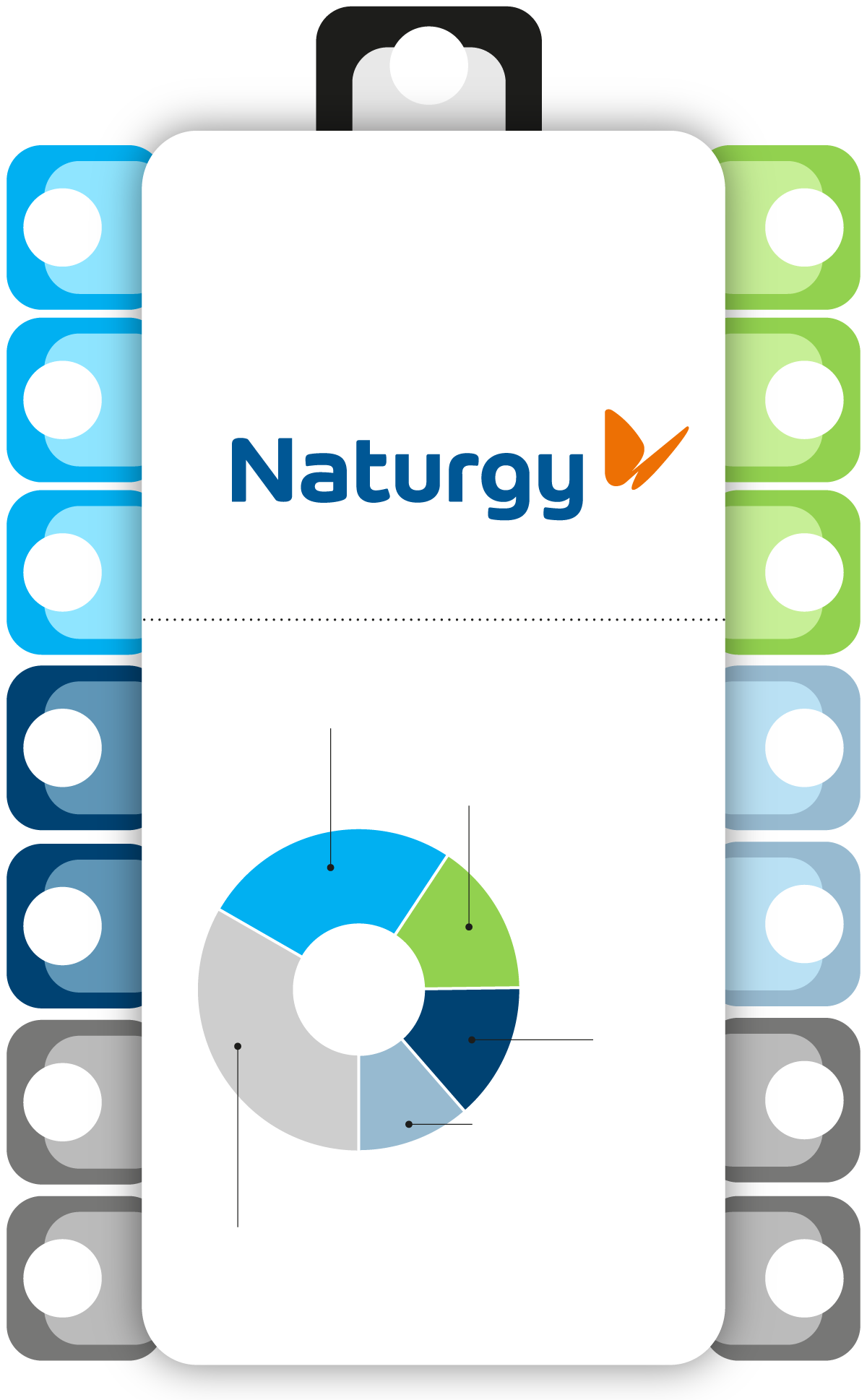
"One thing has absolutely nothing to do with the other," the executive insists. Reynés himself distanced himself from the issue at a press conference this week: "I want to make it clear that it has nothing to do with it," he stated. In fact, Reynés linked it exclusively to IFM's increased stake in the company (15.5%), which places it as the second-largest shareholder behind Criteria (26%). Representing IFM, which has now gone from two to three seats on the board, are Jaime Siles – also renewed as a director until 2030 – Lars Bespolka, and Nicolás Villén. Criteria's directors are: Ramón Adell, also renewed until 2030; Isabel Estapé Tous; and Isabel Gabarró Miquel.
Beyond the fact that it acquired shares gradually, the reason IFM is now the second-largest shareholder is due to the recent divestment by BlackRock-GIP, which, having retained only 11.4% of the share capital, now loses a seat. The remaining capital is divided between the British private equity firm CVC, which, with 13.8% of the capital, has three board members – this figure does not include the rights acquired by the capital directly controlled by the Alba Financial Corporation, which holds 5% – and Sonatrach, the Algerian state-owned energy company with which Naturgy has had a business relationship for over 40 yearsThe company has also managed to achieve a free float – the number of shares traded on the stock exchange – of 23.3% following a self-bid, as required by the CNMV (Spanish National Securities Market Commission). With everything seemingly in place, Reynés said the company would become "boring." But an empty seat on the board of directors – which the majority shareholder could claim – and further moves by funds looking to exit could raise the stakes again.
