Foreign workers have accounted for half of GDP growth since 2022, according to Funcas.
Immigrants take the jobs that nobody wants: less productive and with low wages
-
CAT -
CAST
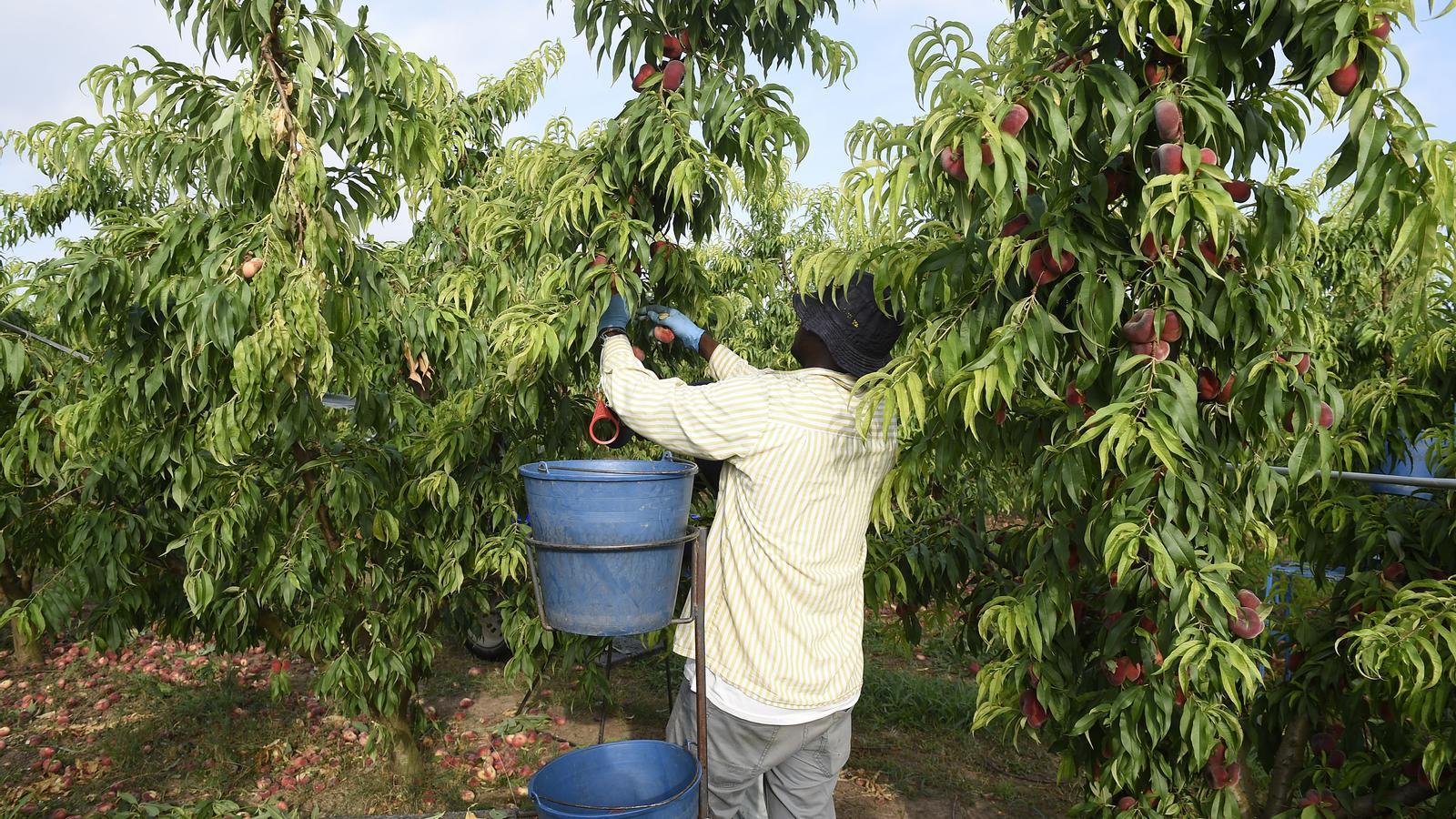
MadridThe arrival of foreign workers has not only meant a boost for the Spanish and Catalan economies In recent years, the trend has shifted from a lack of immigrants to simply "easier" to enter more productive and better-paying jobs. The former are thus filling the positions that workers of origin do not want. This is confirmed by the research and analysis center Funcas in its report.Immigration in Spain: challenges, impact and policies Published this Thursday, the report estimates that foreign workers have contributed 47% to the growth of the Spanish economy since 2022. This means that almost half of the increase in gross domestic product (GDP, the indicator that measures the size of an economy) over the last five years can be attributed to the arrival of migrants. Funcas highlights that the foreign population residing in Spain has risen from marginal figures to become "an unavoidable structural component of Spanish demographics and the labor market." This is illustrated by the active population, which includes those who are working or actively seeking employment: since 2019, it has grown by 7.8%, equivalent to approximately 1.8 million new workers, almost all of whom are of foreign origin. "This is a supply shock unparalleled by the major European economies, which has boosted Spain's productive potential." Furthermore, "the sectoral and occupational bias of the foreign workforce has allowed for the growth of activities that were facing labor shortages," the study concludes.
Future Challenges
However, this transformation of the labor market—and, therefore, of the social and economic reality of Spain and Catalonia—also poses some challenges, Funcas points out. While it is true that Social Security has long registered an increase in migrant workers in high value-added sectors, specifically in professional, scientific and technical activitiesThe fact that they mostly occupy less productive jobs with more precarious salaries "does not allow us to solve" either of these two structural challenges of the Spanish economy.
The Fedea think tank has echoed this sentiment, publishing a report this Thursday acknowledging that immigration has been "key" to addressing the aging population—even stating that "without immigration, aging would be much more pronounced in the future." However, it is not "sufficient" to reverse the negative impact. Specifically, it has mitigated 60% of the decline in the demographic dividend, a key concept for determining potential economic growth.
According to Fedea, the "real capacity to compensate" for the declining birth rate, and therefore the impact on issues such as sustaining the welfare state, will depend on "integrating immigration policy with employment, education, and innovation policies." "In an aging scenario, immigration could play a demographic support role, although the main challenge lies in the capacity of the economic system to transform this contribution into lasting economic prosperity," the study concludes, identifying improved productivity as the primary challenge.
