Emancipation, Rodalies and the housing crisis
Expanding the territory where to build would allow making more homes, but it is necessary to improve communications

-
CAT -
CAST
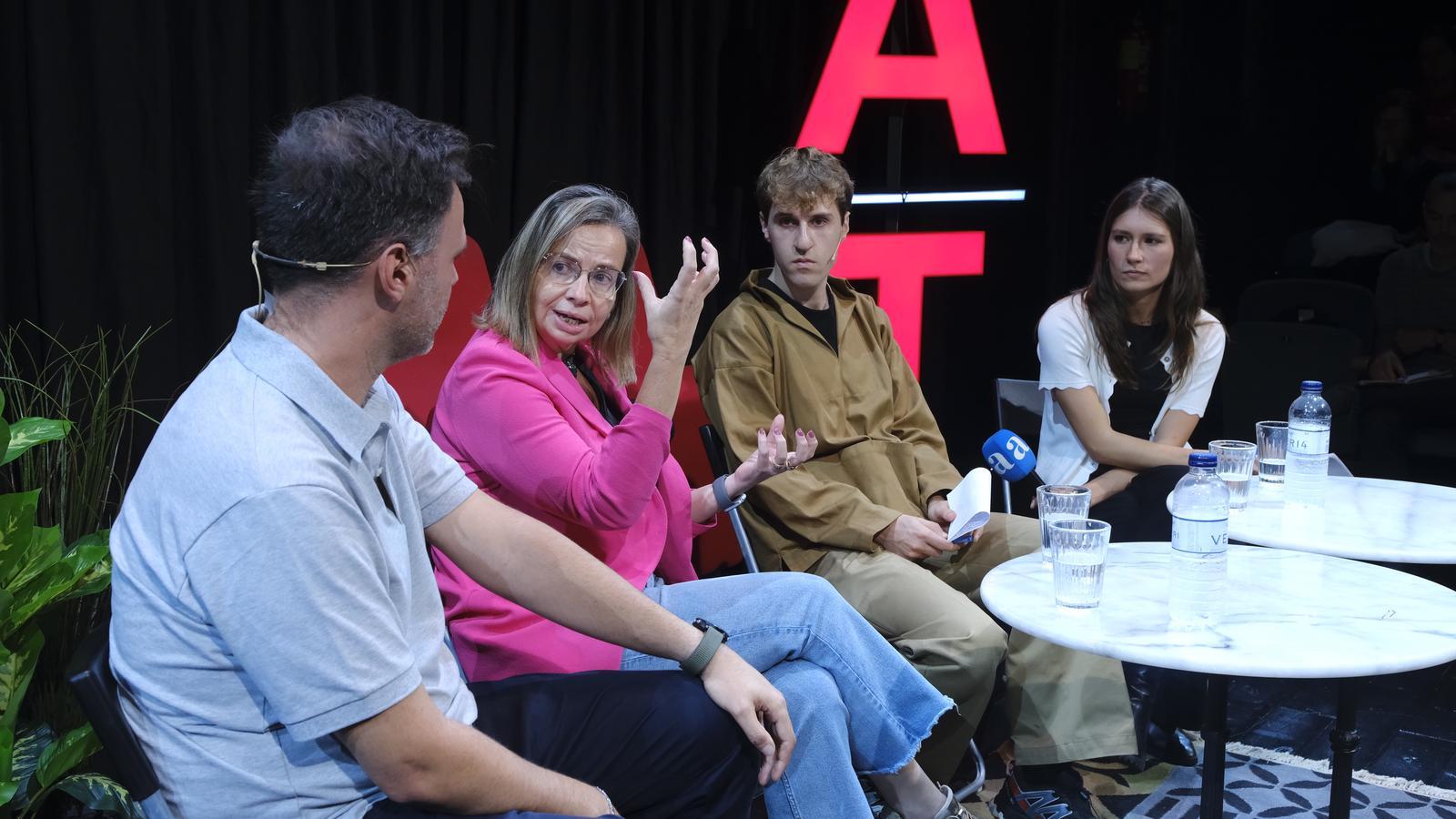
BarcelonaIt is well known that Spain is one of the states in the European Union (EU) where young people take the longest to leave their parents' home to form their own household. It is also clear that the housing crisis we are currently suffering has a direct relationship with this fact. And this was admitted by the experts who participated yesterday in the round table Access to housing and emancipation, the third in the cycle of debate and cinema on housing promoted by the Association of Technical Architecture (Cateb) at the Texas Cinemas, and which is moderated by journalists from ARA, in this case the journalist specializing in housing issues Laura Casserres.
The reason why young people cannot become independent is clear: apartments are too expensive. On this, everyone agrees. But, from here on, there are discrepancies between the participants: Pol Casellas, architect and digital communicator; Jose Téllez, representative of Sostre Cívic, and Anna Puigdevall, general director of Som Habitatge - Union of Property Owners of Catalonia. They have very different points of view on how the lack of housing in Catalonia and Spain should be addressed. "Housing should not be a market good with which to speculate," says Casellas, and Puigdevall responds that "the administration does not have the resources to address the problem and private money will always be needed, which will require a minimum of profitability." And Téllez, meanwhile, defends the cooperative model that allows for new housing to be built on a non-profit basis
Anna Puigdevall asks for more territory to build on, because otherwise cities will have to be densified even further. And despite not everyone being in full agreement, there is indeed a meeting point: the problem would be different if Rodalies were functioning correctly. But the discrepancies return when anglicisms land: coliving, flexliving... But also a very Catalan expression, the shared apartment. How can these new models be addressed, which perhaps are the only path young people have to emancipate themselves? "Administrations must be brave so that these apartments are recovered" for the regular housing stock, says Pol Casellas, but Anna Puigdevall does not see it the same way. In her opinion, tourist apartments are only 1% of Barcelona's stock, and temporary rentals "provide coverage for a real demand". And here Téllez is clear: with seasonal rental "there is a fraud of law" and, therefore, it must be monitored by the administrations. The example: on real estate portals there are now only temporary rental apartments. And while Pol Casellas points out that the administration does not have the resources to address this monitoring, Puigdevall concludes that recovering tourist and temporary apartments does not solve the problem.
