The Generalitat intervenes to save the old women's prison of La Trinitat
The Barcelona City Council has an urban development project to build subsidized housing
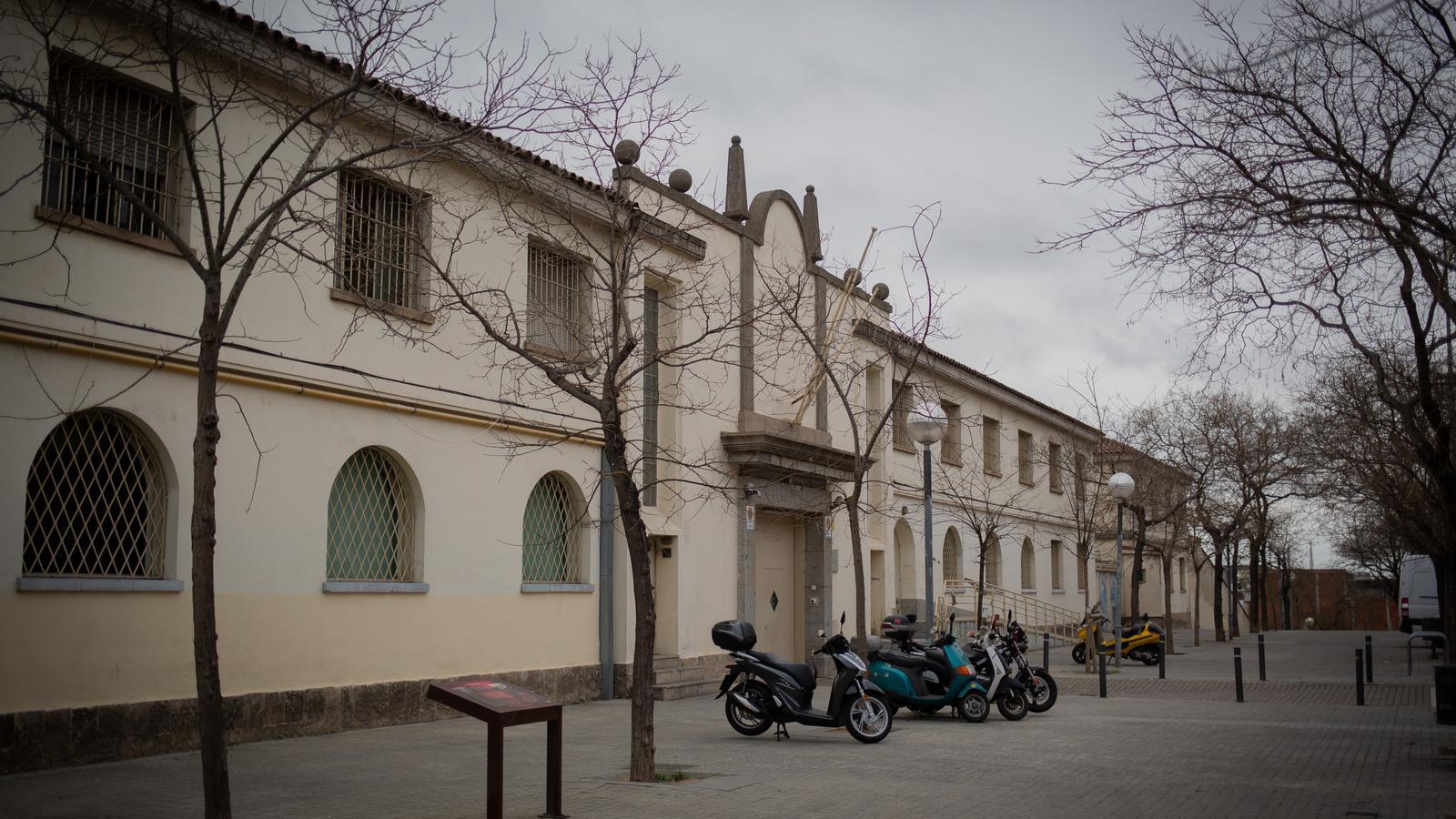
BarcelonaThe Trinitat prison, inaugurated in 1963, was the scene of prison repression against women in Catalonia during the last fifteen years of Francoism. Apparently, it was a modern center, but the objective was none other than to re-educate the inmates according to the criteria of the nuns of the Evangelical Crusades. There they locked up women convicted of common crimes and also political activists. For years, different entities have been fighting to ensure that the place does not disappear from the map and serves to remember this chapter of history, but until now the Barcelona City Council had maintained that it was not compatible with the urban development project. Finally, it has had to give in and part of the prison will be preserved because the process to declare the site a Good of Cultural Interest of Catalonia (BCIN) as a historical site has begun. "The Barcelona City Council ignored all the proposals we made," assures Pep Cruanyes, spokesperson for the Comissió de la Dignitat. "Their argument is that the housing plan construction project was very advanced and it was impossible to preserve anything from the center," he adds.
The Consell de l’Advocacia Catalana also adopted an agreement, in its last plenary session, which it transferred to the Department of Justice and Democratic Quality, the Barcelona City Council and the Comissió de la Dignitat. The Council, as detailed in a statement, proposes a solution that allows "reconciling both purposes through an urban review that expands the buildability in the areas designated for housing, thus guaranteeing that the preservation of a part of the space will not entail any reduction in the number of public housing units planned".
Arguments in favor of preservation
Cruanyes explains that memorialist entities had in their favor the democratic memory law, which establishes that special care must be taken of the memory of political and social repression of women during Francoism. "Furthermore, the urban planning law requires that urban planning must be done while protecting the heritage of neighborhoods and towns," he says. On July 25, 2025, the commission submitted a petition to initiate an expediente for the declaration of a part of the prison building as BCIN to the Department of Culture of the Generalitat. On April 17, the Department of Culture notified that the protection procedure was being opened. Among other arguments is, as is assured in the expediente, the fact that the women's prison of La Trinitat "embodies, above all, a history directly related to Francoist repression, applied to women deprived of their freedom, imprisoned in this penitentiary center." "The will and the historical role of the women's prison of La Trinitat have been clear: to monitor, indoctrinate, and punish the political and ideological dissent of women contrary to the Francoist regime," the expediente states.
In the prison, iron discipline was administered based on psychological repression, humiliation, and punishments of all kinds. As César Lorenzo and Carlota Falgueras explain in Trinitat. La presó de dones ignorada (1963-1983), from the outside the building might have seemed like a kind of school: "It did not have the typical architectural attributes of prisons, but, inside, all testimonies agree in pointing out that the atmosphere was suffocating: a stronghold of the ultra-Catholic fundamentalism that had prevailed in women's prisons since 1939."
In total, the project by the Municipal Housing and Rehabilitation Institute of Barcelona planned the construction of 129 homes. These are subsidized housing units and have been a long-standing demand from residents. These homes will replace the apartments of the Patronato, built in the 1950s and full of dampness and cracks.
