Carlos Cuevas: "The death of Carlos Suárez was a brutal blow"
Actor. Premieres the film 'The Beast'

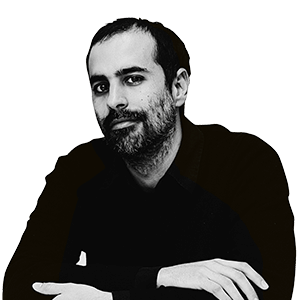
-
CAT -
CAST
BarcelonaIn a scene from the movie The fairThe film, which premieres this Friday, features the wife of one of the protagonists—a group of friends who love extreme sports—explaining to the new partner of one of the friends what the Fatality List is: an annual list of deaths that occur among BASE jumpers, the extreme and very dangerous form of parachuting from a height. The Fatality List ceased to be an abstraction for the film's team last April when Carlos Suárez, the mountaineer and pioneer in the State of BASE jumping with a wingsuit (which lengthens the fall, simulating the flight of a bird), died in an accident while parachuting as part of the film's preparations.
Despite the tragedy, the production went ahead as a tribute to Suárez and his friends, three of whom were added to the Fatality List a few years ago. Carlos Cuevas, who makes her debut as the lead in a film, plays Suárez in a movie directed by Salvador Calvo and also starring Miguel Ángel Silvestre, Miguel Bernardeau, Candela González, and Stéphanie Magnin. While not shying away from the visual spectacle of this risky activity, the film aims to avoid sensationalism and instead explore the doubts, fears, and contradictions of those involved.
One of the themes of The fair It's the tension between how the protagonists see themselves and how the rest of the world sees them. "They think we're crazy, a bunch of nutcases who just want attention," your character complains. Before the film, what did you think of people who do extreme sports?
— I've developed a sense of empathy for them thanks to the film. For me, it's a very distant world; I've never done any extreme sports, nor do I think I ever will. I'm more likely to sign up for a chess course than to get my skydiving license. But through conversations with all these people, I've understood that they simply have a very strong urge and can't help it. Ferran Adrià cooked tirelessly until he discovered spherification, and these people need to jump to feel fulfilled.
And what makes you lose your mind? What's yours? wild beastWhat do they say in the movie?
— In my case, I think it would be the stage, the live performance. Going on stage is quite unnatural; sometimes your heart races, your mouth goes dry, you sweat... I don't do it, but before a premiere, many actors take medication for nerves. And there are people who don't take medication but experience a lot of anxiety and yet they do it anyway. Skydivers are also afraid; they don't hide it, but there's something greater than fear, and that's the need to do it. When they jump, they feel it's worth it. Actors experience something similar; the stage makes up for the nerves, the hours of study and rehearsal, and the sacrifices... But without risking our lives, of course. They're not comparable things, but the feeling that it's all worth it to perform is.
What was your relationship with Carlos Suárez, on whom your character is based, before filming?
— A very close and sincere, very affectionate person. We got in touch three months before filming and spent weeks climbing every day, extending our climbs with a beer or a coffee. I asked him a lot of questions about the script or his life to understand what motivated the character. And I've let my hair grow a bit long, because he had long hair when he was younger, but I didn't want to do an imitation, because he doesn't have a peculiar way of speaking. He was a person with a huge smile, very full of life, one of the best climbers Spain has ever had, but at the same time a very humble guy who helped everyone at the climbing gym, a climbing enthusiast. He wanted me to learn to climb really well and we were constantly writing to each other on WhatsApp, he'd send me videos and tell me a lot of things. Some very subtle, like the gesture of tying a knot or putting on a harness naturally, but I also paid attention to how he felt before and after climbing a wall, the feeling of euphoria in his body. And we were like that for two months until he had the accident.
How did you receive the news of his death?
— Carlos's death was a brutal blow. I was arriving in Madrid on the AVE high-speed train to go see him, actually. A colleague from the film told me to call Borja, my agent, and he broke the news to me. I couldn't believe it. I had spoken to him that same day or the day before. And I realized that the journey ahead of us would be much more difficult. heavy, both the filming and the promotion we are doing now.
Was there any consideration given to canceling the project?
— Yes. The producers couldn't have handled it better. First, they stopped filming and put everything on hold to give the family space to grieve. But from the very beginning, both Carlos's family and friends actively communicated to us that we had to make the film, "now more than ever." It was almost a plea. He was incredibly excited about the project. So, after some time for reflection and with the explicit consent of his family, partner, and friends, the decision was made to move forward. And it remains the story of a survivor; that doesn't change, because the fictional narrative ends around 2012. Later, Carlos had a daughter, and none of that is included in the film. But, even so, it was a very emotional shoot for me. I carried Carlos's books around all day as if they were a talisman, I listened to the songs he loved... There was a very deep sense of respect among the crew: if we were going to make the film, it was essential to do it right.
How does the film change after Carlos's death?
— The script doesn't change, but many lines and scenes take on a different meaning. It's not that we weren't aware of the dangers of BASE jumping, but we hadn't seen the consequences firsthand. When Salvador [Calvo] called me to offer me the role, he told me he didn't want to make a sports film, but a character-driven one, to explore why these guys in their thirties, who have everything in life—a good job, a partner, children—decide to jump off a cliff. What spark inside them drives them to do these things? And they're very aware of what they're doing. Before taking the skydiving course, it's common to write a letter to say goodbye to your family, just in case something happens to you, and many people can't write it and drop out. In other words, if they jump, it's because they've considered all the possible outcomes. They knew death was one of the cards in the deck. And if they were going to die, they wanted it to be jumping, doing what they were passionate about.
In the film, one of the protagonists is compared to a junkie, and he argues that what he does is the opposite of escaping. But another jumper says that flying is "disappearing," a description that reminds me of one used by drug users. What do you think? Are they addicted to adrenaline?
— There's an addictive component to a series of substances that are released in your body and generate a pleasure you want to feel again—of that I'm convinced. But at the same time, there's a strong sense of presence. When the character says he disappears, I think it means he ceases to matter, that he's no longer the protagonist, and he contemplates the world, merging with his surroundings and the sky. It's like watching a bird fly and feeling minuscule in the immensity of nature, like a Caspar David Friedrich dwarfed by the waves. There's also the fact that many of them have everyday jobs, and skydiving is a way to escape monotonous lives. Carlos always said that if he'd been born in another era, he would have been an explorer and traveled to Greenland just to see what was there. And in a way, they were pioneers. The suits they wore for flying were nowhere near as safe as those of today. Armando del Rey, on whom the character of Miguel [Bernardeau] is based, told me that he wouldn't wear a wingsuit from 15 years ago now, not even if he were crazy, but back then that's what they had. It's not for nothing that it's a sport with a brutal mortality rate.
All the jumpers in the film are men, but in The fair The women are not decorative characters; they have their own voice and a very clear idea of what it means to share life with an extreme athlete.
— There are also female jumpers; in fact, a young girl who was a collaborator of died this year.The Anthill [Marta Jiménez, 34 years old]. Yes, the female characters in the film are very good and they grew during the scriptwriting process because they are the eyes of the viewer. I met Armando and his partner, and their story is very powerful. To be happy despite knowing that the death of the person you love could come at any moment. But they have lived through incredible things. Armando has a saying: "Others dream things, but I only have to close my eyes and remember." You don't have to imagine what it would be like to jump from the Empire State Building, or what it would be like to travel to Angel Falls with his friends, jump, and fly together. He has already done it.
What other projects are you working on?
— Oh, lots of things. I'm filming now. a series that tells the story of Ferran Adrià and El Bulli, and in which I play Albert AdriàI've also filmed a very big Netflix series, The secrets of a courtesanwhich is a kind ofPride and Prejudice and that here they compare it to The Bridgertons But they're not really related. It's a series about palaces, fencing, and carriages where I play the prince who falls in love with the wrong person. We'll be back, too. at the Teatre Lliure with The inheritanceAnd then we'll go to Madrid. And I also have a very small film to premiere called Cowgirl And I filmed in Valencia a year ago. There are many projects, but I've been working nonstop for the last two and a half years.
It was also announced a few days ago that at the BCN Film Fest you will premiere The birthday in the company of Willem Dafoe.
— That's right! This project is amazing. About three years ago they sent me a dossier with the script and a character proposal, and when I saw the name of Willem Dafoe I didn't believe it. But in the dossier there was a letter signed by Willem Dafoe, and I said, "Let's do it." But it took a long time to get the funding, so long that I'd almost forgotten about it when they called me a year and a half ago and told me we'd be filming for two months in Greece. And it was wonderful. Dafoe is wonderful, the kind of actor I like. Good actors are always hard workers: Eduard Fernández is a workhorse, Emma Vilarassau... And Willem Dafoe was the same: he was the first to arrive on set and knew his lines better than anyone, incredibly polite to everyone, and with a level of professionalism even greater than his talent. He took great care of me. The first day, when I was introduced to him, he already knew exactly what I was and who I was, and the second day, while they were doing my makeup, they covered my eyes, and I thought, "That must be someone I know," but it was him, just to joke around. He's a very family-oriented and affectionate person, and I'm thrilled that he's coming to my city to present the film.
