Sílvia Munt: "Now girls want to be directors, and that means they want to watch, not be watched."
Gaudí Honorary Award 2026
-
CAT -
CAST
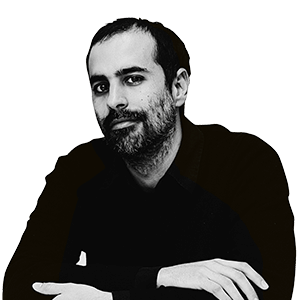
BarcelonaThe Gaudí d'Honor is an award that usually recognizes retired creators or those nearing retirement, but this is not the case here. Silvia Munt (Barcelona, 1957), who has just directed a documentary about Mercè Rodoreda and is immersed in the production of a short film for the Grec Festival and in April will begin preparing an edit of View from the bridge, by Arthur Miller, which will premiere in October. "And then I want to bring my Rodoreda documentary to the stage, and I'm already writing my next film," he adds tirelessly. The Little Dove of The Diamond Square She was a symbol of Catalan cinema, but she has gone from being that actress with expressive eyes to becoming one of the most restless, committed, and hardworking directors. This Sunday, the Film Academy will celebrate her.
What was the first thing you thought when they told you you were receiving the Gaudí Honorary Award?
— Being the incredibly responsible person I am, my first thought was that when I received the award, I'd be about to shoot a short film for the Grec Festival's 50th anniversary. The speech, the interviews, the dress... all of it flashed through my mind. And it was only when the news was officially announced that I started receiving message after message that brought tears to my eyes. And then I thought, "Wow, now I know what I'll talk about in my speech: realizing you're part of a wonderful, albeit dysfunctional, family that loves you and, in some way, believes you deserve this award." This is what truly touched me, because they were all beautiful messages, one after another.
Was he aware that they loved him so much?
— No. I wasn't thinking about it, not at all. I wasn't aware of it, although, subconsciously, I suppose I was looking for it. The team is very important to me, especially since I started directing myself. I think that women, and some men too, have changed that outdated hierarchy that used to exist in film.
In recent years, a great generation of female directors has emerged. When you started directing, there were very few: Isabel Coixet, Rosa Vergés, Judith Colell...
— At first, there were only a few of us who dared. One of the joys of my life has been the women's revolution of the last twenty years. A revolution we had pursued for decades and that finally exploded. To be a part of that and see that now there are so many amazing women, talented, with stories to tell and their own unique perspective... The reactionary powers aren't very comfortable with that. But I heard in an interview that now girls want to be film directors. And do you know what that means? That girls want to watch, and not just be watched.
And what did Silvia Munt want when she was a child?
— I wanted to observe. From a young age, I was a child who observed. I spoke little and observed much. What has always nourished me is human behavior. It's what has interested me and what I've researched, first by studying psychology, then by studying characters, writing screenplays, or directing films and documentaries. It's the most difficult thing to understand and, at the same time, the most fascinating. Human beings never cease to amaze you; it's a continuous spectacle.
And how did she get into acting?
— My grandfather was a doctor, and I wanted to study psychiatry, but my parents separated when I was 13, and it was a very difficult time, both emotionally and financially. So, I couldn't fulfill that dream. But I'd been doing ballet since I was little, and one summer in the Canary Islands, where part of my family is from, I was offered 10,000 pesetas to dance in a contemporary ballet. At 16, I thought, "They're paying me to dance?" Meanwhile, I finished high school and started studying psychology online, but I returned to Barcelona to do contemporary ballet, and from there, I was asked to choreograph for the 1976 Grec Festival, and I ended up playing Puck in... A Midsummer Night's Dream in the Diana Hall. I, who was a dancer, started with Shakespeare.

She also started strong in film, with a role in The orgy, by Francesc Bellmunt.
— Yes, but it was a very small role. It was four or five days of filming, I hardly even noticed. For me, my first film is The Diamond SquareThat's where I realize what cinema is. It's when I get the feeling of making films, because I spend twelve hours in front of the camera, acting with my eyes, acting without acting, learning what it means to get into the skin of a character.
You were very young, almost a debutante, and the success of The Diamond Square It was huge. How did the popularity affect him?
— Looking back, I was so peaceful and quiet. Suddenly, I became a household name everywhere and started making a lot of films, three a year. But I don't remember suffering from being recognized; I'd be lying if I said that, because I'm a very discreet woman. Yes, I had journalists camped outside my house for many years, but I didn't have affairs or do anything strange, and then they got bored of me. That said, I was always on the go, and that wore me down. I need connection and emotion. And that need to be rooted in myself, to know what I think and feel, what I want to say and how I want to say it, is the need that makes me say: stop and write, make your films, choose and listen to yourself. So, to answer the question, perhaps the success of The Diamond Square It is one of the reasons why I reached the point of not feeling good being in a place where I was being looked at, because I wanted to look.
When she began directing in the late 90s, she put acting on hold for a while. Had she stopped enjoying acting?
— Sometimes I enjoyed it, and sometimes I didn't. This might seem frivolous, but we often exaggerate these professions. You don't always have a good time in this job. Sometimes someone directs you and supports you, and you have a good rapport, but you can also feel very alone. Besides, I'm overwhelmed by the feeling of doing something I don't agree with. I've been lucky enough to work on some very good films, but also on things that weren't... And that makes me sick. I wasn't enjoying it, because I'm not an actress who enjoys doing just anything. When I started directing, I wasn't doing well. I didn't like the series I was working on, but I had three daughters, and it was very convenient for me to keep working. Then someone asked me if I was happy doing what I was doing, and that question made me take the plunge: I requested a leave of absence to go to the Sahara and shoot the short film. LaliaAnd that gave me a freedom and a feeling of oxygen that healed everything.
One of the biggest challenges for actresses is the pressure to conform to certain aesthetic standards. By becoming a director, she avoided that.
— Perhaps so. An actress ages twice, once in real life and once in front of the camera, because you're constantly being watched. It's a nightmare. But I was 37 or 38, I didn't yet suffer that pressure. It wasn't like being 50. And now things have changed and there are more roles for women under 30, because there are more women writing and directing.
Have you ever missed being an actress?
— No, nothing. Not even the slightest. For me, it's like ballet. They're lives that are part of a stage in my life and that have nourished me greatly. Ballet gave me tremendous mental and physical discipline, and so has acting. But now I'm doing other things. I've filmed a documentary about Mercè Rodoreda, I'm working on a short film about the Grec Festival of 1976... I feel fulfilled, I'm whole inside. It's been a long time since I've acted, and it makes me a bit lazy. And I love actors dearly, but I know how difficult the work is, and I don't miss it, because it doesn't make me happy anymore.
In all these years, who is the most talented person you have met?
— Rodoreda. When I met her, I thought that woman had a way of looking that seemed to see right through your eyes. She knew exactly what you were like and what you were thinking. Her intelligence was as sharp as any I've ever known. I've met many talented people, but she was something else entirely. Of course, I've read all of her work, over and over again, and the older you get, the more you realize what she was.
Could you choose a memory related to film?
— Ugh, it's cruel to choose just one. Look, I'm not going to be original. I have very fond memories of that wonderful summer I filmed The Diamond SquareBecause I was happy playing that character with a team that loved and supported me. There, I discovered a family and a place where I felt very comfortable. With the cameraman, the director of photography, the electricians, Juana from makeup, who looked after me like a daughter, or Agustí Villaronga, who did the costumes... So many colleagues that for the first time we had the feeling we were making an important film... It was a great feeling of fulfillment. And it was 1981, a very beautiful year in which we thought the dictator's death would be a turning point.
45 years later, how do you see the current political and social climate?
— With utter despair. I have three daughters, and it's heartbreaking to see how repugnant the role models being instilled on social media and in politics are, both in the United States and here. I'm completely distraught, and I don't know what we should do to get ourselves out of this mess. We know it all stems from the anger over the great revolution women have brought about, and that there are people who are very angry. Because the women's revolution is a paradigm shift that fuels this reactionary politics of returning to traditional family values, religion, and the most brutal form of capitalism. We're at a point where the only way forward is to improve, because things can't get any worse. We've hit rock bottom.
