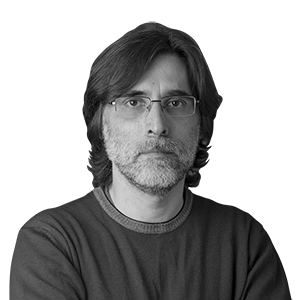
BarcelonaTo transmit "joy and hope" on the first morning of 2026. This is the aim of Yannick Nézet-Séguin (Montreal, 1976), who makes his debut as conductor of the Vienna Philharmonic's New Year's Concert. The event, as has been the custom since 1939, will take place on January 1st in the imposing Golden Hall of the Musikverein in the Austrian capital. It can be watched on TVE's La1 channel starting at 11:15 a.m.
Without abandoning the weight of tradition inherent in an event centered on waltzes and polkas by the Strauss family, the Quebecois conductor brings the formal modernity he himself brings as music director of the Metropolitan Opera House in New York (the Met), and also introduces some new pieces to the repertoire, among which works by the composer stand out. Sirenan lieder by the Austrian Josephine Weinlich (1848-1887), who was the first female conductor of a European orchestra; and Rainbow waltzby the American Florence Price (1887-1953), the first African American woman recognized as a symphonic composer. In 2025 it was Riccardo Muti, the first conductor to include a work by a female composer in the New Year's Eve Concert: Ferdinandus-WalzerBy Constanza Geiger.
"Florence Price was a composer unfairly relegated for reasons of gender and race," Nézet-Séguin explained at a press conference in Vienna. "And now she is a very important composer for the history of the United States. Moreover, she was influenced by the Viennese waltz, a step forward toward a more open-minded classical music." Nézet-Séguin has long championed Florence Price's legacy: in 2021, leading the Philadelphia Orchestra, she recorded the Arkansas composer's Symphonies Nos. 1 and 3, a recording that earned her a Grammy Award. Little by little, then, the New Year's Eve Concert is incorporating works by female composers, but the day has not yet arrived when a woman will conduct.
The Nézet-Séguin Style
Yannick Nézet-Séguin, who will take over from Riccardo Muti at the New Year's Eve concert, has consolidated his prestige in both the symphonic and operatic fields, particularly as principal conductor of the Philadelphia Orchestra, which he has led since 2012, and as music director of the Metropolitan Opera, the Montreal Opera, and the Rotterdam Philharmonic. His orchestral work includes recordings of works by Beethoven, Rachmaninoff, Mahler, Richard Strauss, Berlioz, Stravinsky, Bruckner, and Falla, among others. He made his debut at the New York Opera (where his husband, Pierre Tourvill, plays viola) in 2008 with Carmen, by Bizet, and later conducted Don Carlos, by Verdi, and SplendorGounod's work. Nézet-Séguin accompanies the musical rigor with a less constrained elegance that perfectly suits the understated air of renewal the Vienna Philharmonic now seeks to convey.
Although the Quebecois maestro is making his debut at the New Year's Concert, it is not his first time working with the Viennese orchestra, with which he began collaborating fifteen years ago. However, he has never had such a large audience as he will have on January 1, 2026: almost one billion viewers worldwide, in addition to the 1,700 who will fill the Golden Hall of Vienna's Musikverein.
The repertoire of the 2026 New Year's Concert in Vienna
- Johann Strauss II: the opening of the operetta Indigo und die vierzig Räuber
- Carl Michael Ziehrer: The Waltz Donausagen, op. 446
- Joseph Lanner: Malapou-Galoppe, op. 148
- Eduard Strauss: the fast polka Brausteufelchen, op. 154
- Johann Strauss II: The Quadrille Fledermaus, op. 363
- Johann Strauss I: The Gallop of Der Karneval in Paris, op. 100
- Franz von Suppé: the opening of the operetta The beautiful Galathée
- Josephine Weinlich: the polka mazurka Sirenan Lieder, op. 13 [arrangement by W. Dörner]
- Josef Strauss: The Waltz Frauenwürde, op. 277
- Johann Strauss II: the French polka Diplomaten-Polka, op. 448
- Florence Price: Rainbow Waltz [arrangement by W. Dörner]
- Hans Christian Lumbye: Copenhagen Jernbane
- Johann Strauss II: The Waltz Rosen Aves dem Süden, op. 388
- Johann Strauss II: Egyptischer Marsch, op. 335
- Josef Strauss: The Waltz Friedenspalmen, op. 207
- And an encore culminating with the Radetzky-Marsch by Johann Strauss
Other New Year's Eve concerts at the Palau de la Música and the Liceu
The tradition of New Year's Eve concerts featuring Viennese music has also taken root in our city. The Palau de la Música is hosting half a dozen concerts performed by the Vallès Symphony Orchestra under the direction of Isabel Rubio. Performances will take place on December 31st, and January 1st, 2nd, 3rd, and 4th. The concert on Wednesday the 31st is at 12 pm; the one on Thursday the 1st at 6 pm; both on Friday the 2nd at 6 pm and 9 pm; the one on Saturday the 3rd at 9 pm; and the one on Sunday the 4th at 6 pm. The program includes waltzes and polkas by the Strauss family, as well as tangos by Carlos Gardel and works by Juli Garreta and Camille Saint-Saëns, among others. The Vallés Symphony Orchestra, conducted by Xavier Puig, also performs New Year's Eve concerts at the La Farándula Theatre in Sabadell on January 3 and 4, at 8 pm and 11:30 am, respectively.
The Liceu is also scheduling a special concert on January 4 (6 pm), featuring musicians from the Liceu and La Fenice orchestras conducted by Riccardo Frizza and with the participation of soprano Saioa Hernández and tenor Xabier Anduaga. The concert's repertoire will be primarily operatic, with pieces by Bellini, Donizetti, Offenbach, Puccini, Rossini and Verdi, among others.