Frederick Wiseman, the man who observed the world, dies
His documentaries explored all kinds of institutions, from mental asylums to the New York Public Library

-
CAT -
CAST
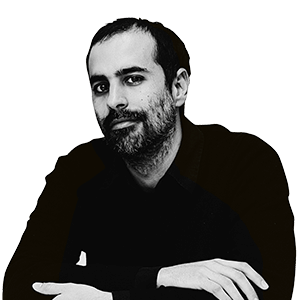
Special correspondent in BerlinIt's hard to imagine a more fruitful and coherent artistic career than that of a documentary filmmaker Frederick WisemanThe director of fifty films spanning six decades, he was recognized as the most astute observer of American society, a tireless chronicler of the world, and especially of its institutions. Wiseman, who died Monday at the age of 96, was considered one of the most important non-fiction filmmakers of recent decades and had won an honorary Oscar and the Golden Lion for Lifetime Achievement. In 2016, he was awarded an honorary doctorate. honorary cause by Pompeu Fabra University.
In Wiseman's films, the star was the location. The director shot films about asylums, schools, universities, town halls, and three-star restaurants. He avoided interviews and voice-overs, letting the camera capture the ordinary activity of these institutions to construct a kind of impressionistic portrait, inevitably incomplete but always revealing. Ultimately, all his films form a work of more than 80 hours in which each film is a movement of a grand symphony about life during the last decades of the 20th century and the first of the 21st.
In his debut work, Titicut madness In 1967, Wiseman filmed daily life in a psychiatric hospital for the criminally insane. It was such a stark portrayal of the patients' living conditions, subjected daily to abuse by the staff, that the film was banned for nearly 25 years. Before turning to filmmaking, he had studied law, partly to avoid serving in the Korean War. He eventually ended up serving in the army, but that experience helped him complete his studies in Paris and later work as a law professor.

The leap from law to film wasn't as complicated as it might seem. "Back then, there wasn't a film school on every corner," he recalled. in 2016 in an interview with the ARA—If you wanted to make films, you worked with someone who was already making them and then you made your own. So I worked on a film that was halfway between fiction and documentary [The cool world[from 1963] and I thought, "If these idiots can do it, so can I."
Invisible and non-interventionist camera
Formally, his documentaries belonged to the Direct Cinema movement, characterized by an observational and non-intrusive style. As in the films of D.A. Pennebaker and Albert Maysles, Wiseman's camera seems invisible to the subjects of his films. He attributed this to his working method: "I never intervene in situations, I explain to all participants beforehand what I'm doing, I don't use lights, the equipment is minimal, and I try to strip cinema of its mystique by explaining the technical details to anyone who asks... The goal is to make people feel comfortable."
Although consistent in his desire to portray only institutions, he was also very varied in the types of organizations he depicted. In 1968, he filmed a movie at a high school in Philadelphia, High School, in which she demonstrated how schools transmit not only facts, but also values laden with ideology. Primate, In 1974, he observed how at the Yerkes National Primate Research Center, experiments were being conducted on apes that were later vivisected. And in Bookplate, of the In 2017, I toured the halls of the New York Public Library to show for 197 minutes how this public service constantly adapts to its environment.
Bookplate It is an example of the length that Wiseman's films could have, as seen in the 1989 documentary Near deathThe film, about a Boston hospital, reached six hours of footage. In an interview with ARA in 2018The director said that films "have an obligation not to simplify their themes and to show all the nuances and ambiguities [...], the good and bad things about the institutions" they focused on. In that sense, he added, he considered himself an enemy of "didacticism and propaganda" and placed himself at the "opposite extreme to Michael Moore."
Despite his advanced age, the final stretch of Wiseman's career was especially productive, with extraordinary works such as National Gallery (2014), In Jackson Heights (2015) and City Hall (2020), and in 2022 he even filmed his first work of fiction, A coupleabout Sofia Tolstaia, Tolstoy's wife. In 2023 he released his latest film, The great menuA tantalizing tour of the inner workings of a three-Michelin-starred French restaurant, Le Bois sans Feuilles. In a career where he did almost everything, only two dreams remained unfulfilled: to direct 50 films (he reached 47) and to shoot a documentary about the White House.

