Escalivada and rice, antidotes to Islamophobia
-
CAT -
CAST
Barcelona1714 is a well-established and significant date in the history of Catalonia. A thousand years earlier, in 714, it should also be remembered as a milestone: it is when Berber and Arab Muslims completed the conquest of the entire Iberian Peninsula in what is now Catalan lands (only Galician, Basque, and some Pyrenean territories remained untouched). The invaders then continued north: Narbonne (720), Toulouse (721), and Carcassonne and Nîmes (725). In present-day Catalonia, Girona and Barcelona offered no resistance, but Tarragona did, and was destroyed and abandoned, as did Badalona, Mataró, Terrassa, and possibly Empúries. All of these areas became part of Al-Andalus—there is much debate about the correct spelling—within the Islamic Umayyad Empire, governed from the city of Damascus, now in Syria.
Incidentally, the Balearic Islands did not enter the Islamic world until the 10th century. And also incidentally, the political and military rivalry between the Christian and Muslim worlds ran parallel to fruitful cultural exchanges, as written by the philologist and historian Dolors Bramon, who has published a new work. The Islamic heritage, number 244 of the collection Notebooks of the 'Girona Magazine'Despite focusing on Girona, it illuminates the reality of the entire Catalan Islamic legacy.
A book of this kind—rigorous, illustrated, and educational—is more necessary than ever to combat the growing Islamophobia exploited by the far-right parties Alianza and Vox. Among other things, Bramon reminds us, for example, that Islam does not emphasize religious proselytism among those who practice another monotheistic religion, who, according to the Quran, cannot be forced to change their beliefs. Thus, in the 8th century and beyond, Christians were able to continue practicing their religion, albeit in exchange for paying tribute.

This doesn't mean that some didn't make the change. Quite the opposite, in fact, as in the case of the Berber chieftain Munussa, who fortified Llívia and married Lampègia, daughter of the Duke of Aquitaine and Gascony. Defeated by his former coreligionists, he ended up committing suicide by throwing himself off a cliff in 731. Lampègia was then taken to the Emir of Córdoba, who fell in love with her. However, it seems she ended her days in the harem of Damascus.
Let's leave love aside and return to war. Or rather, to demography. During that time, in just a few decades (711 to 755), a million people arrived from the Arab world and North Africa (mainly Berbers), adding to a peninsular population estimated at between 6 and 9 million. The mixing was inevitable.
Now, the war: if in 732 the Islamic defeat at Poitiers marked this city as the border between Islam and Christendom, between 759 and 785, when Girona fell to the Franks, this border was located at the Onyar River. But just as had happened with Christians during the Islamic period, Muslims in Christian territory were also able to preserve their faith, again with some limitations and monetary tolls: these are the so-called Mudéjars, Moors, or Saracens. The politically Islamic presence in present-day Catalonia lasted for several more centuries, until Count Ramon Berenguer IV conquered Tortosa (1147), Lleida (1148), and Siurana and the Prades Mountains (1153), the last Catalan stronghold under Muslim rule.
The Muslim cultural imprint is highly significant. Even a strict Christian like Francisco Eiximenis (14th century), opposed to tolerance towards the Saracens, recognized the value of austerity in dress and in the education of children, and the wisdom of their philosophers and scientists. Indeed, without them, the Babylonian, Indian, and ancient Greek advances would not have arrived. From botany to physics and mathematics, including medicine and pharmacology, or mechanics and zoology.
The monastery of Ripoll was key in this transmission, with the central figure of Abbot Oliba (971-1014), who continued the cultural relations between the Catalan and Andalusian lands, consolidated especially during the reign of Caliph al-Hakam II (961-976). Yes, Ripoll's open-mindedness proved decisive. What a contrast to the closed-mindedness of Orriola today.
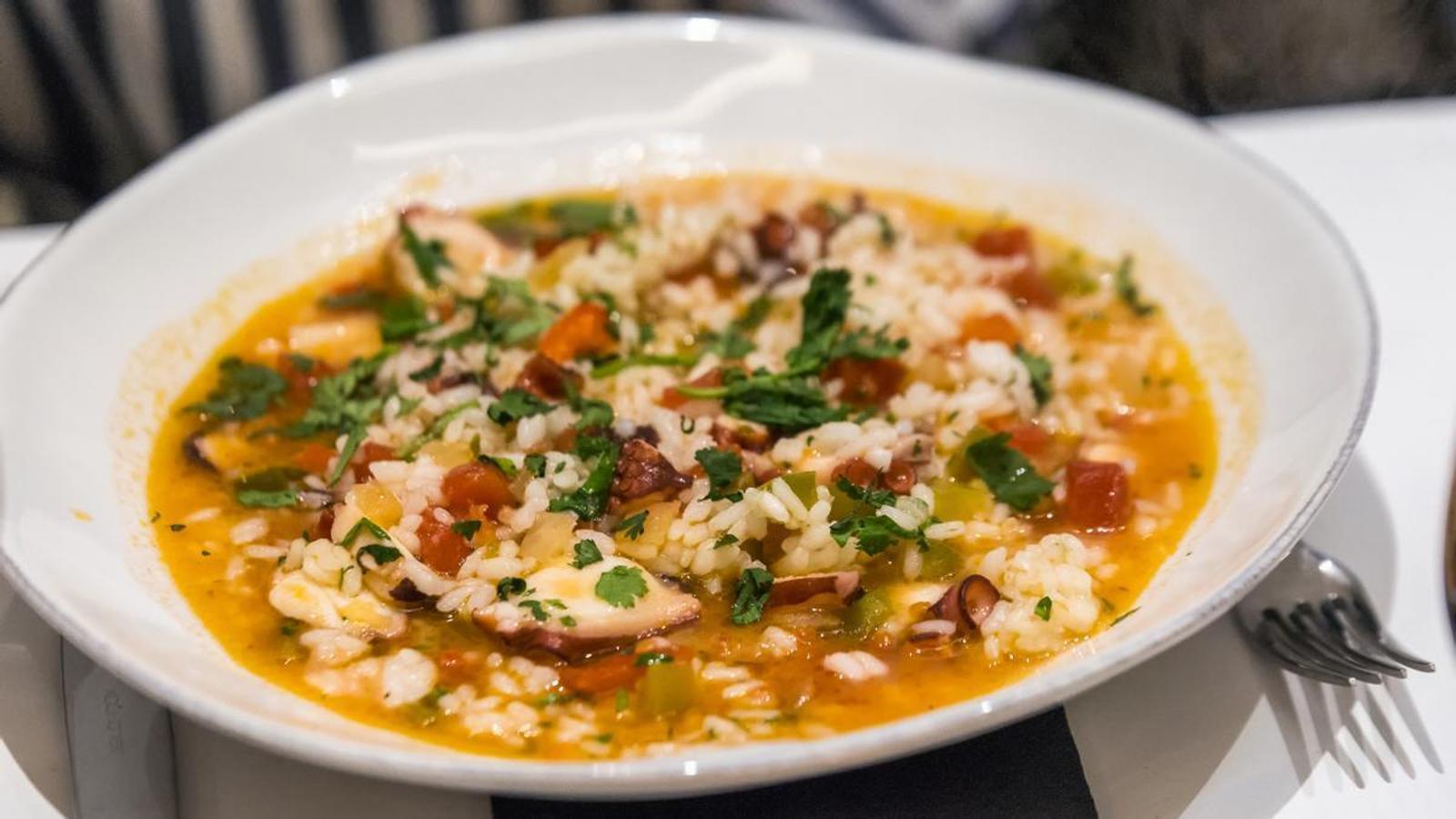
Of course, the influence on vocabulary, place names, and cuisine is well known. In language, they have bequeathed to us since theenxaneta from the castellers to the verbs stroke either pryTo cite just a few lesser-known examples. And when it comes to food, the list is enticing: escalivada, rice, sugar, saffron, pistachios, watermelon... In short, nothing beats a good meal of escalivada and rice to combat the narrow-minded and intolerant Islamophobia. And if it can be followed by conversation with Dolors Bramon, all the better.
