Animac opens its 30th edition this Thursday, February 19th, with the presentation of the Honorary Award to Irish animator Nora Twomey, creative director of Cartoon Saloon and creator of animated gems such as The Breadwinner . The Animation Master Award will go to German animator Andreas Hykade. Animac will feature retrospectives of both award winners, who will also offer masterclasses. The theme "Things Change" is the leitmotif of this edition, which reflects on change with guests such as Ron Dyens, producer of Flow , and illustrator Bea Lema, who has adapted her comic El cuerpo de Cristo (The Body of Christ), winner of the 2024 National Comic Award, into an animated short. The festival will also pay tribute to Montxo Algora, a leading figure in digital culture in Spain.
"Animation students are afraid that they will eventually be replaced by AI."
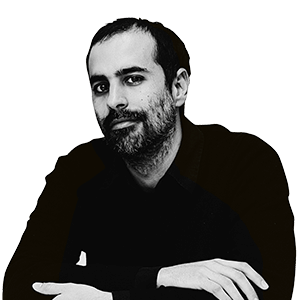
The Animac festival in Lleida, directed by Carolina López Caballero, opens a new edition and celebrates its 30th anniversary.

-
CAT -
CAST
BarcelonaIn the early nineties, right after finishing my Fine Arts degree, Carolina López Caballero (Villafranca de los Caballeros, Toledo, 1966) went to England to study animation. There he discovered the depth and richness of international animated cinema and directed a short film, Swan song, which was screened at the London Film Festival alongside the legendary Comfort creatures by Nick Park, co-founder of Aardman. Upon returning to Barcelona, seeing the disparity between the English and Catalan animation scenes, she took advantage of a screening of her short film at the Generalitat's film department to hand over a thick dossier to the officials with a project to create an animation festival in Catalonia. "Back then, there were animation festivals in England, Channel Four, BBC2... But it was a desert, and I, besides being a creator, have always had a desire to share," explains López Caballero.
This could have been the beginning of the story of Animac, the Catalan Animation Film Festival, which kicks off a new edition this Thursday and celebrates its 30th anniversary, if it weren't for the fact that that dossier was put away in a drawer and lost forever. The festival's story actually begins in 1996, when the Lleida City Council asked local cultural organizations for ideas to commemorate the centenary of cinema, and two students from the municipal art school proposed organizing an animation festival. Initially called Cinemàgic and renamed Animac from its second edition onwards, the festival had already run for four years when, to consolidate the project, the City Council hired a young woman in 2001 as its director. This woman, who headed the Anima't section of the Sitges Film Festival, was already considered one of Catalonia's leading animation experts. Whether by fate or coincidence, ten years after envisioning an animation festival for Catalonia, she ended up directing one.
Under López Caballero's leadership, Animac defined its identity as a platform for international auteur animation: "In Sitges, I ran a program more focused on Japanese and genre animation, but in Lleida, I saw the possibilities of exploring more experimental animation and the connections it offered. It allowed us to be more radical." In 2003, he stepped back for personal reasons and handed the reins to Basque animator Isabel Herguera, but in 2012 he returned with a very specific mission: to connect Animac with the Lleida audience. "Isabel's artistic direction was outstanding, but the City Council felt the festival wasn't quite taking root in the city," recalls López Caballero. "To address this, we began structuring the program around themes and promoting different audiences: children and young people, who now fill all 10,000 places we offer in the Animacrea space, and animation students participating in the Animac Campus."
The technological revolution in animation
The three decades of the exhibition coincided with a major transformation in animated film. "Thirty years ago it seemed that 3D would devour all other techniques, even thestop-motion“But that hasn’t happened,” says López Caballero. “Technological development has been incredible, but there are more and more young people doing handcrafted animation and more training centers. Students graduate with an excellent level of skill, and in general, the animation being done now is much better.” The public’s perception of animation has also changed in recent years. “During my first years at the Sitges Film Festival, I still had to explain that animation wasn’t something exclusive to every possible medium.” Olivia and the Invisible Earthquake, the first Catalan animated film in stop-motion, which presented the previous Animac a work in progress and ended up winning awards at Annecy and the Gaudí Awards. "Its success has been very important, because it has shown that in Catalonia we can make a great film with a good script and impeccable animation that has international impact," she says.
The great unknown that hangs over the world of animation today, as in most visual arts, is the changes that the arrival of artificial intelligence will bring. López Caballero prefers "to speak of artificial intelligences in the plural" and is cautious but optimistic. "On the one hand, AI is facilitating processes such as storyboardsBut they're not a magic brush; there always have to be artists with discernment behind them, she says. AI will eliminate many jobs, but it will also create new ones. Conversely, the director of Animac predicts that "we're in for years of seeing some very ugly things made with AI, like when 3D first came out." And she notes the unease this technology is causing among new generations of animators. "And they have some reason to be worried, but I have complete faith in human creativity; it will always be necessary," she asserts.
Through her work as a festival director and programmer, López Caballero has met most of her heroes, masters of international animation like the co-founder of Studio Ghibli. Isao Takahata, the Quay Brothers and Jan Švankmajer, for whom he organized an exhibition in Sitges and then at the CCCBBut he highlights the masterclasses given at Animac by animators Michaël Dudok de Wit and Regina Pessoa: "They didn't just talk about their work, but about how they understood the creative act, with a discourse close to poetry." So many years working with animators have convinced him that they all share certain qualities. "They are people with a very rich inner world, very sensitive artists who work in many areas, from scripts to drawings and the technological aspects, and very respectful of each other's work," he says. "I've seen the film world up close, and any third-rate actor comes with demands that have nothing to do with those of an Isao Takahata or a connoisseur of art, and that's where they want to dig in, but in animation there's always a good atmosphere. The people on the Animac team always tell me: the guests who come to the festival are lovely."
